
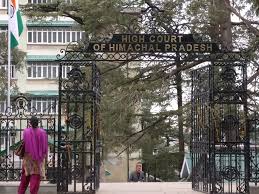
The case of Urmila Devi v. State of Himachal Pradesh and Otherscenters on the illegal influence of political recommendations in public appointments, specifically regarding the selection of an ASHA (Accredited Social Health Activist) worker,.
Factual Background and Dispute
The petitioner challenged the appointment of Respondent No. 4 (Chanchala Devi) as an ASHA worker at the Primary Health Centre, Chukku,. While the Selection Committee initially ranked Respondent No. 4 higher, the petitioner alleged that the selection was vitiated by bias and extraneous considerations rather than being based on merit,.
Evidence of Political Interference
The Court found clear documentary evidence that the selection process was compromised by political pressure:
- Ministerial Intervention: The Minister of Health, Revenue & Law issued a U.O. (Unofficial) Note expressing a “desire” to have Respondent No. 4’s application considered “sympathetically”,.
- The “Command” Doctrine: Justice Ajay Mohan Goel ruled that a Minister’s “desire” expressed to subordinate officers—such as the Block Medical Officer and Block Development Officer—operates effectively as a command, thereby destroying the neutrality of the selection process,.
- Political Lobbying: A letter from the local Congress Committee Pradhan also urged the appointment of the respondent on the grounds that her family supported the political party,.
Manipulation of Merit Scores
The Court highlighted a stark disparity between the objective and subjective scoring of the candidates, suggesting a deliberate attempt to favor the private respondent:
- Objective Lead: In the objective evaluation (based on criteria like being a widow, local residency, and category status), the petitioner had a clear lead with 4 out of 6 marks, while Respondent No. 4 had only 2 marks,,,.
- Subjective Manipulation: To “set at naught” the petitioner’s objective lead, the government officials on the committee awarded Respondent No. 4 disproportionately high interview marks (2 and 1.75 out of 2),. Conversely, they gave the petitioner significantly lower marks (0.5) than other candidates,,.
- Result: This arbitrary grading allowed Respondent No. 4 to narrowly surpass the petitioner with a total score of 6.75 against 6.00,.
Conclusion and Directives
The High Court ruled that the appointment was “bad in law” as it was designed to please the Minister rather than select the most qualified candidate. The Court issued the following orders:
- Quashing of Appointment: The appointment of Respondent No. 4 was set aside,.
- New Appointment: The authorities were directed to offer the post to the next candidate on merit,.
- Recovery of Salary: Because Respondent No. 4 had “usurped” the post through an arbitrary and biased process, the Court ordered that the salary paid to her during her tenure be recovered,.
STPL (Web) 2026 HP 202
Urmila Devi V. State of Himachal Pradesh And Others (D.O.J. 25.04.2026)
Loading Viewer...