
NDPS: Failure to Prove Conscious Possession – Acquittal Upheld

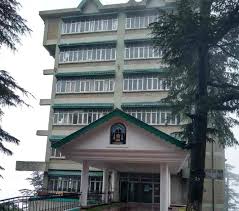
In State of Himachal Pradesh vs. Desh Raj (2026), the High Court of Himachal Pradesh dismissed an appeal by the State and upheld the acquittal of an individual charged under Section 20 of the Narcotic Drugs and Psychotropic Substances (NDPS) Act.

Case Background

The prosecution alleged that in December 2009, a police party conducting a search of a transport bus at a checkpoint discovered a bag containing 400 grams of charas. The accused, who was sitting at seat No. 19, was apprehended after the substance was identified and weighed in the presence of the bus driver and other witnesses. The Trial Court, however, acquitted the respondent after evaluating the evidence.

Key Reasons for Upholding Acquittal

The High Court affirmed the acquittal because the prosecution failed to establish the recovery of the contraband beyond a reasonable doubt due to several “irreconcilable contradictions”:

  • Failure to Prove Conscious Possession: There were major discrepancies regarding the physical location of the recovered bag. While one witness claimed the bag was found under the bus seat, the investigating officer testified it was held between the accused’s legs. The Court held that such contradictions vitiate the claim of conscious possession, a mandatory requirement for an NDPS conviction.
  • Inconsistent Police Records: The official Daily Diary (GD Entry) recording the police party’s departure omitted the name of a key witness who allegedly stopped the bus. The Court found that if the witness was not part of the party according to the record, his presence at the scene was doubtful.
  • Mysterious Investigative Process: The officer leading the police party provided testimony that was silent on the actual recovery of the bag and the sequence of events at the scene. Additionally, witnesses testified that two boys were initially brought out of the bus with the bag, but the prosecution provided no explanation for the second person or why only the respondent was charged.
  • Hostile Witness Testimony: The bus driver, an independent witness, gave shifting statements, at one point refusing to identify the accused in court and later providing a “parallel story” regarding the search that contradicted the police narrative.

Conclusion

The High Court concluded that the “mysterious and inconsistent” investigative process created serious doubt about the genesis of the case. Finding no perversity in the Trial Court’s decision, the Court ruled that the presumption of innocence remained fortified and dismissed the State’s appeal.

STPL (Web) 2026 HP 231

State of Himachal Pradesh V. Desh Raj (D.O.J. 14.05.2026)

Loading Viewer...

Next Story

NDPS: Failure to Prove Conscious Possession – Acquittal Upheld

In State of Himachal Pradesh vs. Desh Raj (2026), the High Court of Himachal Pradesh dismissed an appeal by the State and upheld the acquittal of an individual charged under Section 20 of the Narcotic Drugs and Psychotropic Substances (NDPS) Act.

Case Background

The prosecution alleged that in December 2009, a police party conducting a search of a transport bus at a checkpoint discovered a bag containing 400 grams of charas. The accused, who was sitting at seat No. 19, was apprehended after the substance was identified and weighed in the presence of the bus driver and other witnesses. The Trial Court, however, acquitted the respondent after evaluating the evidence.

Key Reasons for Upholding Acquittal

The High Court affirmed the acquittal because the prosecution failed to establish the recovery of the contraband beyond a reasonable doubt due to several “irreconcilable contradictions”:

  • Failure to Prove Conscious Possession: There were major discrepancies regarding the physical location of the recovered bag. While one witness claimed the bag was found under the bus seat, the investigating officer testified it was held between the accused’s legs. The Court held that such contradictions vitiate the claim of conscious possession, a mandatory requirement for an NDPS conviction.
  • Inconsistent Police Records: The official Daily Diary (GD Entry) recording the police party’s departure omitted the name of a key witness who allegedly stopped the bus. The Court found that if the witness was not part of the party according to the record, his presence at the scene was doubtful.
  • Mysterious Investigative Process: The officer leading the police party provided testimony that was silent on the actual recovery of the bag and the sequence of events at the scene. Additionally, witnesses testified that two boys were initially brought out of the bus with the bag, but the prosecution provided no explanation for the second person or why only the respondent was charged.
  • Hostile Witness Testimony: The bus driver, an independent witness, gave shifting statements, at one point refusing to identify the accused in court and later providing a “parallel story” regarding the search that contradicted the police narrative.

Conclusion

The High Court concluded that the “mysterious and inconsistent” investigative process created serious doubt about the genesis of the case. Finding no perversity in the Trial Court’s decision, the Court ruled that the presumption of innocence remained fortified and dismissed the State’s appeal.

STPL (Web) 2026 HP 231

State of Himachal Pradesh V. Desh Raj (D.O.J. 14.05.2026)

Loading Viewer...
Next Story

Service Law: Transfer – Petitioner had already completed more than his normal tenure.

In the case of Rohit Kumar vs. State of H.P. and Others (2026), the High Court of Himachal Pradesh addressed the legality of a transfer order issued during an election period and involving an employee eligible for the “couple case” policy.

Case Background and Petitioner’s Claims

The petitioner, a Music Teacher at Government College Basa, challenged his transfer to Government College Sujanpur. He raised three primary arguments:

  • The transfer was issued solely to accommodate another official.
  • His case was protected under the “couple case” clause of the state’s transfer policy, which aims to keep spouses posted at the same station.
  • The order was passed during the enforcement of the Model Code of Conduct for Panchayati Raj Elections.

Court’s Findings and Legal Principles

The Court rejected the petitioner’s contentions and upheld the transfer based on the following findings:

  • Completion of Tenure: The Court noted that the petitioner had been at his current station since 2022, meaning he had already completed more than his normal tenure. A transfer after such a period is legally valid, even if it facilitates the placement of another official.
  • “Couple Case” Indulgence: The Court clarified that “couple case” status is a matter of administrative indulgence and not an absolute legal right. Departmental requirements and public interest must take precedence over the personal convenience of employees, especially when administrative exigencies arise.
  • Validity under Model Code of Conduct: The transfer was found to be technically valid because the State had obtained prior permission from the State Election Commission before issuing the order.

Final Order and Policy Recommendations

While the Court refused to quash the transfer order, it issued the following directives:

  1. Implementation Deferment: To maintain the integrity of the electoral process, the Court ordered that the actual implementation of the transfer must be deferred until the Model Code of Conduct is lifted.
  2. State Policy Development: The Court expressed a need for the State Government to define specific guidelines regarding the frequency of “couple case” benefits. It suggested a policy that specifies how many times such indulgence can be granted during a career to prevent recurring administrative disruptions.

STPL (Web) 2026 HP 229

Rohit Kumar V. State of H.P. And Others (D.O.J. 13.05.2026)

Loading Viewer...

Next Story

Defamation Complaint Quashed as Case not made out

In the case of Surinder Sharma vs. Parveen Kalia & Another (2026), the High Court of Himachal Pradesh quashed a defamation complaint against a shopkeeper and a journalist, ruling that reporting on police proceedings and making good-faith complaints to authorities does not constitute defamation.

Case Background

The dispute involved priests from the Mata Chintpurni Shrine who filed a joint criminal complaint for defamation (Sections 500 and 120-B of the IPC) against a business rival (Rajesh Kalia) and a news reporter (Surinder Sharma). The priests alleged that Kalia had filed false police reports against them and that Sharma had published these “baseless” allegations in a newspaper, damaging their reputation.

Key Legal Findings

  • Maintainability of Joint Complaints: The Court clarified that a joint complaint filed by multiple people is legally maintainable under Section 200 of the CrPC if they share the same cause of action. This is because, under Section 13 of the General Clauses Act, the word “complainant” in the singular includes the plural.
  • Jurisdiction and Inquiry: The petitioner argued that a mandatory inquiry under Section 202 of the CrPC was required because the accused resided outside the Magistrate’s sub-division. The Court rejected this, holding that since both the court and the accused were within the same district, the Magistrate’s jurisdiction applied, and a special inquiry was unnecessary.
  • Protection for Police Complaints: The Court ruled that accusations made in good faith to a lawful authority (such as the police) for the protection of interests are protected under Exceptions 8 and 9 of Section 499 of the IPC. Consequently, filing a police report is not a defamatory act.
  • Journalistic Freedom and the FIR: The Court emphasized that faithful reporting of the contents of an FIR or a registered crime is an exercise of the freedom of speech and the press guaranteed under Article 19(1)(a) of the Constitution. The public has a right to know about events in the public domain, and reporting factually correct information—even if it causes “discomfort” to the subjects—cannot be termed defamatory.
  • Quashing of Proceedings: Applying the principles from State of Haryana v. Bhajan Lal, the Court found that the allegations, even if taken at face value, did not disclose a prima facie offence of defamation.

Conclusion

The High Court allowed the petitions and quashed the complaint and the subsequent summoning orders. It held that allowing the trial to continue would be an abuse of the process of the court, as both the initial police complaint and the newspaper’s reporting were legally protected actions.

STPL (Web) 2026 HP 228

Surinder Sharma V. Parveen Kalia & Another (D.O. J. 12.05.2026)

Loading Viewer...

Next Story

Will Validity: Earlier will superseded by later

In the case of Laxmi Dutt vs. Beasa Devi & Others (2026), the High Court of Himachal Pradesh upheld the validity of a Will dated July 6, 1997, ruling that it superseded an earlier Will from 1994.

Case Background

The dispute involved two competing Wills executed by the late Bhadar Singh. The plaintiff (Bhadar Singh’s son) propounded the 1997 Will, which distributed the property equally between himself and the defendant (Bhadar Singh’s grandson). The defendant relied on a 1994 Will that bequeathed the property solely to him.

While the Trial Court initially rejected the 1997 Will, claiming it was “shrouded in suspicious circumstances” due to the witnesses’ affinity with the plaintiff, the First Appellate Court reversed this decision. The High Court subsequently affirmed the Appellate Court’s judgment.

Key Legal Findings

  • Witness Affinity is Not Suspicious: The Court held that associating known and trusted persons—such as relatives, family friends, or longtime lawyers—as attesting witnesses does not constitute a “suspicious circumstance” per se. It is natural for a testator to invite reliable, known individuals rather than strangers to witness a Will.
  • Equitable Distribution: The Court noted that the 1997 Will provided an equitable distribution of property between the parties. This lack of exclusion for natural heirs helped dispel claims of undue influence or fraud.
  • Requirement to Plead Suspicions: The High Court emphasized that “suspicious circumstances” must be specifically pleaded and proved. They cannot be inferred by the court for the first time if the foundation for such a claim was not laid in the original pleadings.
  • Due Diligence in Amendments: The Court dismissed an application to amend the plaint during the appeal because the plaintiff failed to show “due diligence”. It clarified that “inadvertence” is a form of negligence and does not satisfy the legal requirement for allowing late-stage amendments.

Scope of Judicial Review

The High Court reaffirmed that under Section 100 of the CPC, its jurisdiction in a second appeal is limited. It cannot re-appreciate evidence to disturb findings of fact unless those findings are shown to be “wholly perverse” or contrary to settled law. The Court concluded that the execution and attestation of the 1997 Will were properly proved according to the Indian Succession Act and the Indian Evidence Act.

STPL (Web) 2026 HP 227

Laxmi Dutt V. Beasa Devi & Others (D.O.J. 12.05.2026)

Loading Viewer...

Recent Articles