Defamation Complaint Quashed as Case not made out

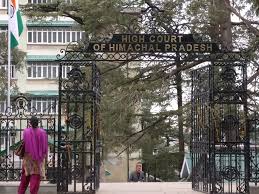
In the case of Surinder Sharma vs. Parveen Kalia & Another (2026), the High Court of Himachal Pradesh quashed a defamation complaint against a shopkeeper and a journalist, ruling that reporting on police proceedings and making good-faith complaints to authorities does not constitute defamation.

Case Background

The dispute involved priests from the Mata Chintpurni Shrine who filed a joint criminal complaint for defamation (Sections 500 and 120-B of the IPC) against a business rival (Rajesh Kalia) and a news reporter (Surinder Sharma). The priests alleged that Kalia had filed false police reports against them and that Sharma had published these “baseless” allegations in a newspaper, damaging their reputation.

Key Legal Findings

  • Maintainability of Joint Complaints: The Court clarified that a joint complaint filed by multiple people is legally maintainable under Section 200 of the CrPC if they share the same cause of action. This is because, under Section 13 of the General Clauses Act, the word “complainant” in the singular includes the plural.
  • Jurisdiction and Inquiry: The petitioner argued that a mandatory inquiry under Section 202 of the CrPC was required because the accused resided outside the Magistrate’s sub-division. The Court rejected this, holding that since both the court and the accused were within the same district, the Magistrate’s jurisdiction applied, and a special inquiry was unnecessary.
  • Protection for Police Complaints: The Court ruled that accusations made in good faith to a lawful authority (such as the police) for the protection of interests are protected under Exceptions 8 and 9 of Section 499 of the IPC. Consequently, filing a police report is not a defamatory act.
  • Journalistic Freedom and the FIR: The Court emphasized that faithful reporting of the contents of an FIR or a registered crime is an exercise of the freedom of speech and the press guaranteed under Article 19(1)(a) of the Constitution. The public has a right to know about events in the public domain, and reporting factually correct information—even if it causes “discomfort” to the subjects—cannot be termed defamatory.
  • Quashing of Proceedings: Applying the principles from State of Haryana v. Bhajan Lal, the Court found that the allegations, even if taken at face value, did not disclose a prima facie offence of defamation.

Conclusion

The High Court allowed the petitions and quashed the complaint and the subsequent summoning orders. It held that allowing the trial to continue would be an abuse of the process of the court, as both the initial police complaint and the newspaper’s reporting were legally protected actions.

STPL (Web) 2026 HP 228

Surinder Sharma V. Parveen Kalia & Another (D.O. J. 12.05.2026)

Loading Viewer...
Next Story

Will Validity: Earlier will superseded by later

In the case of Laxmi Dutt vs. Beasa Devi & Others (2026), the High Court of Himachal Pradesh upheld the validity of a Will dated July 6, 1997, ruling that it superseded an earlier Will from 1994.

Case Background

The dispute involved two competing Wills executed by the late Bhadar Singh. The plaintiff (Bhadar Singh’s son) propounded the 1997 Will, which distributed the property equally between himself and the defendant (Bhadar Singh’s grandson). The defendant relied on a 1994 Will that bequeathed the property solely to him.

While the Trial Court initially rejected the 1997 Will, claiming it was “shrouded in suspicious circumstances” due to the witnesses’ affinity with the plaintiff, the First Appellate Court reversed this decision. The High Court subsequently affirmed the Appellate Court’s judgment.

Key Legal Findings

  • Witness Affinity is Not Suspicious: The Court held that associating known and trusted persons—such as relatives, family friends, or longtime lawyers—as attesting witnesses does not constitute a “suspicious circumstance” per se. It is natural for a testator to invite reliable, known individuals rather than strangers to witness a Will.
  • Equitable Distribution: The Court noted that the 1997 Will provided an equitable distribution of property between the parties. This lack of exclusion for natural heirs helped dispel claims of undue influence or fraud.
  • Requirement to Plead Suspicions: The High Court emphasized that “suspicious circumstances” must be specifically pleaded and proved. They cannot be inferred by the court for the first time if the foundation for such a claim was not laid in the original pleadings.
  • Due Diligence in Amendments: The Court dismissed an application to amend the plaint during the appeal because the plaintiff failed to show “due diligence”. It clarified that “inadvertence” is a form of negligence and does not satisfy the legal requirement for allowing late-stage amendments.

Scope of Judicial Review

The High Court reaffirmed that under Section 100 of the CPC, its jurisdiction in a second appeal is limited. It cannot re-appreciate evidence to disturb findings of fact unless those findings are shown to be “wholly perverse” or contrary to settled law. The Court concluded that the execution and attestation of the 1997 Will were properly proved according to the Indian Succession Act and the Indian Evidence Act.

STPL (Web) 2026 HP 227

Laxmi Dutt V. Beasa Devi & Others (D.O.J. 12.05.2026)

Loading Viewer...

Next Story

Will Not Valid: Execution date after Death

In the case of Brahma Ram vs. Kamla Devi &Ors. (2026), the High Court of Himachal Pradesh upheld the concurrent findings of the lower courts, declaring a propounded Will invalid due to numerous suspicious circumstances.

Case Background

The plaintiff, the sister of the deceased (Puran Chand), challenged a Will dated April 22, 1991, which was produced by the defendant. The plaintiff argued that the Will was forged because her brother had actually died on April 21, 1991, a day before the alleged execution of the document. The defendant maintained that Puran Chand was alive on the 22nd, executed the registered Will in Mandi, and died on April 23, 1991, while undergoing treatment at a hospital.

Suspicious Circumstances surrounding the Will

The Court found that the defendant (the propounder) failed to discharge the heavy legal burden of removing suspicions surrounding the Will’s execution. Key factors included:

  • Physical Impossibility: Medical records indicated the deceased suffered from cardio-respiratory failure and was admitted to the hospital 15 days before his death. The Court found it highly improbable that a person in such a critical condition could travel alone to Mandi to execute a Will and return to die within 24 hours.
  • Contradictory Recitals: The Will claimed the defendant was taking care of the deceased, yet witnesses (including those for the defense) testified that the deceased lived alone and cooked for himself.
  • Unexplained Identification: The Will included an alias for the deceased (“Jogi”) that was later scored off, and no witness could explain why that name was used or that Puran Chand was ever known by that alias.
  • Participation of Beneficiaries: Relatives of the beneficiary were found to have taken an active part in the execution and attestation of the Will.

Key Legal Findings

  • Admissibility of Public Records: The Court held that the Panchayat death register, which recorded the death as April 21, was a public document admissible under Section 35 of the Indian Evidence Act and carried significant weight.
  • Admissions in Pleadings: Under Order 8 Rule 5 of the CPC, the plaintiff’s relationship as the sister was deemed admitted because the defendant did not specifically deny it in his written statement.
  • Adverse Inference: The Court ruled that no “adverse inference” could be drawn against the plaintiff for not appearing as a witness because her relationship was not in dispute and the legal burden was on the defendant to prove the Will’s validity.
  • Scope of Second Appeal: Reaffirming settled law under Section 100 CPC, the High Court stated it cannot re-appreciate evidence or disturb concurrent findings of fact unless they are “patently perverse”.

Conclusion

The High Court dismissed the appeal, affirming that the Will was a product of suspicious circumstances and that the lower courts had correctly applied the law in declaring it invalid.

STPL (Web) 2026 HP 226

Brahma Ram V. Kamla Devi &Ors. (D.O.J. 12.05.2026)

Loading Viewer...

Next Story

Service Law: Rights of Persons with Disabilities – Rejection based on law already declared unconstitutional

In the case of Hem Lata and Others vs. State of Himachal Pradesh and Anr. (2026), the High Court of Himachal Pradesh addressed multiple petitions filed by employees seeking regular appointment from their initial date of service under the Rights of Persons with Disabilities (RPwD) Act, 2016.

Case Background and Claims

The petitioners sought regular appointment benefits based on the provisions of the RPwD Act and several prior judicial precedents, such as Nitin Kumar vs. State of Himachal Pradesh and Pushpa Devi vs. Himachal Pradesh University. Their claims had been previously rejected by the State authorities based on the Himachal Pradesh Recruitment and Conditions of Service of Government Employees Act, 2024 (Act No. 23 of 2025).

Quashing of the 2024 Act

The Court noted that the constitutionality of the 2024 Act had already been adjudicated in the landmark judgment of Devinder Kumar & others vs. State of H.P. (April 2026). In that ruling, the Act was quashed and set aside as unconstitutional. Consequently:

  • All actions, omissions, or orders by the State—including those denying benefits or proposing recoveries—based on the quashed 2024 Act were declared illegal, unconstitutional, and null.
  • The specific office orders that had rejected the petitioners’ claims were quashed and set aside.

Conclusion and Final Order

The High Court disposed of the petitions with the following instructions to the State authorities:

  • Fresh Reconsideration: The Competent Authority is directed to reconsider the petitioners’ claims afresh, specifically applying the provisions of the RPwD Act and binding judicial precedents.
  • Deadline for Decision: A reasoned and speaking order must be passed by June 30, 2026, after granting the petitioners an opportunity to be heard.
  • Survival of Grievances: If any grievances remain after this fresh consideration, the petitioners are at liberty to pursue further legal remedies.

STPL (Web) 2026 HP 225

Hem Lata And Others V. State of Himachal Pradesh And Anr. (D.O.J. 11.05.2026)

Loading Viewer...

Next Story

Service Law: Law already declared Unconstitutional – Rejection of petition based on it quashed – Representation

In the case of Dr. Sanjay Kumar Gupta vs. State of Himachal Pradesh and Ors. (2026), the High Court of Himachal Pradesh addressed a challenge to an office order that rejected the petitioner’s claim for service benefits based on the now-defunct Himachal Pradesh Recruitment and Conditions of Service of Government Employees Act, 2024,.

Quashing of the 2024 Act

The Court noted that the constitutionality of the 2024 Act (Act No. 23 of 2025) had already been adjudicated in the landmark case of Devinder Kumar & others vs. State of H.P. (April 2026), where the Act was quashed and set aside,. As a result:

  • All actions, instructions, or orders by the State that denied benefits or proposed recoveries based on this Act were declared illegal, unconstitutional, and null.
  • The specific office order rejecting the petitioner’s claim was quashed.

Settled Principles for Service Claims

The Court directed the competent authority to re-evaluate the petitioner’s claim by June 30, 2026, applying five “settled principles of law”,:

  1. Judicial Mandates: Benefits already adjudicated by a court in favor of an employee must be extended, regardless of any internal policies.
  2. Contract Service (without full R&P Rules): Employees appointed on contract without strictly following regular Recruitment and Promotion (R&P) Rules, but later regularized without interruption, are entitled to have that period count toward pensionary and retiral benefits. They receive notional increments for the contract period to determine their last pay drawn, but they do not receive back-arrears or seniority for that time.
  3. Contract Service (with full R&P Rules): Employees appointed via a formal process under Article 309 (open competition with wide publicity) are entitled to all consequential benefits, including financial increments and seniority from their initial date of contract appointment,,.
  4. Financial Restrictions: For recurring claims like pensions, financial benefits may be restricted to three years prior to the date of the claim, unless a specific court order directs otherwise,.
  5. Seniority Claims: Seniority must be decided based on service jurisprudence, taking into account the timing of the claim and the rights of any affected third parties,.

Conclusion

The High Court disposed of the petition with instructions for the State to issue a reasoned, speaking order by the end of June 2026,. The petitioner was also granted liberty to file a fresh petition should any grievances survive after the new decision.

STPL (Web) 2026 HP 224

Dr. Sanjay Kumar Gupta V. State of Himachal Pradesh And Ors.(D.O.J. 11.05.2026)

Loading Viewer...

Recent Articles