Ejectment: TPA – Validity of Short Notice U/s 106(3)

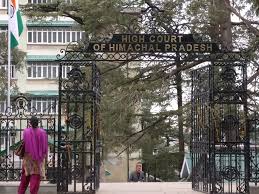
In the case of Lekh Raj v. Kamal Kumar (2026), the High Court of Himachal Pradesh restored a trial court’s decree for the ejectment of a tenant, ruling that a notice to quit is not invalid simply because the period mentioned in it is shorter than the statutory requirement, provided the suit is filed after that period expires.

The following is a summary of the judgment:

Case Background

The plaintiff (Lekh Raj) filed a suit for the recovery of rent arrears and the ejectment of the defendant from a shop in Una, H.P.. The plaintiff served a notice on January 18, 2005, requesting the tenant to vacate by the end of January 2005. While the Trial Court decreed the suit in full, the First Appellate Court set aside the order for possession, concluding that the notice was invalid because it provided only 14 days of notice instead of the 15 days required under Section 106 of the Transfer of Property Act (TPA).

Key Findings of the Court

The High Court set aside the appellate court’s decision based on the following legal principles:

  • Validity of Short Notice (Section 106(3) TPA): The Court highlighted that under the amended Section 106(3) of the TPA, a notice is not deemed invalid merely because the period mentioned falls short of 15 days, as long as the suit or proceeding is filed after the expiry of the 15-day period. In this case, although the notice gave only 14 days, the suit was filed on February 17, 2005—well after the 15-day window from the receipt of the notice.
  • Waiver of Objections: The Court held that any objection regarding the insufficiency or invalidity of a notice must be specifically pleaded in the written statement at the earliest opportunity. Because the defendant failed to specifically challenge the 15-day period in his initial response, the objection was deemed waived and could not be raised for the first time during the appeal.
  • Common-Sense Interpretation: Reaffirming settled law, the Court stated that notices to quit must be construed in a “common sense way” and not in a “hyper-technical” or “hyper-critical” manner with a desire to find faults. The test is what the notice would mean to the specific tenant who is conversant with the facts, not how a stranger would interpret it.
  • Error of the Lower Appellate Court: The High Court found that the First Appellate Court erred by entertaining a plea that had been waived and by failing to account for the legislative intent of the amended TPA, which was meant to “plug the loopholes” and prevent technicalities from defeating substantive justice.

Legal Conclusion

The High Court concluded that the tenancy had been lawfully terminated. The appeal was allowed, the First Appellate Court’s judgment was set aside, and the original decree directing the defendant to hand over vacant possession of the suit premises was restored.

STPL (Web) 2026 HP 135

Lekh Raj (Since Deceased) Through Lrs. V. Kamal Kumar (D.O.J. 22-04-2026)

Loading Viewer...

Next Story

Cancellation of Distillery’s License: Highly Disproportionate Given the “Doubtful” Nature of Alleged Offenses.

In the judgment of State of H.P. & Others v. Mars Bottlers Una & Another, the High Court of Himachal Pradesh dismissed a review petition filed by the State, upholding a previous order that quashed the cancellation of a distillery’s license. The Court reaffirmed that the State’s refusal to renew the license was based on a misapplication of excise rules and that the penalties imposed were highly disproportionate given the “doubtful” nature of the alleged offenses.

  1. Applicability of Rules: Old Himachal vs. Una

A central conflict in the case was which version of the Punjab Distillery Rules, 1932 applied to the Una area.

  • The State’s Argument: The State contended that a 1994 notification amended the rules to prohibit license renewals if an application was not filed at least 90 days before expiry.
  • The Court’s Finding: The Court ruled that because Una was transferred from Punjab to Himachal Pradesh via the Punjab Reorganisation Act, 1966, it remained governed by the laws in force at the time of the transfer unless specifically modified.
  • The 1963 Rules: The Court found that the 1994 amendment applied only to “Old Himachal”. For the Una area, the 1963 version of the Punjab Distillery Rules remains in force, which expressly allows the Commissioner to renew a license even if the application is filed late, provided a new license fee is paid.
  1. Disproportionate Penalties and Doubtful Evidence

The State challenged the Court’s earlier direction to compound the offenses, arguing that the recovery of over 4,274 bulk liters of illicit liquor was a non-compoundable offense under the H.P. Excise Act. The Court rejected this for several reasons:

  • Unreliable Recovery: The Court found the story of the liquor recovery “highly improbable” and “unreliable”. There was no physical evidence of the liquor being recovered from the truck, which was found abandoned, and the quantity of liquor was reported missing even before the police took action.
  • Contradictions in Reports: There were irreconcilable differences between the raiding party’s initial report (which claimed the liquor was bottled at the plant) and the FIR registered ten days later (which claimed it was not).
  • Judicial Review: The Court exercised its inherent powers under Article 226 to interfere with administrative actions that are found to be “highly disproportionate” and based on “faulty investigation”.
  1. Final Ruling and Directives

The High Court concluded that there was no error in its original judgment that warranted a review.

  • Dismissal of Review: The State’s petition was dismissed, though a clerical error in the previous judgment (para 36) was ordered to be deleted.
  • Direction for Renewal: The Commissioner, State Taxes and Excise, was directed to determine an appropriate compounding fee and renew the respondent’s license without requiring a fresh application.
  • Equitable Relief: The Court emphasized that a business should not suffer “irreparable hardship” due to the State’s administrative errors or unreliable allegations.

STPL (Web) 2026 HP 156

State Of H.P. & Others V. Mars Bottlers Una & Another (D.O.J.08-04-2026)

Loading Viewer...

Next Story

Service Law: High Court Limits Pay Arrears Due to 15-Year Delay

Service Parity and the Doctrine of Laches: High Court Limits Pay Arrears Due to 15-Year Delay

In the judgment of Madan Lal and Others v. State of Himachal Pradesh and Another, the High Court of Himachal Pradesh dismissed a petition seeking full back wages based on pay parity. While the Court acknowledged the petitioners’ right to the same pay scale as their juniors, it ruled that actual monetary benefits (arrears) must be restricted to a three-year period due to the petitioners’ failure to approach the court in a timely manner.

Case Background: The Pay Scale Anomaly

The petitioners were Auditors who found themselves in an “anomalous situation” following a previous court ruling in the case of Sanjeev Kumar Mahajan.

  • The Previous Case: In 2009, the High Court directed the State to grant certain Auditors a higher pay scale (Rs. 1800-3200) based on the principle of “equal pay for equal work”.
  • State’s Correction: To fix the resulting disparity where juniors (who were parties to the 2009 case) were earning more than their seniors, the State issued an order on September 30, 2010, extending the higher pay scale to all Auditors.
  • The Restriction: However, the State granted this benefit notionally from the original due date but restricted actual cash arrears to a period of only three years prior to the 2010 order.

Key Legal Principles and Findings

The petitioners challenged this restriction, seeking full arrears from the date they joined the department. The Court rejected their claim based on several established legal doctrines:

  • The “Vigilant” Litigant: The Court distinguished the petitioners from their colleagues in the Sanjeev Kumar Mahajan case, noting that the latter had approached the court “well within time”. In contrast, the current petitioners had waited nearly 15 years to seek judicial relief, relying only on administrative representations which do not legally extend the period of limitation.
  • Continuing Wrongs and the Tarsem Singh Principle: Relying on the Supreme Court precedent Union of India v. Tarsem Singh, the Court explained that while pay-related grievances are “continuing wrongs” that can be heard despite delays, the consequential financial relief is generally capped.
  • Three-Year Limit on Arrears: The Court reaffirmed that in cases of long-delayed service claims, High Courts should restrict arrears to three years prior to the filing of the petition or the administrative order to prevent stale claims from burdening the state.
  • Fairness of the State’s Order: The Court found that the State had acted fairly and followed the law (specifically the Jai Dev Gupta precedent) by voluntarily correcting the anomaly for non-litigants while limiting the financial liability caused by their delay.

Final Ruling

The High Court concluded that the petition was “bereft of any substance”. It ruled that the petitioners could not claim identical arrears to those who were more vigilant in pursuing their legal rights. The petition was dismissed, and the State’s restriction of arrears to a three-year period was upheld.

STPL (Web) 2026 HP 155

Madan Lal And Others V. State of Himachal Pradesh And Another (D.O.J.08-04-2026)

Loading Viewer...

Next Story

Governance Over Sentiment: High Court Upholds Expansion of Municipal Council Jawalamukhi

Governance over Sentiment: High Court Upholds Expansion of Municipal Council Jawalamukhi

In the judgment of Ravi Chand v. State of Himachal Pradesh &Ors., the High Court of Himachal Pradesh upheld a government notification including the villages of Darang and Chiru within the Municipal Council of Jawalamukhi. The Court ruled that the reorganization of municipal boundaries is a matter of statutory governance and integrated urban planning, and that local opposition or the potential loss of rural subsidies does not render such a transition illegal.

Case Background: Resistance to Urban Inclusion

The petitioner, a resident of the affected area, challenged the inclusion of these villages on several grounds:

  • Economic Impact: He argued that 95% of the residents are poor farmers dependent on agriculture and rural subsidies like MGNREGA, which would be lost upon becoming part of an urban body.
  • Lack of Infrastructure: The petitioner claimed that the existing Nagar Panchayat Jawalamukhi already failed to provide basic services—citing a lack of toilets, shopping complexes, and waste disposal systems—and that adding more territory would aggravate these problems.
  • Community Consent: He contended that the inclusion was done without the consent of the community or the local Gram Panchayat.

Key Judicial Findings and “Due Process”

The Court emphasized that the State followed all legal requirements, particularly after a previous round of litigation directed the government to provide a personal hearing to the objectors.

  • Gram Panchayat Resolutions are not Vetoes: The Court held that while resolutions from local bodies reflect community sentiment, they do not operate as a “statutory veto” against the State’s power to reorganize municipalities for administrative feasibility.
  • Policy Consequences of Transition: The Court noted that the loss of rural benefits is a standard “consequential aspect of transition” from rural to urban frameworks and cannot override statutory governance objectives.
  • Access to Urban Schemes: To balance the loss of rural aids, the Court highlighted that residents would become eligible for urban welfare programs, such as the National Urban Livelihoods Mission (NULM) and Pradhan Mantri Awas Yojana (Urban).
  • Mitigation of Hardship: The Court observed that the State demonstrated “due application of mind” by excluding certain other areas based on field reports and granting a three-year property tax relaxation to the newly included residents to ease the financial transition.

The Rationale for Planned Development

The Court rejected the argument that an area must already have industries or hospitals to be included in a municipality. Instead, it ruled that the very absence of infrastructure reinforces the rationale for inclusion, as it enables “regulated planning, civic services, sanitation, and solid waste management” that are necessary for future growth.

Final Ruling

Finding no arbitrariness or jurisdictional defect in the State’s decision, the High Court concluded that the objections were largely “apprehensive and general in nature”. The petition was dismissed, and the notification dated February 25, 2026, was upheld as legally valid.

STPL (Web) 2026 HP 154

Ravi Chand V. State of Himachal Pradesh &Ors.(D.O.J. 06-04-2026)

Loading Viewer...

Next Story

Transition to Urban Governance: Constitution of Nagar Panchayat Barsar Held Valid

Transition to Urban Governance: High Court Upholds Constitution of Nagar Panchayat Barsar

In the judgment of Balbir Singh &Ors. v. State of Himachal Pradesh &Ors., the High Court of Himachal Pradesh upheld the validity of notifications creating Nagar Panchayat Barsarin District Hamirpur. The Court ruled that the Governor has broad discretion under Article 243Q of the Constitution to declare an area as “transitional” based on developmental needs and that all socio-economic criteria do not need to be satisfied simultaneously.

The Dispute: Inclusion of Rural Wards in Urban Fold

The petitioners, residents of Gram Panchayat Bani, challenged the inclusion of their area in the newly formed Nagar Panchayat. Their primary objections included:

  • Rural Character: They argued that the inhabitants are engaged in animal husbandry and agriculture, and that many are below the poverty line.
  • Financial Burden: They expressed concern over the higher taxes and financial costs associated with being part of a Nagar Panchayat.
  • Lack of Constitutional Compliance: The petitioners alleged that the state failed to specify or satisfy the mandatory factors under Article 243Q, such as population density, revenue generation, and the percentage of non-agricultural employment.

Key Legal and Factual Findings

The Court rejected the challenge, emphasizing the broad administrative discretion granted to the state for urban planning:

  • Interpretation of Article 243Q(2): The Court held that it is not mandatory for all factors (population, density, revenue, non-agricultural employment, etc.) to exist for the creation of a municipal area. The provision allows the Governor to consider “such other factors as he may deem fit”.
  • Focus on Development: The Court found that the proposal to create the Nagar Panchayat for “better development and well-organized arrangements” was a constitutionally permissible “other factor”.
  • Evidence of Urbanization: The administrative record demonstrated that the area already possessed significant urban infrastructure, including:
    • A population of 7,132 and annual revenue of approximately ₹19.75 lakhs.
    • Institutional facilities such as a Civil Hospital, SDM Office, Courts, four Senior Secondary Schools, six banks, and a B.Ed. College.
    • Significant economic activity driven by a high footfall of tourists and devotees visiting the nearby Baba Balaknath Ji Temple.
  • Adherence to Due Process: The state followed the required legal procedure by inviting objections, providing a personal hearing to the petitioners (pursuant to a previous court order), and issuing a reasoned “speaking order” before finalization.

Final Ruling

The High Court concluded that there was no arbitrariness or illegality in the state’s decision. The petition was dismissed, affirming the constitutional validity of the transition from a Gram Panchayat to Nagar Panchayat Barsar.

STPL (Web) 2026 HP 153

Balbir Singh &Ors. V. State of Himachal Pradesh &Ors. (D.O.J. 06-04-2026)

Loading Viewer...

Recent Articles