Recalling Witnesses: To Prevent Failure of Justice

Justice Over Oversight: High Court Upholds Recalling Witnesses During Final Arguments to Prevent Failure of Justice

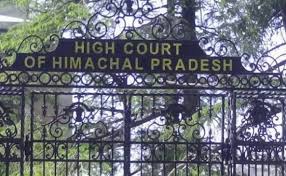
In the judgment of Vijay Singh v. State of HP, the High Court of Himachal Pradesh affirmed the power of a Trial Court to recall material witnesses even at the stage of final arguments. The Court ruled that an administrative oversight by a prosecutor—such as failing to show a weapon of offense to medical and forensic experts—is a rectifiable error rather than an “irreparable lacuna” that would bar the recall.

The Procedural Impasse

The petitioner, accused of murder and other offenses under the IPC and Arms Act, challenged a Trial Court order allowing the prosecution to recall two key witnesses: Dr. Sangeet Dhillon (PW17), who conducted the post-mortem, and Naseeb Singh Patial (PW41), a forensic expert.

  • The Oversight: During their initial examination, the prosecution failed to show the recovered revolver and bullets to these witnesses to confirm if the injuries were caused by that specific weapon.
  • The Timing: The application to recall was filed after arguments had already partly commenced, roughly 15 to 26 months after the witnesses were first examined.
  • The Challenge: The accused argued that the delay was inordinate and that the prosecution was merely trying to fill a “lacuna” in its case, causing grave prejudice to the defense.

Legal Principles: The Scope of Section 311 Cr.P.C.

The Court’s decision centered on a purposive reading of Section 311 of the Cr.P.C. (now Section 348 of the BNSS) and Section 165 of the Evidence Act.

  • Wide Discretionary Power: The Court emphasized that the power to recall is phrased in the “widest possible terms” (“at any stage”) and is not constrained by the closure of evidence.
  • Mandatory Obligation: The provision is divided into two parts; while the first is discretionary, the second is obligatory, mandating the court to recall a witness if their evidence is “essential to the just decision of the case”.
  • The “Discovery of Truth”: The Court held that a trial judge is not a “hapless bystander” but has an active role in unearthing the truth to ensure justice is not derailed by technical errors.

Distinguishing Oversight from a “Lacuna”

A critical aspect of the ruling was the definition of a legal “lacuna”.

  • Inherent Weakness: A lacuna refers to an inherent weakness in the prosecution’s case.
  • Human Error: In contrast, the failure of a Public Prosecutor to elicit a specific answer or show a physical exhibit is a “fallout of an oversight”. The Court noted that “to err is human” and parties should not be foreclosed from correcting inadvertent mistakes.
  • No Prejudice: Correcting such an error does not change the nature of the case but merely allows for the appreciation of existing evidence (like the revolver already on record).

Indispensability of Medical Opinion

The Court highlighted that in cases involving firearms, it is the duty of both the prosecution and the Court to invite a medical witness’s opinion on the weapon of offense.

  • Forensic Necessity: Recalling the doctor was essential to confirm if the injuries found during the post-mortem could have been caused by the revolver produced by the prosecution.
  • Expert Identification: Recalling the forensic expert was necessary to verify that the revolver currently on record was the same one he had test-fired in the laboratory.

Conclusion

The High Court dismissed the petition, concluding that the essentiality of evidence outweighs the duration of the delay or the stage of the trial. The ruling reinforces that the primary function of a criminal court is the administration of justice rather than counting the errors committed by the parties.

Himachal Pradesh High Court

Vijay Singh V. State of HP (D.O.J. 23-02-2026)

STPL (Web) 2026 HP 36

Next Story

Signed Statement Barred Land Demarcation Challenge

The Finality of the Pen: How a Signed Statement Barred a Land Demarcation Challenge

In the case of Balak Ram v. State of H.P. & Ors., the High Court of Himachal Pradesh addressed the legal consequences of a party accepting and signing off on land demarcation proceedings conducted by revenue officials.

Case Overview

The petitioner, Balak Ram, initiated an application for the demarcation of land comprised in Khasra Nos. 48 and 270 in District Mandi. The demarcation was carried out on February 18, 2019, by a Field Kanungo in the presence of the affected parties. On that day, the petitioner and other parties signed a joint statement confirming that the demarcation was conducted according to law, using authentic revenue records, and that the determined boundaries were acceptable to them.

The Dispute

Despite his earlier acceptance, the petitioner later filed objections against the demarcation report. He claimed that:

  • Statements regarding fixed points were not recorded before the process began.
  • The demarcation was conducted in the absence of other co-sharers.

The petitioner’s objections were dismissed by three successive revenue authorities: the Assistant Collector Second Grade, the Sub Divisional Collector, and the Divisional Commissioner. He then approached the High Court seeking to set aside these concurrent orders.

The Court’s Ruling

Justice Jyotsna RewalDua dismissed the petition based on the following key legal principles:

  • Principle of Estoppel: The Court held that since the petitioner was present at the spot, stated that he understood the demarcation, and signed a statement accepting it as correct, he was estopped from later challenging it on the grounds of procedural non-compliance.
  • Statutory Bar under Section 107(7): The Court highlighted Section 107(7) of the H.P. Land Revenue Act, 1954 (inserted in 2023), which explicitly states that if all interested parties agree to and accept the limits defined by a Revenue Officer without raising objections during the proceedings, no appeal shall lie against that order.
  • No Standing for Third Parties: Regarding the absence of other co-sharers, the Court ruled that the petitioner could not “plead a cause for others” who had not themselves filed objections or felt aggrieved by the proceedings.

Conclusion

The High Court affirmed that once a party categorically accepts a demarcation report through a signed statement, they cannot subsequently seek to invalidate it. The petition was dismissed as being devoid of merit.

STPL (Web) 2026 HP 58

BalakRam V. State of H.P. & Ors. (D.O.J. 02-03-2026)

Next Story

Acknowledgment of Civil Liability is Not a Confession Under Criminal Law

Acknowledgment of Debt is Not a Confession: High Court Upholds Acquittal in Embezzlement Case

In the judgment of State of Himachal Pradesh v. Shankar Dutt, the High Court of Himachal Pradesh upheld the acquittal of a salesman accused of criminal breach of trust. The Court ruled that the mere deposit of a portion of an alleged shortfall and an undertaking to pay the balance does not constitute a confession of criminal guilt, but rather an acknowledgment of civil liability.

The Dispute: Audit Shortfalls and Alleged Embezzlement

The respondent, a salesman for the Sihal Agriculture Cooperative Society, was accused of embezzling ₹1,24,718.32. The trial court originally convicted him under Section 408 of the IPC (Criminal breach of trust by clerk or servant), placing heavy reliance on Exhibit P-8—a document where the accused had deposited ₹46,000 and promised to pay the remainder of the audit shortfall. However, the first Appellate Court set aside the conviction, leading the State to appeal to the High Court.

Audit Inaccuracies and Perished Stock

The High Court found that the prosecution’s case suffered from significant procedural and factual flaws:

  • Lack of Physical Verification: The Audit Inspector (PW-6) admitted he never conducted a physical verification of the store’s articles and relied solely on registers provided by the Secretary.
  • Unaccounted Perishables: Witnesses for the society admitted that damaged or “perished” items were removed from the store. However, no inventory was prepared for these removals, and the auditor was never informed about them. Consequently, items that were simply thrown away as waste were incorrectly treated as “misappropriated” sales in the audit.
  • Procedural Lapses: Despite the management committee knowing about alleged discrepancies over a long period, no formal notices were ever issued to the accused.

Legal Principles: Civil Liability vs. Criminal Offence

The Court emphasized the high burden of proof required for a conviction under Section 408:

  • The “Dishonesty” Requirement: Under Section 405, the prosecution must prove that the accused dishonestly misappropriated or converted property to his own use. The Court ruled that there was “no evidence” showing the accused used the articles or money for his personal benefit.
  • Rejection of “Confession” (Ext. P-8): The Court held that Exhibit P-8 was merely an acknowledgment of an outstanding amount based on an audit report. Paying a debt or asking for time to clear a liability “cannot be construed as an admission of guilt” for a crime.
  • Debt is Not a Crime: The Court clarified that the mere failure to discharge an admitted liability or pay an acknowledged debt is insufficient to prove criminal breach of trust.

Final Ruling

The High Court concluded that the prosecution failed to prove “dishonest intent” beyond a reasonable doubt. Finding no illegality in the appellate court’s decision to acquit, the High Court dismissed the State’s appeal and upheld the respondent’s acquittal.

Himachal Pradesh High Court

State of Himachal Pradesh V. Shankar Dutt (D. O. J. 28-02-2026)

STPL (Web) 2026 HP 57

Next Story

Service Law: Delay and Laches Bar Stale Employment Claim

Delay and Laches Bar Stale Employment Claim: High Court Dismisses 15-Year-Old Grievance

In the judgment of Sh. Shamsher v. State of Himachal Pradesh, the High Court of Himachal Pradesh dismissed a writ petition seeking government employment, ruling that a claim filed 15 years after the cause of action is legally stale. The Court held that “mere representations” to authorities cannot revive a dead claim and that the State is not liable for the employment terms of a private entity.

The Dispute: Takeover of a Private School

The petitioner served as a Peon in a privately managed institution, Acharya Vinoba Bhave Senior Secondary School, from 1996 to 1999. When the Education Department took over the school in 1999, the petitioner’s services were dispensed with. Although the petitioner claimed to have made continuous verbal and written requests for employment to the Education Authorities between 1999 and 2014, he only approached the Court for relief in late 2014/early 2015.

Legal Reasoning: The Doctrine of Delay and Laches

Justice Ajay Mohan Goel rejected the petition based on several fundamental legal principles:

  • Time-Barred Action: The Court found that the cause of action accrued in 1999, yet the petitioner “slept over his right” for over a decade. The Court viewed the filing of the petition as an “afterthought” rather than a timely pursuit of justice.
  • Representations Do Not Stop Time: The Court emphasized that making repeated administrative requests or representations does not extend the limitation period or revive a claim that has already become stale.
  • Lack of Evidence: Despite claiming he had made many written requests over 15 years, the petitioner failed to append any evidence of these communications to his petition, aside from one document dated 2015.

No Privity with the State

The Court clarified the legal relationship (or lack thereof) between the petitioner and the State:

  • Private Employment: The petitioner’s original employment was with a private school, which ceased to exist as a private entity upon the government takeover.
  • No Automatic Right: There is no automatic right to government employment simply because a private employer’s institution is taken over by the State.
  • Non-Liability of the State: The Court ruled that the State of Himachal Pradesh and the Director of Education cannot be held responsible for the acts or omissions of a previous private employer, especially when that private employer was not even impleaded as a party in the case.

Conclusion

Finding no merit in the petition due to the extraordinary delay and lack of legal grounds, the High Court dismissed the case. This ruling reinforces the principle that the Court’s inherent powers under Article 226 will not be exercised to assist those who are not vigilant about their legal rights.

Himachal Pradesh High Court

Shamsher V. State of Himachal Pradesh and Another (D.O.J. 24-02-2026)

STPL (Web) 2026 HP 56

Next Story

Service Law: High Court Upholds 60-Year Age Limit for BRO Workers

Standardizing Retirement for Casual Labour: High Court Upholds 60-Year Age Limit for BRO Workers

In the judgment of Nokh Ram and Others v. Union of India, the High Court of Himachal Pradesh ruled that Casual Paid Labourers (CPLs) do not have a vested legal right to continue their engagement beyond the age of 60. The Court held that applying the standard superannuation age of 60 years to casual workers is neither arbitrary nor illegal, particularly in roles requiring significant physical strength.

The Dispute: Engagement without a “Retirement Age”

The petitioners were Casual Paid Labourers working under the Border Road Organization (BRO/GREF). Upon reaching the age of 60, their services were verbally discontinued by the authorities.

  • The Petitioners’ Argument: They contended that because they were casual laborers rather than regular employees, there was no fixed retirement age in their service rules. They argued they should be allowed to serve as long as they remained medically fit.
  • The State’s Defense: The Union of India argued that CPLs are engaged for short periods (typically 179 days) and that existing policies—such as those of the H.P. Building and Other Construction Workers Welfare Board—limit engagement to individuals between 18 and 60 years of age.

Key Legal Principles Established

Justice Ajay Mohan Goel dismissed the petitions, establishing the following points:

  • Lack of Vested Right: As casual workers, the petitioners were not regular employees and therefore did not possess a guaranteed tenure or a right to serve indefinitely. The Court found no “contemporaneous record or documents” to support the claim that they could work past 60.
  • Judicial Notice of Superannuation: The Court took judicial notice of the fact that 60 years is the standard age of superannuation for Central Government employment. It held that applying this same benchmark to casual laborers is a reasonable and valid administrative action.
  • Administrative and Physical Necessity: The Court noted that the petitioners’ work involved the upkeep of the Border Road Organization, which is physically demanding. It ruled that physical strength is a crucial factor that authorities must consider, making the age of 60 a logical cut-off point for such labor-intensive tasks.

Conclusion

The High Court concluded that the act of discontinuing the petitioners’ services at age 60 could not be faulted in law. The petitions were dismissed, affirming that even in the absence of explicit retirement rules for casual staff, administrative authorities may rely on established government norms and the nature of the work to set reasonable age limits.

Himachal Pradesh High Court

Nokh Ram And Others V. Union of India And Others (D.O.J. 28-02-2026)

STPL (Web) 2026 HP 55

Recent Articles