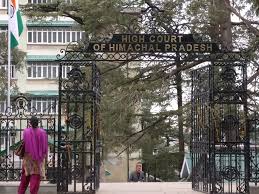
Quashing: Sexual Intercourse Without Consent – Quashed on Compromise

In the judgment of Bhanu Pratap Singh v. State of H.P., the High Court of Himachal Pradesh quashed an FIR involving allegations of sexual intercourse without consent (rape), ruling that even in heinous cases, the court may exercise its inherent powers to end proceedings if a voluntary compromise makes the chance of conviction “remote and bleak”.

The Allegations and Relationship Context

The case involved the petitioner, a Property Manager in Manali, and the respondent (victim), a social media marketing professional. According to the status report, the two developed a friendship in Manali and later maintained a consensual physical relationship. However, an FIR was registered on December 9, 2025, alleging that the petitioner committed sexual intercourse with the respondent without her consent on a subsequent date.

The Compromise and Judicial Review

While the petitioner was in judicial custody, the parties entered into a Compromise Deed in January 2026. The victim appeared before the Court and stated on oath that she had settled the dispute of her own free will, was not under any influence, and did not wish to pursue the criminal case.

The State opposed the petition, arguing that rape is a heinous crime and should not be quashed based on a private settlement.

Legal Reasoning: Section 528 of the BNSS

Justice Jiya Lal Bhardwaj analyzed the petition under Section 528 of the Bharatiya Nagarik Suraksha Sanhita (BNSS), 2023, which preserves the same inherent powers as Section 482 of the former CrPC to “secure the ends of justice” or “prevent abuse of the process of any Court”.

Drawing on Supreme Court precedents such as Narinder Singh v. State of Punjab and Gian Singh v. State of Punjab, the Court established several principles:

  • Conviction Prospects: While the court should normally refrain from quashing heinous crimes like rape or murder, it must evaluate if the possibility of conviction is remote.
  • Waste of Judicial Resources: Since the victim (a major) was now residing in her native Karnataka and had declared she would not support the prosecution, the Court concluded that forcing a trial would result in an inevitable acquittal.
  • Benevolence and Harmony: The Court noted that quashing the proceedings would avoid “great oppression and prejudice” to the accused and prevent the wastage of the trial court’s valuable time.

The Final Ruling

The High Court found that continuing the investigation or trial would serve no fruitful purpose. Consequently, the FIR and all consequential proceedings were quashed, and the petitioner was acquitted of the charges. The Registry was directed to issue release warrants immediately to the jail where the petitioner was lodged.

Himachal Pradesh High Court

Bhanu Pratap Singh v. State of H.P:

STPL (Web) 2026 HP 33 (D.o.J. 06.02.2026)

Next Story

Transport Cooperative Society: Membership Dispute

Electoral Purity Over Topographic Barriers: High Court Orders Membership Audit to End 11-Year Deadlock in Cooperative Society

This judgment by the High Court of Himachal Pradesh in Rakesh Kumar v. State of H.P. addresses a protracted dispute within the Baghal Land Loosers Transport Cooperative Society, which manages transport for a major cement company. To end an 11-year hiatus in democratic governance, the Court upheld a unique zoning method based on membership serial numbers and ordered a comprehensive audit of the society’s entire membership list by a neutral statutory authority.

The Zoning Dispute: Geography vs. The Register

The primary challenge involved the Registrar’s decision to carve out 11 electoral zones based on the ascending order of membership serial numbers rather than geographical boundaries.

  • The Hilly Terrain Factor: The Registrar found that the society’s area of operation, spread across five Panchayats, featured a hilly topography with no clear geographical demarcation. This made identifying contiguous boundaries for 11 equal zones practically impossible.
  • Legal Validity: The Court ruled that under Rule 37 and Appendix “A” of the H.P. Cooperative Societies Rules, using the membership register is a legally permissible alternative when “contiguity is not discernible”. The Court concluded that this provided a transparent and objective criterion to divide the 619 members into equal zones.

The Membership Crisis: Alleged “Clout” and Illegal Enrollment

The petitioners also sought the removal of 126 members (Respondents 16 to 141), alleging they were enrolled in violation of the society’s Bye-law 6(b).

  • Unauthorized Enrollment: An inquiry report suggested that an unauthorized Administrator had enrolled members in disregard of the requirement that members must have land acquired specifically for the plant, conveyor belt, or mines.
  • Preventing a “Farce”: The Court emphasized that a valid election must be built on a valid voters’ list. It noted that holding an election on a “grossly invalid” list would turn the democratic process into a farce.

The Court’s Directives and Timeline

Recognizing that the society had been managed by an ad-hoc committee for over a decade, Justice Sandeep Sharma invoked the Court’s extraordinary jurisdiction under Article 226 to ensure “electoral purity”. Rather than relying on the current management, the Court referred the dispute to a neutral party to settle it “for all times to come”.

The Final Mandate:

  1. Assistant Registrar (AR) Audit: The AR (Cooperative Societies), Solan, must convene a General House meeting within one month to begin a complete verification of all members against the Act, Rules, and Bye-laws.
  2. Due Process: The AR must notify the list of valid members and afford those found ineligible an opportunity to raise objections via a speaking order.
  3. Strict Deadlines: The verification process must be completed by March 15, 2026.
  4. Final Elections: The society must conduct elections based on the serial-number zones and the newly validated membership list on or before June 30, 2026.

Himachal Pradesh High Court

Rakesh Kumar and Ors. V. State of Himachal Pradesh and Ors. : STPL (Web) 2026 HP 32

Next Story

Jurisdictional error: Exercise of Rule for Purposes that it does not contemplate

Statutory Misalignment: High Court Quashes Road Infrastructure Notice Due to Jurisdictional Error

In the case of Smt. Rama Gupta v. State of Himachal Pradesh, the High Court of Himachal Pradesh quashed a government notice issued to a citizen, ruling that administrative authorities cannot exercise power under a specific rule for purposes that the rule does not contemplate. The Court found that the State had committed a jurisdictional error by using a provision meant for removing abandoned property to address alleged land encroachment.

The Procedural Conflict

The petitioner was served a notice on January 6, 2026, under Rule 4(1)(b) of the Himachal Pradesh Road Infrastructure Protection Rules, 2004. The notice alleged two specific violations at a location on the SolanJaunajiDharja road:

  • Encroachment upon Government land/road infrastructure.
  • Extension of a boundary wall towards the roadside.

The notice directed the petitioner to restore the road infrastructure to its original position within a fortnight, failing which the department would initiate the work at her risk and cost.

The Legal Misstep: Misapplication of Rule 4(1)(b)

The petitioner argued, and the Court agreed, that the notice was “ex facie bad in law” because it relied on a statutory provision that did not cover the alleged acts.

  • The Specific Scope: Rule 4(1)(b) of the 2004 Rules is explicitly limited to the “removal of abandoned Motor Vehicle or machinery or goods”.
  • The Mismatch: The allegations in the notice pertained to land encroachment and structural extensions (a boundary wall), neither of which fall under the category of abandoned vehicles, machinery, or goods.
  • Ultra Vires Exercise: The Court held that an authority is legally prohibited from issuing a notice under a specific rule for purposes outside that rule’s explicitly defined scope.

Conclusion and Liberty to the State

Justice Ajay Mohan Goel concluded that the notice was both procedurally and substantively flawed. Consequently, the High Court issued the following orders:

  • Quashing of Notice: The impugned notice dated January 6, 2026, was quashed and set aside.
  • Liberty to Proceed: While the specific notice was invalidated, the Court granted the State the liberty to proceed against the petitioner under the correct provisions of law.
  • Requirement of Fairness: Any future action taken by the State must strictly adhere to the principles of natural justice.

Himachal Pradesh High Court

Smt. Rama Gupta v. State of Himachal Pradesh and another : STPL (Web) 2026 HP 31

Next Story

Service Law: Recovery from Class-III Employees and Retirees Barred

Equity Over Administrative Error: High Court Bars Recovery from Class-III Employees and Retirees

In the judgment of Ramesh Chand and Others v. State of Himachal Pradesh, the High Court of Himachal Pradesh addressed the legality of withdrawing pay incentives and recovering excess payments from Technicians in the Public Works Department. While the Court allowed the State to correct its pay-fixation errors, it categorically prohibited the recovery of money already paid to these Class-III employees and retirees, ruling that such recovery would be “iniquitous and harsh”.

The Dispute: ACP Benefits vs. Three-Tier Pay Structure

The case involved Technicians (Junior, Grade-II, and Grade-I) who had been granted benefits under the Assured Career Progression (ACP) Scheme (4, 9, and 14 years of service) [4(ii), 4(iv)]. Years later, the State determined these benefits were inadmissible because the Technicians were already covered by a specific Three-Tier Pay Structure (50:30:20 ratio), which expressly excluded them from the general ACP schemes [1, 10(i), 10(ii)]. Consequently, the State issued orders in 2019 to withdraw the ACP benefits, re-fix their pay, and recover the “excess” amounts disbursed over several years [3, 5(ii)].

The Court’s Ruling on Pay Re-fixation

The Court upheld the State’s right to withdraw the ACP benefits and re-fix the petitioners’ pay. It reasoned that:

  • Ouster Clauses: The 1998 and 2012 ACP schemes contained specific “ouster clauses” excluding categories of employees who already received multi-tier pay structures [1, 10(vi)].
  • No Vested Right to Error: An employee has no vested right to claim benefits that are outside (dehors) the statutory scheme [1, 10(vii)]. The State has the inherent authority to correct a bona fide mistake in pay fixation.

The Prohibition of Recovery

While the re-fixation was upheld, the Court quashed the recovery orders, relying on established Supreme Court precedents like Rafiq Masih (White Washer) and Thomas Daniel [1, 11(vii), 20]. The Court’s decision was based on several key principles:

  • No Fault of Employee: The excess payments were the result of the State’s negligence and wrong interpretation of rules, not fraud or misrepresentation by the employees [1, 11(ii), 19].
  • Protection for Vulnerable Groups: Under the Rafiq Masih guidelines, recovery is strictly prohibited from Class-III/Group C employees and retirees (or those within a year of retirement).
  • Five-Year Limit: Recovery is generally impermissible if the excess payment has been made for more than five years before the recovery order is issued.
  • Constitutional Protection: Retiral benefits like pension and gratuity are not a “bounty” but earned property rights under Article 300-A of the Constitution [1, 30(ii), 31]. Withholding these funds without due process or statutory authority is arbitrary and illegal.

Final Mandate and Directions

The High Court partly allowed the petitions with the following directives:

  1. Refixation Upheld: The orders withdrawing the inadmissible ACP benefits and re-fixing pay are valid [35(ii)].
  2. Recovery Quashed: All orders to recover excess amounts from the petitioners are set aside [35(iii)].
  3. Mandatory Refund: The State must refund any amounts already recovered from the petitioners within two months [35(v)].
  4. Interest Penalty: If the refund is not made within two months, the State is liable to pay 6% annual interest until the actual refund is issued [35(vi)].

Himachal Pradesh High Court

Ramesh Chand and Others v. State of Himachal Pradesh & others: STPL (Web) 2026 HP 30

Next Story

Service Law: One-Time Relaxation vs. Perpetual Waiver

One-Time Relaxation vs. Perpetual Waiver: High Court Rejects Mandatory Hiring of Ineligible Teachers

In the judgment of State of Himachal Pradesh v. Yog Raj, a Division Bench of the High Court of Himachal Pradesh overturned a previous order that had directed the state to appoint Physical Education Teachers (PETs) who lacked the current statutory qualifications. The Court ruled that a “one-time relaxation” granted by the government for a specific batch of posts cannot be converted into a perpetual right to bypass recruitment rules for future vacancies.

The Shift in Recruitment Rules

The dispute centered on a change in the minimum educational qualifications for PETs:

  • Old Rules (1973): Required a one-year Diploma in Physical Education.
  • New Rules (2011): Mandated a two-year Diploma (DPET) and a 10+2 certificate.
  • The 2011 Relaxation: To transition between rules, the State Cabinet granted a one-time relaxation on February 15, 2011, to fill 125 PET posts (63 via direct recruitment and 62 batch-wise) using the old criteria, provided those hired improved their qualifications within five years.

The “Perpetual Relaxation” Claim

The respondents, who possessed only one-year diplomas, were considered for the 62 batch-wise posts in 2011 but were not selected due to their lower seniority and the limited number of vacancies. They later approached the court seeking appointment against 870 newly vacant posts, arguing that the 2011 relaxation should still apply to them.

The High Court rejected this, establishing several key legal principles:

  • No Vested Right to Appointment: Mere participation in a selection process does not grant a candidate an indefeasible right to be appointed, especially once the specific selection process for which relaxation was granted has ended.
  • Discretionary Power of the State: Under Rule 18, the power to relax recruitment rules is a discretionary administrative function based on “necessity or expediency”. The Court cannot issue a mandamus to force the State to exercise this discretion.
  • Future Vacancies and Fresh Selection: Vacancies arising after a selection process culminates must be filled according to the rules in force at the time of the new selection. Using an old relaxation list as a “reservoir” for future vacancies is unconstitutional and violates Articles 14 and 16.

The “Saroj Kumar” Precedent Clarified

The respondents heavily relied on a previous case, Saroj Kumar, where 20 similarly situated candidates were appointed following court intervention. However, the Division Bench clarified that the Saroj Kumar judgment did not declare a general law.

  • Judgement in Personam: The Court held that Saroj Kumar was a “special relaxation” implemented to honor a specific court order and did not constitute a binding precedent for others.
  • Avoiding Perpetuated Illegality: The Court emphasized that “two wrongs do not make a right.” Granting parity to ineligible candidates based on a previous administrative error would “perpetuate illegality” and undermine the standards of the education system.

Alignment with National Standards

The Court also noted that since 2014, NCTE (National Council for Teacher Education) Regulations have strictly mandated a minimum two-year diploma for PETs. Directing the State to hire teachers with one-year diplomas would distort these mandatory national standards and treat “unequals as equals,” which is fundamentally discriminatory against candidates who have obtained the required two-year qualifications.

Conclusion and Final Order

The High Court allowed the State’s appeals, set aside the previous judgment, and dismissed the petitions of the ineligible candidates. The ruling affirms that statutory rules are binding, and administrative silence or past leniency cannot be used to waive mandatory qualifications indefinitely.

Himachal Pradesh High Court

State of Himachal Pradesh v. Yog Raj and others: STPL (Web) 2026 HP 29

Recent Articles