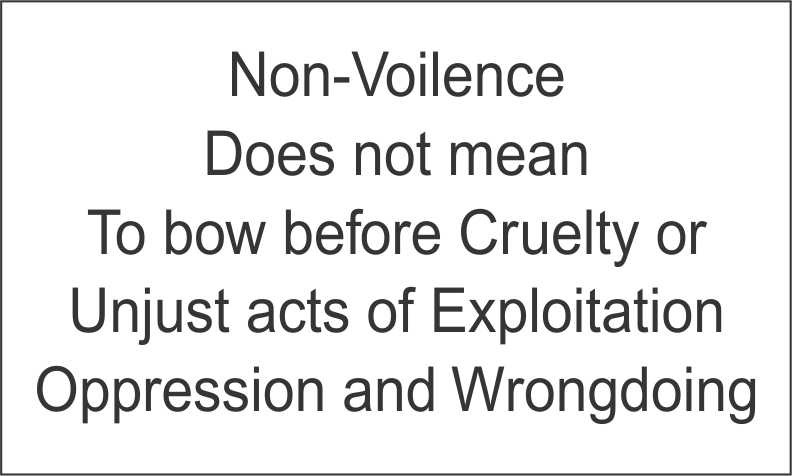

Non Violence

Next Story

MACT: Compensation Enhanced

In the case of Trilok Chand &Anr. vs. Narinder Kumar &Ors., the High Court of Himachal Pradesh enhanced the compensation awarded to the parents of a 20-year-old road accident victim, correcting several legal errors made by the Motor Accident Claims Tribunal (MACT) regarding income assessment and the application of multipliers.

  1. Evidentiary Standards for Income

The Court reversed the Tribunal’s decision to fix the deceased’s monthly income at only Rs. 6,000 due to a lack of documentary proof. The Court established that:

  • Oral vs. Documentary Evidence: The law does not hierarchically prioritize documents over credible oral testimony.
  • Informal Sector Reality: It is unrealistic to expect formal employment records or tax filings from street-vending assistants. Since the oral evidence of an income of Rs. 9,000 per month survived cross-examination, the Court accepted it as the established base.
  1. Correct Multiplier and Dependency Calculations

The Court identified a significant error in the Tribunal’s use of a multiplier based on the age of the surviving parents.

  • Baseline for Multiplier: Under settled law (notably Sarla Verma), the age of the deceased is the absolute baseline for choosing a multiplier. For a 20-year-old victim, the correct multiplier is 18, rather than the 13 applied by the Tribunal.
  • Future Prospects: An additional 40% was added to the monthly income for future prospects, bringing the amount to Rs. 12,600.
  • Personal Deductions: As the deceased was a bachelor, 50% was deducted for personal and living expenses, resulting in a monthly family contribution of Rs. 6,300.
  1. Adjustment of Conventional Heads and Interest

The Court restructured the compensation for conventional heads (funeral expenses, loss of estate, and consortium) to align with Supreme Court precedents like Pranay Sethi.

  • Inflationary Revision: The Court applied a mandatory 10% upward revision for every three years that passed since the original template judgments were delivered.
  • Interest Rate: To reflect prevailing banking trends, the interest rate on the total award was scaled down from 9% to 7.5% per annum.

Final Award

The High Court significantly increased the total compensation from the Tribunal’s initial award of Rs. 8,58,400 to Rs. 15,03,800. The liability to pay this amount remains with the insurance company.

STPL (Web) 2026 HP 239

Trilok Chand &Anr. V. Narinder Kumar &Ors. (D.O.J. 18.05.2026)

Loading Viewer...

Next Story

MACT: Ccompensation Reduced

This case, ICICI Lombard General Insurance Company Limited vs. Sharda Devi & Others, involves an appeal against a Motor Accident Claims Tribunal (MACT) award regarding a fatal road accident that occurred in May 2013. The High Court of Himachal Pradesh ultimately partially allowed the appeal, significantly reducing the compensation amount while upholding the insurer’s liability.

  1. Dispute Over Driving License Genuineness

The insurance company argued it should be exonerated because the driver’s license was allegedly fake. To support this, they cited a report from the licensing authority stating the record for the license was “not available”. However, the court held that:

  • A “not available” status resulting from systemic irregularities or missing records at the licensing authority does not automatically render a license fake.
  • The insurer failed to prove that the vehicle owner had “guilty knowledge” or intentionally permitted an unlicensed person to drive the vehicle.
  1. Rejection of Additional Evidence

The appellant sought to introduce a private investigator’s report as additional evidence under Order XLI Rule 27 of the Code of Civil Procedure. The court dismissed this application because:

  • The appellant produced only a photocopy of the report rather than the original.
  • The appellant failed to establish due diligence. The court ruled that internal administrative issues, such as “strained relations” between a company manager and legal counsel, do not justify the failure to produce evidence during the original trial.
  1. Reduction of Compensation

The court found that the MACT had erred in its financial assessments and deviated from legal benchmarks set by the Supreme Court:

  • Income Assessment: The MACT arbitrarily fixed the deceased’s monthly income at ₹6,000 without documentary proof. The High Court ruled the income must be based strictly on the state Minimum Wages notification from the year of the accident (2013), which was ₹4,500 per month.
  • Conventional Heads: Following precedents like National Insurance Co. Ltd. v. Pranay Sethi, the court deleted arbitrary awards for “love and affection” and “expectation of life”.
  • Adjustments: Future prospects were scaled down to 10% (for a 53-year-old), and awards for loss of estate, funeral expenses, and consortium were restricted to legally permissible rates.

Ultimately, the High Court reduced the total compensation awarded to the claimants from ₹11,45,244 to ₹5,78,600, maintained at an interest rate of 7.5% per annum.

STPL (Web) 2026 HP 238

ICICI Lombard General Insurance Company Limited V. Sharda Devi & Others(D.O.J. 18.05.2026)

Loading Viewer...

Next Story

Gift Deed Held Valid

This case, Satya Devi and Others vs. Tarsem Singh, involves a legal challenge to a gift deed executed on November 28, 1989, by a woman named Rumal Dei. The plaintiffs argued the deed was void because the donor suffered from hearing, speech, and cognitive disabilities. The High Court of Himachal Pradesh dismissed the appeal, affirming that the gift deed was validly executed.

Procedural Irregularity: The “Next Friend” Rule

A significant portion of the ruling focused on Order XXXII Rule 15 of the Code of Civil Procedure. The Court held that:

  • A suit cannot be maintained through a “next friend” unless the person is already adjudged to be of unsound mind or the Court conducts a formal judicial inquiry to find them mentally incapable of protecting their interests.
  • In this case, the trial court failed to conduct such an inquiry and issued summons in a routine manner, meaning the very premise of filing the suit through a next friend was not established.

Mental Capacity vs. Physical Impairment

The Court clarified the distinction between physical disabilities and mental unsoundness:

  • Lay vs. Expert Testimony: Lay witnesses cannot authoritatively depose on a person’s cognitive or mental infirmities. Their claims that the plaintiff was mentally challenged were not given as much weight as medical evidence.
  • Medical Evidence: A certificate from a Surgical Specialist proved that while Rumal Dei was hard of hearing, she was alert, well-oriented, and capable of understanding when spoken to loudly.
  • Physical Limitations: The Court ruled that physical limitations such as hearing and speech impairments do not translate into a lack of free will or mental incapacity.

Execution of the Gift Deed

The Court found the execution and registration of the gift deed to be legally sound based on the following:

  • Witness Testimony: The scribe and attesting witnesses testified that the deed was read over and explained to Rumal Dei, and she acknowledged its correctness before placing her thumbprint on the document.
  • Official Verification: The registering Tehsildar (Sub Registrar) testified that he made inquiries of Rumal Dei, which she answered, confirming her sound disposing mind at the time of registration.
  • Concurrent Findings: Both the trial and appellate courts found no evidence of fraud or mental incapacity, and the High Court determined these findings were not perverse or legally unsustainable.

Ultimately, the High Court concluded that the plaintiffs failed to prove Rumal Dei was mentally incapable of executing the deed, and the validity of the gift deed was upheld.

STPL (Web) 2026 HP 237

Satya Devi And Others V. Tarsem Singh (Deceased) Through Lrs & Ors. (D.O.J. 18.05.2026)

Loading Viewer...

Next Story

POCSO: Bail Granted as Both Accused and Victim Wish to Marry

In the case of Vikram Singh vs. State of Himachal Pradesh, the High Court of Himachal Pradesh granted regular bail to a petitioner accused of sexual assault under Section 64 of the Bharatiya Nyaya Sanhita (BNS) and Section 6 of the POCSO Act. The court’s decision was heavily influenced by the consensual nature of the relationship and the welfare of the infant child born from the union.

Factual Context

  • Origin of Case: The FIR was not lodged by the victim or her family but was initiated by a Medical Officer when the victim, then a minor (17 ½ years old), was brought to the hospital for delivery.
  • Relationship Status: The victim, who has since attained majority, testified on oath that the relationship was based on mutual love rather than exploitation and that she joined the petitioner’s company of her own volition and both of them wanted to marry. She is not interested in case.
  • Family Unit: Following the birth of their child, the victim and the infant began residing with the petitioner’s mother. The victim expressed a clear desire to solemnize marriage with the petitioner and did not wish to prosecute the case.

Judicial Reasoning

The Court balanced strict statutory provisions with humanitarian considerations:

  • Protection of the Family: Relying on Supreme Court precedents like K. Kirubakaran v. State of T.N., the court observed that while a minor’s consent is technically immaterial under the law, judicial discretion must be used to protect the “emerging family unit”.
  • Hardship to the Infant: The court noted that keeping the petitioner incarcerated would leave the victim to raise their two-month-old child alone, causing irreparable hardship and disrupting the social fabric.
  • Completion of Investigation: Since the investigation was complete, the challan (charge sheet) had been filed, and no further recoveries were required, the court found no justification for continued “punitive” incarceration before conviction.
  • Bail Principles: The court reaffirmed that “bail is the rule and jail is the exception,” especially when there is no risk of the accused fleeing or tampering with evidence.

Outcome

The petitioner was ordered to be enlarged on bail subject to a personal bond of Rs. 50,000 and specific conditions, including attending all court hearings and refraining from tampering with prosecution evidence. The court clarified that these observations were limited to the bail application and did not reflect on the ultimate merits of the trial.

STPL (Web) 2026 HP 240

Vikram Singh V. State of Himachal Pradesh (D.O.J. 15.05.2026)

Loading Viewer...

Recent Articles