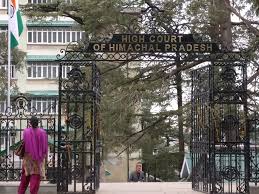


In the judgment of Bhanu Pratap Singh v. State of H.P., the High Court of Himachal Pradesh quashed an FIR involving allegations of sexual intercourse without consent (rape), ruling that even in heinous cases, the court may exercise its inherent powers to end proceedings if a voluntary compromise makes the chance of conviction “remote and bleak”.
The Allegations and Relationship Context
The case involved the petitioner, a Property Manager in Manali, and the respondent (victim), a social media marketing professional. According to the status report, the two developed a friendship in Manali and later maintained a consensual physical relationship. However, an FIR was registered on December 9, 2025, alleging that the petitioner committed sexual intercourse with the respondent without her consent on a subsequent date.
The Compromise and Judicial Review
While the petitioner was in judicial custody, the parties entered into a Compromise Deed in January 2026. The victim appeared before the Court and stated on oath that she had settled the dispute of her own free will, was not under any influence, and did not wish to pursue the criminal case.
The State opposed the petition, arguing that rape is a heinous crime and should not be quashed based on a private settlement.
Legal Reasoning: Section 528 of the BNSS
Justice Jiya Lal Bhardwaj analyzed the petition under Section 528 of the Bharatiya Nagarik Suraksha Sanhita (BNSS), 2023, which preserves the same inherent powers as Section 482 of the former CrPC to “secure the ends of justice” or “prevent abuse of the process of any Court”.
Drawing on Supreme Court precedents such as Narinder Singh v. State of Punjab and Gian Singh v. State of Punjab, the Court established several principles:
- Conviction Prospects: While the court should normally refrain from quashing heinous crimes like rape or murder, it must evaluate if the possibility of conviction is remote.
- Waste of Judicial Resources: Since the victim (a major) was now residing in her native Karnataka and had declared she would not support the prosecution, the Court concluded that forcing a trial would result in an inevitable acquittal.
- Benevolence and Harmony: The Court noted that quashing the proceedings would avoid “great oppression and prejudice” to the accused and prevent the wastage of the trial court’s valuable time.
The Final Ruling
The High Court found that continuing the investigation or trial would serve no fruitful purpose. Consequently, the FIR and all consequential proceedings were quashed, and the petitioner was acquitted of the charges. The Registry was directed to issue release warrants immediately to the jail where the petitioner was lodged.
Himachal Pradesh High Court
Bhanu Pratap Singh v. State of H.P: (D.o.J. 06.02.2026)
STPL (Web) 2026 HP 33
Loading Viewer...