

Right to Retrospective Promotion: High Court Orders Consequential Benefits for Senior Agriculture Official
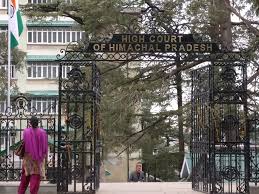
In the judgment of Jugendra Singh v. State of Himachal Pradesh and Another, the High Court of Himachal Pradesh ruled that the State cannot deny retrospective promotions and financial benefits to an employee after formally recognizing their seniority through a government notification. The Court held that the term “consequential benefits” inherently includes the right to be promoted from the same dates as one’s juniors and mandated the creation of supernumerary posts if necessary to rectify the injustice.
The Dispute: Decades of Bypassed Promotions
The petitioner was appointed as a Chemist Ghee Grading in 1966, a post for which he was senior to a colleague, Sh. Y.P. Gupta. Over several decades, the respondent-department amended recruitment rules in a manner that favored Gupta (who held an M.Sc.) while making the petitioner (who held a B.Sc.) ineligible for higher roles. Consequently, Gupta was promoted to the ranks of Joint Director and Additional Director while the petitioner remained in lower grades.
A turning point occurred in July 2000, when the State issued a notification (Annexure P-12) promoting the petitioner to a Class-II Gazetted post retrospectively from December 17, 1975, and granting him “all consequential benefits”. Despite this notification, the State failed to grant him the actual promotions to higher director-level positions that his juniors had achieved.
Key Legal Principles and Findings
- Binding Nature of State Notifications: The Court ruled that once the State issued the 2000 notification recognizing the petitioner’s promotion and seniority from 1975, it was estopped from taking a “u-turn” by later claiming he was ineligible or lacked qualifications.
- Defining “Consequential Benefits”: Relying on the Supreme Court precedent K. Samba Moorthy v. Sanjiv Chadha, the Court established that “consequential benefits” is a broad term that includes the right to promotion. If a junior is promoted ahead of a senior, and that seniority is later restored, the senior must be granted notional promotion from the same date.
- Duty to Create Supernumerary Posts: The State argued it could not grant the promotions due to a lack of vacancies at the time. The Court rejected this, holding that to “impart justice and remove anomaly,” the State has a legal obligation to create supernumerary posts so that the rightful position of the senior employee is restored without disturbing those already in office.
- Inconsistency in State’s Plea: The Court noted that the State’s claim that the petitioner was “unqualified” was unsustainable, as they had already promoted him to the post of Deputy Director in 1991, effectively acknowledging his eligibility.
Final Ruling and Relief
The High Court allowed the petition and issued the following directives to the State:
- Grant of Promotions: The respondents must grant the petitioner consequential promotions to the posts of Deputy Director, Joint Director, Additional Director, and Director (Agriculture) from the specific dates his juniors were promoted.
- Payment of Arrears: The petitioner is entitled to all financial arrears resulting from these retrospective promotions, calculated from the date the petition was instituted.
STPL (Web) 2026 HP 111
Jugendra Singh V. State of Himachal Pradesh And Another (D.O.J. 24-03-2026)
Loading Viewer...