Parole: insufficient grounds for rejection without substantive evidence

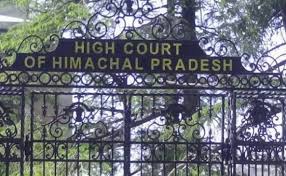
In the case of Ram Pal v. State of Himachal Pradesh & Others (2026), the High Court of Himachal Pradesh quashed an order denying parole to a convict, ruling that objections from a victim’s family or local authorities are insufficient grounds for rejection without substantive evidence of a threat to public order.

The following is a summary of the judgment:

Case Background

The petitioner was serving a 20-year rigorous imprisonment sentence following his conviction for offences under Section 376 of the IPC and Section 4 of the POCSO Act, as well as kidnapping and abduction. After serving over four years of his sentence with recorded good conduct, he applied for temporary release on parole. His application was rejected by the State on January 20, 2026, based solely on objections from the victim’s family and the local Gram Panchayat, who feared he might cause harm upon his release.

Key Findings of the Court

The Court set aside the rejection and granted parole based on several legal and reformative principles:

  • Individual Threat vs. Public Order: The Court clarified that under Section 6 of the H.P. Good Conduct Prisoners (Temporary Release) Act, 1968, parole can only be denied if the release endangers State security or “public order”. It held that a threat to a specific individual does not constitute a threat to public order.
  • Insufficiency of Bald Objections: The Court ruled that “bald objections” or “flimsy grounds” raised by a victim’s family or a Panchayat cannot be the sole basis for denying parole. The State failed to provide any credible material to substantiate the claim that the petitioner was a “dangerous person”.
  • Heinous Nature of Offence is Not a Bar: While the petitioner was convicted of a serious crime, the Court emphasized that the nature of the offence alone should not be a factor to deny parole outright if the prisoner shows a tendency toward reformation.
  • Reformative Theory of Punishment: Relying on the Supreme Court’s decision in Asfaq v. State of Rajasthan, the Court noted that parole is a humanistic tool intended to allow convicts to maintain family and social ties, preventing them from becoming hardened criminals due to prolonged isolation.
  • Right to Dignity: The Court reaffirmed that a prisoner does not lose their basic constitutional rights at the prison gate. Under Article 21, even convicts have the right to a reasonably dignified life and the opportunity to “breathe fresh air” periodically if they maintain good conduct.
  • Hardened Criminal Definition: A “hardened criminal” is one for whom crime has become a way of life (recidivism). The petitioner, having only a single conviction and a report of good conduct from jail authorities, did not fit this category.

Conclusion and Parole Conditions

The Court concluded that the denial of parole was legally unsustainable and quashed the impugned order. The petitioner was ordered to be released on parole for 28 days subject to the following conditions:

  • A personal bond of 1,00,000 with two sureties.
  • A strict directive not to contact the victim’s family.
  • Continuous monitoring by a Probation Officer to report any deviations in conduct.

STPL (Web) 2026 HP 122

Sh. Ram Pal V. State of Himachal Pradesh & Ors. (D.O.J. 20-03-2026)

Loading Viewer...

Next Story

Quashing of FIR: Quashed as No Case Made Out

In the case of Thakar Singh Bharmouri v. State of H.P. & Others (2026), the High Court of Himachal Pradesh quashed an FIR and criminal proceedings against a senior Congress leader accused of using abusive language against the Prime Minister during an election speech.

The following is a summary of the judgment:

Case Background

The petitioner was booked under Section 125 of the Representation of the People Act, 1951, and Section 504 of the Indian Penal Code (IPC). The complaint was lodged via email by an office bearer of the Bharatiya Janta Party (BJP), alleging that the petitioner made “absurd and uncalled for” remarks against the Hon’ble Prime Minister during an election rally in October 2021, thereby violating the Model Code of Conduct.

Key Findings of the Court

The Court quashed FIR No. 110 of 2021 and the subsequent charge sheet based on the following legal determinations:

  • Failure to Meet Criteria for Section 125: To invoke Section 125 of the Representation of the People Act, the prosecution must prove the accused promoted enmity or hatred between different classes of citizens on grounds of religion, race, caste, community, or language. The Court found no evidence that the petitioner’s remarks, even if uncalled for, attempted to promote such class-based hatred.
  • Lack of Specificity: Both the FIR and the final police report failed to provide a specific description of the abusive language allegedly used. The Court noted that general allegations of “absurd remarks” are insufficient to constitute a criminal offense.
  • No Provocation or Breach of Peace (Section 504): Section 504 of the IPC requires that an intentional insult must provoke a person to break the public peace or commit an offense. The Court observed that there was no material suggesting any disruption of public peace following the speech.
  • Vague and Third-Party Complaint: The Court noted that the person allegedly insulted (the Prime Minister) did not file the complaint. Instead, the complaint was filed by a third party (a BJP member) and was deemed vague and evasive.
  • Abuse of Process: Applying the principles from the landmark Bhajan Lalcase, the Court determined that the allegations, even if accepted in their entirety, did not prima facie constitute an offense. Consequently, continuing the trial would be an abuse of the process of law and a “weapon of harassment”.

Legal Conclusion

The High Court concluded that the criminal proceedings were bound to fail and would cause unnecessary harassment to the petitioner. The Court quashed and set aside the FIR and the charge sheet, ordering the acquittal of the petitioner.

STPL (Web) 2026 HP 124

Thakar Singh Bharmouri V. State Of H.P. & Ors. (D.O.J. 17-03-2026)

Loading Viewer...

Next Story

Dishonour of Cheque: Interim Compensation order quashed

In the case of Sh. Ramesh v. Ram Kumar (2026), the High Court of Himachal Pradesh quashed trial court orders that had “mechanically” directed an accused individual to pay the maximum allowable interim compensation in a cheque dishonor case,.

The following is a summary of the judgment:

Case Background

The respondent filed a complaint under Section 138 of the Negotiable Instruments (NI) Act, alleging that the petitioner, Ramesh, issued a cheque for 12,00,000 which was dishonored due to “insufficient funds”,. During the proceedings, the trial court allowed the accused to cross-examine the complainant but simultaneously invoked Section 143-A of the NI Act, ordering the accused to pay 20% of the cheque amount as interim compensation within 60 days,. When the petitioner failed to pay, the court ordered the amount to be recovered as a fine.

Key Legal Findings of the Court

The High Court set aside the trial court’s orders based on several critical legal principles:

  • Discretionary, Not Mandatory Power: The Court emphasized that the use of the word “may” in Section 143-A indicates that the power to award interim compensation is discretionary, not mandatory,. It is not required for the court to order payment in every single complaint.
  • Violation of Natural Justice: The Court found that the trial court failed to afford the accused a reasonable opportunity to be heard or to file a reply before directing the payment,. The accused had specifically denied ever availing the ₹12,00,000 loan.
  • Requirement for a Prima Facie Evaluation: Before ordering interim compensation, the court must evaluate the merits of the complainant’s case and the plausibility of the defense,. The Court noted that the statutory presumption under Section 139 of the NI Act is not, by itself, a sufficient ground to mandate interim payment because it is a rebuttable presumption.
  • Need for Reasoned Orders: The Court held that a trial court must record brief reasons for granting interim compensation and for determining the specific percentage (anywhere from 1% to 20%), Awarding the maximum cap of 20% without considering the “attending parameters”—such as the nature of the transaction, the relationship between parties, and the paying capacity of the accused—is legally unsustainable,,.
  • Drastic Nature of the Provision: Because Section 143-A allows for a “drastic order” for payment before any final adjudication of guilt is made, the Court ruled that such power must be exercised judiciously and not in a routine or mechanical manner,.

Conclusion

The High Court concluded that the trial court’s orders lacked the application of mind and violated the principles of natural justice,. Consequently, the Court quashed and set aside the orders for interim compensation and directed the trial court to consider the matter afresh after giving both parties a proper hearing,

STPL (Web) 2026 HP 123

Sh. Ramesh V. Ram Kumar (D.O.J. 30-03-2026)

Loading Viewer...

Next Story

Parole: insufficient grounds for rejection without substantive evidence

In the case of Ram Pal v. State of Himachal Pradesh & Others (2026), the High Court of Himachal Pradesh quashed an order denying parole to a convict, ruling that objections from a victim’s family or local authorities are insufficient grounds for rejection without substantive evidence of a threat to public order.

The following is a summary of the judgment:

Case Background

The petitioner was serving a 20-year rigorous imprisonment sentence following his conviction for offences under Section 376 of the IPC and Section 4 of the POCSO Act, as well as kidnapping and abduction. After serving over four years of his sentence with recorded good conduct, he applied for temporary release on parole. His application was rejected by the State on January 20, 2026, based solely on objections from the victim’s family and the local Gram Panchayat, who feared he might cause harm upon his release.

Key Findings of the Court

The Court set aside the rejection and granted parole based on several legal and reformative principles:

  • Individual Threat vs. Public Order: The Court clarified that under Section 6 of the H.P. Good Conduct Prisoners (Temporary Release) Act, 1968, parole can only be denied if the release endangers State security or “public order”. It held that a threat to a specific individual does not constitute a threat to public order.
  • Insufficiency of Bald Objections: The Court ruled that “bald objections” or “flimsy grounds” raised by a victim’s family or a Panchayat cannot be the sole basis for denying parole. The State failed to provide any credible material to substantiate the claim that the petitioner was a “dangerous person”.
  • Heinous Nature of Offence is Not a Bar: While the petitioner was convicted of a serious crime, the Court emphasized that the nature of the offence alone should not be a factor to deny parole outright if the prisoner shows a tendency toward reformation.
  • Reformative Theory of Punishment: Relying on the Supreme Court’s decision in Asfaq v. State of Rajasthan, the Court noted that parole is a humanistic tool intended to allow convicts to maintain family and social ties, preventing them from becoming hardened criminals due to prolonged isolation.
  • Right to Dignity: The Court reaffirmed that a prisoner does not lose their basic constitutional rights at the prison gate. Under Article 21, even convicts have the right to a reasonably dignified life and the opportunity to “breathe fresh air” periodically if they maintain good conduct.
  • Hardened Criminal Definition: A “hardened criminal” is one for whom crime has become a way of life (recidivism). The petitioner, having only a single conviction and a report of good conduct from jail authorities, did not fit this category.

Conclusion and Parole Conditions

The Court concluded that the denial of parole was legally unsustainable and quashed the impugned order. The petitioner was ordered to be released on parole for 28 days subject to the following conditions:

  • A personal bond of 1,00,000 with two sureties.
  • A strict directive not to contact the victim’s family.
  • Continuous monitoring by a Probation Officer to report any deviations in conduct.

STPL (Web) 2026 HP 122

Sh. Ram Pal V. State of Himachal Pradesh & Ors. (D.O.J. 20-03-2026)

Loading Viewer...
Next Story

Dishonour of Cheque: Presumption – Conviction Upheld

In the case of Rangeen Kumar v. Saurabh Mehra and Another (2026), the High Court of Himachal Pradesh upheld the conviction of an individual for the dishonor of a cheque, reaffirming the legal presumptions against the drawer under the Negotiable Instruments (NI) Act.

The following is a summary of the judgment:

Case Background

The respondent (complainant) alleged that he advanced a loan of 3,50,000 to the petitioner (accused) in October 2020. To discharge this liability, the accused issued a cheque dated December 16, 2020. When presented, the cheque was dishonored due to “Funds Insufficient”. Despite receiving a legal notice, the accused failed to make the payment, leading to a complaint under Section 138 of the NI Act.

The trial court convicted the accused, sentencing him to one year of simple imprisonment and ordering him to pay 4,00,000 in compensation to the complainant. This conviction was subsequently affirmed by the Sessions Judge.

Key Findings of the Court

The High Court dismissed the revision petition and upheld the lower courts’ decisions based on several factors:

  • Failure to Rebut Statutory Presumptions: Under Sections 118 and 139 of the NI Act, there is a legal presumption that a cheque is issued toward the discharge of a lawful debt. Since the accused admitted to the issuance of the cheque and his signatures on it, the burden shifted to him to prove otherwise. The Court found he failed to lead any “cogent and convincing evidence” to rebut this presumption.
  • Rejection of the “Security Cheque” Defense: The accused argued that the cheque was a security for a separate vegetable transaction with a third party. However, he failed to examine that third party as a witness or explain how the complainant came into possession of the cheque. The Court clarified that even a “security cheque” is valid for encashment if the promised repayment is not made.
  • Limited Revisional Jurisdiction: The Court emphasized that its power under Section 397 of the Cr.P.C. is supervisory and not a “second appeal”. It noted it would not re-appreciate evidence unless there was a “glaring feature” or gross miscarriage of justice, which was absent here.
  • Conduct of the Petitioner: During the revision proceedings, the petitioner failed to comply with a court order to deposit 30% of the compensation amount as a condition for staying his sentence.

Legal Conclusion

The Court concluded that all basic ingredients of Section 138 were met. Finding no error of law or fact in the concurrent findings of the lower courts, the High Court dismissed the petition and directed the petitioner to surrender and serve his sentence.

STPL (Web) 2026 HP 121

Rangeen Kumar V. Saurabh Mehra And Another (D.O.J. 18-03-2026)

Loading Viewer...

Recent Articles