“Equal Pay for Equal Work”: High Court Grants Pay Parity to School Laboratory Attendants
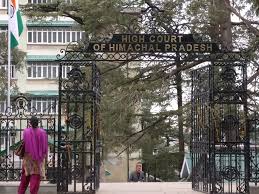
In the judgment of Roshan Lal and Others v. State of Himachal Pradesh and Another, the High Court of Himachal Pradesh ruled that Senior Laboratory Attendants working in government schools are entitled to the same pay scale as Junior Lecturer Assistants (JLAs) working in colleges. The Court held that the denial of pay parity was discriminatory under Article 14 and Article 39(d) of the Constitution because the two categories of employees perform identical duties.
The Dispute: Functional Identity vs. Different Designations
The petitioners, serving as Senior Laboratory Attendants in schools, sought the pay scale of ₹4400–7000 (effective from 01.01.1996), which was granted to JLAs in colleges. They argued that while their designations differed, their responsibilities were the same.
The State opposed the petition, arguing that pay scales are determined by Recruitment and Promotion (R&P) Rules and that JLA posts were specifically sanctioned only for the college cadre, not for schools.
Key Findings on Identical Duties
The Court performed a detailed comparison of the job profiles based on government norms from 1964, 1990, and 1993:
- Identical Responsibilities: The Court found that school Laboratory Attendants are responsible for store management, maintaining stock registers, annual stock verification, and corresponding with firms for purchases. These are the exact technical responsibilities assigned to JLAs in colleges.
- Absence of JLA Posts in Schools: Because there are no JLA posts in schools, the Laboratory Attendants are the ones actually discharging these higher-level functions.
- Common Cadre and Seniority: The Court noted that there is a common seniority list for Laboratory Attendants in both schools and colleges. Furthermore, Laboratory Attendants serve as the feeder category for promotion to the post of Junior Lecturer Assistant, making the pay disparity even more irrational.
Legal Principles: Limits of Executive Discretion
While the Court acknowledged that pay fixation is primarily an executive function and judicial review is generally limited, it established that judicial interference is necessary when administrative decisions are:
- Unreasonable or Unjust: Denying parity when duties and qualifications are identical is “unreasonable, unjust and prejudicial”.
- Constitutional Mandate: The principle of “Equal Pay for Equal Work” is a constitutional goal read into Articles 14 and 16.
- Source of Recruitment: Once employees are in a particular cadre, the method of their appointment becomes irrelevant if they are performing the same work as their counterparts.
Final Ruling and Relief
The High Court concluded that the State’s action was “unreasonable, unjust and violative of Article 14”.
The Court issued the following directions:
- Grant of Pay Scale: The respondents must grant the pay scale of ₹4400–7000 to the petitioners effective from January 1, 1996.
- Notional vs. Actual Benefits: The benefit is granted on a notional basis from 1996, but actual monetary arrears are restricted to three years prior to the date the petition was filed.
- Timeline for Payment: All arrears must be paid within three months.
STPL (Web) 2026 HP 88
Roshan Lal And Others V. State of Himachal Pradesh And Another (D.O.J. 17-03-2026)
Loading Viewer...