

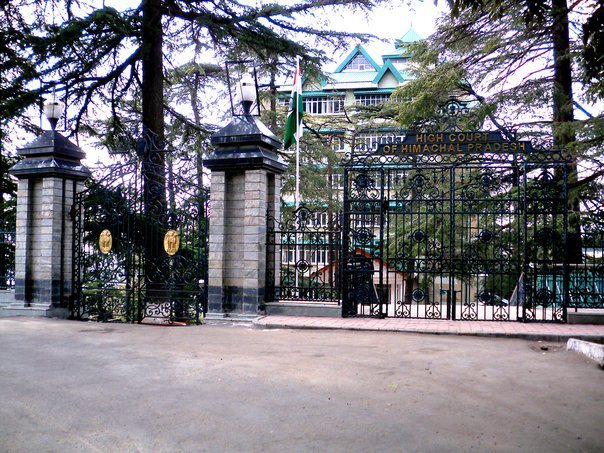
In Riya Sharma v. State of Himachal Pradesh &Ors., the High Court of Himachal Pradesh declared the offending portion of Rule 14 of the HPPVC Rules, 2011, to be ultra vires the parent Himachal Pradesh Para Veterinary Council Act, 2010. The Court ruled that under Section 2(j) of the Act, a degree or diploma from any University established by law constitutes a “recognized qualification” without needing additional recognition from the State Government. Since the petitioner obtained her diploma from GADVAS University (established by a Punjab State enactment), the Court quashed the Council’s refusal to register her and directed that she be registered within one week.
- Background: The Refusal of Registration
The petitioner, a resident of Himachal Pradesh, completed a Diploma in Veterinary Science and Animal Health Technology from Guru Angad Dev Veterinary and Animal Sciences University (GADVAS University) in Punjab. When she applied for registration with the Himachal Pradesh Para Veterinary Council (the “State Council”), her application was rejected. The Council argued that under Rule 14 of the HPPVC Rules, 2011, her diploma was not recognized because GADVAS University was not specifically recognized by the H.P. State Government nor registered with the State Council.
- Conflict Between the Parent Act and Subordinate Rules
The central legal issue was the discrepancy between the definition of “recognized qualifications” in the parent Act versus the requirements in the Rules:
- Section 2(j) of the HPPVC Act, 2010: This section defines recognized qualifications as those granted by “any University established by law” OR “any other institution recognized by the State Government”.
- Rule 14 of the HPPVC Rules, 2011: This rule attempted to mandate that all private institutions and Universities must be recognized by the State Government and registered with the Council to be eligible.
The Court observed that GADVAS University is a University established by law (Punjab Act No. 16 of 2005) and is recognized by the UGC. Therefore, under the clear language of the parent Act, its qualifications are automatically recognized in Himachal Pradesh.
- The Doctrine of “Ultra Vires”
The High Court applied the established principle that subordinate legislation (Rules) must conform to the parent Act and cannot travel beyond its scope or travel in conflict with it.
- Supplement vs. Supplant: The Court held that while Rules can supplement an Act by filling in details, they cannot supplant it by imposing new restrictions or disabilities not contemplated by the legislature.
- Illegal Restriction: By requiring State recognition for Universities established by law, Rule 14 attempted to enlarge the scope of the Act and create a barrier to registration that Section 2(j) did not exist.
- Final Ruling and Directives
The Court concluded that the part of Rule 14 requiring Universities to be registered with the Council and recognized by the State Government was void and illegal.
- Rule Quashed: The offending portion of Rule 14 of the HPPVC Rules, 2011, was quashed and set aside.
Registration Ordered: The communication rejecting the petitioner’s application was quashed. The State Council was directed to register the petitioner within one week, provided she completes other standard formalities.
STPL (Web) 2026 HP 382
Riya Sharma V. State of Himachal Pradesh &Ors. (D.O.J. 15.07.2026)
Loading Viewer...