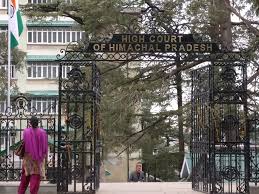


In Amrik Singh v. State of Himachal Pradesh and Others (Cr.MMO No.203 of 2022, decided on May 13, 2026), the High Court of Himachal Pradesh quashed an FIR and its consequential criminal proceedings against a police official who had been charged under Section 12 of the Prevention of Corruption Act, 1988, for allegedly abetting bribery. The prosecution contended that when a co-accused (an Assistant Sub-Inspector) demanded a bribe of Rs. 5,00,000/- from a complainant, the petitioner advised the complainant to pay a reduced sum of Rs. 10,000/- to resolve the matter.
The High Court allowed the petition, ruling that to invoke an offense under Section 12, the prosecution must establish a clear nexus, prior instigation, or active facilitation between the alleged abettor, the principal offender, and the transaction. Because the co-accused received the bribe directly without any physical presence, prior acquaintance, or intermediation by the petitioner, and because the corroborative telephonic evidence was forensicly unreliable, the Court held that the legal ingredients of abetment were not prima facie disclosed. Subjecting the official to a protracted trial bound to fail would constitute an unmitigated abuse of the judicial process.
1. Factual Background and Path of Investigation
- The Original Extortion: On April 20, 2019, a florist named Rakesh Kumar lodged an administrative complaint alleging that ASI Rajinder Pathania (Incharge, Police Post Daulatpur Chowk) was harassing him over a matrimonial dispute and demanding a bribe of Rs. 5,00,000/- to make the issue disappear.
- The Alleged Abetment: Seeking assistance, the complainant contacted the petitioner, Amrik Singh—a separate police official who had previously been posted near the complainant’s native place. The petitioner allegedly advised him to pay a lower sum of Rs. 10,000/- to settle the matter with the ASI.
- The Trap and Charging: Acting on the complaint, State Vigilance and Anti-Corruption Bureau officials caught the co-accused ASI red-handed accepting the Rs. 10,000/- bribe directly from the complainant. Following the trap, the State registered FIR No. 0005 of 2019, charging both the ASI and the petitioner under Sections 7 and 12 of the Prevention of Corruption Act, 1988.
- Threshold Challenge: After the police completed the investigation and submitted a formal charge-sheet (Challan), the petitioner approached the High Court under Section 482 of the Cr.P.C., seeking absolute threshold quashing of the proceedings pending before the trial court.
2. Key Legal Issues and Court’s Observations
A. Jurisdictional Scope of Section 482 After a Charge-Sheet is Filed
The State opposed the petition by highlighting that because the investigation had already concluded and a formal charge-sheet was on the record, the controversy should be left entirely to a trial. Justice Sandeep Sharma, reviewing historic Supreme Court guidance (including L. Muniswamy, Bhajan Lal, Kaptan Singh, and Abhishek Singh), clarified the boundaries of inherent public law review:
- Looking Beyond the Roster: When a quashing petition is brought after the police file a charge-sheet, the High Court must look past bare textual allegations in an FIR and evaluate the actual, substantive material gathered by the state.
- Prevention of Persecution: While a constitutional court must not weigh conflicting evidence as a trial bench or an investigative agency, it holds a mandatory public duty to examine whether the collected facts satisfy the primitive legal elements of the offense. If the evidence fails to construct a prima facie case, forcing a citizen into a protracted trial turns court processes into a weapon of targeted harassment.
B. Failure to Prove Essential Ingredients of Abetment under Section 12
The High Court conducted a rigorous textual evaluation of Sections 7, 11, and 12 of the Act, highlighting the missing links in the prosecution’s case:
- Absence of a Dynamic Nexus: To capture an individual under Section 12, there must be clear proof that the abettor actively instigated the bribe, physically facilitated the exchange, or maintained a common plan with the primary offender.
- Geographical and Operational Isolation: At the time of the incident, the petitioner and the co-accused ASI were posted at entirely different, unconnected police stations. The prosecution produced no data, records, or logs establishing a prior meeting, mutual acquaintance, or communication network between the two officers.
- Direct Pre-Existing Transactions: The complainant’s own statement revealed that he had been directly dealing with, and paying money to, the co-accused ASI as early as March 31, 2019—long before he ever sought the telephonic advice of the petitioner. Since a direct extortion channel already existed, there was no logical occasion or operational need to involve the petitioner as an intermediary.
- No Handling of Funds: The petitioner never handled, collected, or attempted to pass any currency from the victim to the principal offender; the ASI accepted the bribe completely independently.
C. Fatal Rejection of Electronic Forensic Records
The state’s secondary evidence centered around an audio recording transcript intended to prove that the petitioner telephonically instigated the bribery transaction. The High Court completely discredited this material based on the State’s own records:
- The FSL Findings: The official Forensic Science Laboratory (FSL) report explicitly noted that the primary voice recordings contained severe, overwhelming environmental background noise and continuous communication disturbance.
- Total Admissibility Failure: The FSL categorized the recording and transcript quality as sub-standard. The Court observed that since the underlying data was forensically compromised, the integrity of the transcript was highly doubtful, leaving the prosecution with no credible link to establish criminal abetment.
3. Final Order of the Court
- Petition Allowed: The High Court found the prosecution’s case against the petitioner entirely unsustainable.
- Proceedings Quashed: FIR No. 0005 of 2019, registered at Police Station SV & AC, Una, along with all consequential criminal proceedings, is permanently quashed and set aside strictly with respect to the petitioner only.
- Acquittal: The petitioner is formally acquitted of all criminal charges brought against him under the subject FIR.
- Disposal: The petition and all connected temporary miscellaneous applications were ordered closed.
STPL (Web) 2026 HP 276
Amrik Singh V. State of Himachal Pradesh And Others (D.O.J. 13.05.2026)
Loading Viewer...