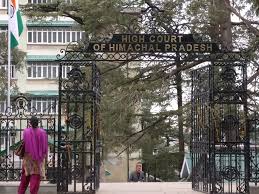

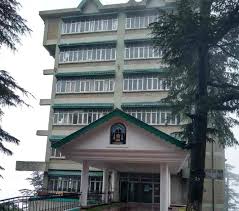
In Radha Devi &Ors. v. Gangi Devi &Anr. (RSA No. 169 of 2024, decided on May 5, 2026), the High Court of Himachal Pradesh dismissed a Regular Second Appeal filed under Section 100 of the Code of Civil Procedure (CPC), affirming the concurrent findings of the lower courts. The dispute centered around a 1980 revenue mutation recorded in favor of the appellants’ late mother, Smt. Ghrunku, as the legal heir and wife of a deceased municipal employee, Sh. Chandu Lal. The appellants argued that because the deceased’s first marriage to their mother was never dissolved by a formal legal decree, his subsequent marriage to the respondent/plaintiff was invalid.
The High Court upheld the respondent’s status as the legally wedded wife, ruling that a strong legal presumption of marriage arises from long-term continuous cohabitation under Section 114 of the Indian Evidence Act, 1872. This presumption was strongly supported by the employer’s official service records, compassionate appointment, and subsequent pension disbursements. Furthermore, the Court reaffirmed that under Section 100 CPC, concurrent findings of fact cannot be disturbed in a second appeal unless the lower courts’ conclusions are shown to be perverse, entirely unsupported by evidence, or legally unsustainable.
1. Factual Background and Path of Litigation
- The Claim: The respondent/plaintiff (Gangi Devi) filed a civil suit on October 24, 2016, seeking a declaration that she was the legally wedded wife and lawful heir of late Sh. Chandu Lal, an employee of the Municipal Council Rampur who passed away on October 19, 1978.
- The Marital Timeline: The deceased was originally married to Smt. Ghrunku, but the relationship deteriorated and she completely vacated the matrimonial home. In 1968, Ghrunku remarried another individual (Takhu Ram) and raised a separate family with him, giving birth to the present appellants (defendants No. 1 to 3). Concurrently, from June 1967 onwards, the deceased and the respondent continuously cohabited as husband and wife, raising a surviving family.
- The Administrative Records: Following Chandu Lal’s death in 1978, the Municipal Council acted upon its official service books—which recorded the respondent as his wife—by releasing all terminal financial outlays to her and granting her a compassionate government job, from which she eventually retired with a pension.
- The Revenue Dispute: In 2016, the respondent discovered that a revenue mutation (No. 7338) had been quietly attested on November 5, 1980, granting a $1/5\text{th}$ property share to the former wife, Ghrunku. The respondent sought to have this entry declared null, void, and completely inoperative.
- Lower Court Decisions: The Senior Civil Judge, Rampur Bushahr, decreed the suit in favor of the respondent on January 18, 2023. The Additional District Judge, Kinnaur, subsequently dismissed the appellants’ first appeal on February 26, 2024, confirming the trial court’s order. The appellants then approached the High Court via a Regular Second Appeal.
2. Key Legal Issues & Court’s Observations
A. Presumption of Legitimate Marriage from Prolonged Cohabitation
The appellants contended that in the absence of a formal legal decree of divorce, the primary marriage of their mother remained intact, invalidating any subsequent legal status of the respondent. The High Court rejected this contention under the Indian Evidence Act, 1872:
- Section 114 Benchmarks: Under Section 114, the law permits courts to presume the existence of facts based on the common course of natural events, human conduct, and public/private business.
- Presumption vs. Concubinage: Relying on the Supreme Court precedent Shiramabai v. The Captain, Record Officer for OIC Records (2023) (referencing historic rulings like Badri Prasad and Mohabbat Ali Khan), Justice Romesh Verma reiterated that when a man and a woman continuously cohabit as husband and wife for a prolonged spell and are recognized as such by society, a powerful legal presumption arises in favor of wedlock and against concubinage.
- Heavy Rebuttal Burden: While this presumption is legally rebuttable, an exceptionally heavy burden of proof lies on the party attempting to strip the relationship of its legal legitimacy.
- Evidentiary Matrix: The appellants failed to displace this presumption. Local Pariwar (family) registers and death certificates explicitly recorded their mother, Ghrunku, as the wife of Takhu Ram, and she had completely severed ties with the deceased since 1968. Conversely, the official municipal employment entries, the compassionate appointment, and the subsequent pension data heavily fortified the legitimacy of the respondent’s marriage.
B. Scope of Interference in Second Appeals Under Section 100 CPC
The High Court emphasized that it could not investigate the factual grounds or re-evaluate evidence simply because an alternative factual inference was plausible.
- Statutory Nature of Second Appeals: A right to a second appeal is a substantive statutory creation, not an inherent or natural right of litigation, and must be strictly regulated by Section 100 CPC. It cannot be decided merely on equitable grounds.
- Characteristics of a Substantial Question of Law: Citing the Supreme Court benchmarks in Hero Vinoth v. Seshammal (2006) and Annamalai v. Vasanthi (2025), the Court noted that a substantial question of law must be debatable, not previously settled by a binding precedent, and must have a direct material bearing on the rights of the parties based on a foundation already laid in the pleadings.
- Finality of the First Appellate Court: The first appellate court is the absolute final court of fact. The High Court will only disturb concurrent findings if the conclusions drawn by the lower courts are perverse, based on entirely inadmissible evidence, or arrived at by completely ignoring material admissible evidence or mandatory legal provisions. Since both lower courts comprehensively thrashed out the evidence, no substantial question of law arose.
3. Final Quantum and Operational Directives
- Dismissal of the Appeal: Finding the judgments and decrees of the lower courts completely valid, legal, and sustainable, the High Court dismissed the Regular Second Appeal.
- Mutation Quashed: The 1980 revenue mutation entry (No. 7338) and subsequent property records reflecting Ghrunku as an owner/wife of the deceased stand permanently declared null, void, and illegal.
- Case Resolution: The parties were ordered to bear their own legal costs, and all pending miscellaneous applications linked to the main appeal were formally disposed of.
STPL (Web) 2026 HP 275
Radha Devi &Ors. V. Gangi Devi &Anr. (D.O.J. 05.05.2026)
Loading Viewer...