
MACT: Compensation Slightly Reduced

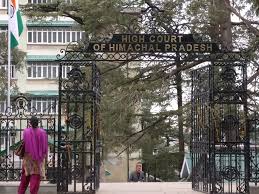
In the case of Oriental Insurance Company Ltd. v. Smt. Reena and Others (FAO (MV) No. 107 of 2014, decided on May 8, 2026), the High Court of Himachal Pradesh reviewed an appeal filed by the insurer against a 2014 Motor Accident Claims Tribunal (MACT) award. The case arose from a fatal motor accident in 2012 that resulted in the death of 26-year-old skilled mason Sh. Yog Raj.

The High Court modified the compensation downward from Rs. 19,59,480/- to Rs. 19,08,600/-, ruling that the Tribunal had erred in calculating the deceased’s baseline monthly income, applying an incorrect dependency multiplier, and deducting an mathematically improper ratio for personal upkeep. Additionally, the High Court streamlined the conventional damages by incorporating mandatory inflationary updates while reducing the uniform interest rate from 9% to 7.5% per annum.

1. Factual Background and Tribunal’s Award

  • The Incident: On February 8, 2012, Sh. Yog Raj suffered fatal head injuries when the vehicle he was travelling in was driven rashly and negligently, crashing near Pangola Nallah.
  • Claim Petition: The widow, minor son, and mother of the deceased filed a claim under Section 166 of the Motor Vehicles Act, 1988, pleading that the deceased was a 26-year-old skilled mason earning Rs. 10,000/- per month.
  • Tribunal’s Ruling: On January 16, 2014, the MACT awarded Rs. 19,59,480/- with a 9% annual interest rate, directing the Insurance Company to pay the claimants first while granting it recovery rights against the vehicle owner.

2. Key Issues Addressed & Legal Principles Applied

A. Assessment of Baseline Income in Unorganized Sector

The appellant contested that the baseline income of Rs. 10,000/- per month was arbitrary and lacked accounting proof. The High Court observed that during cross-examination, both the employer (PW-1) and the deceased’s mother (PW-2) stated that his daily wage was Rs. 300/-. Computing Rs. 300/- across a month yields a realistic standard baseline of Rs. 9,000/- per month, making the Tribunal’s previous assessment legally unsustainable.

B. Application of Multipliers, Deductions, and Future Prospects

The High Court strictly corrected the mathematical formula using benchmarks established in Sarla Verma v. Delhi Transport Corporation (2009):

  • Future Prospects: An additional 40% margin was added to the unorganized sector base salary (Rs. 9,000/- base + 40% future prospects), bringing the gross monthly income to 12,600/-.
  • Standardized Deductions: Since the household had exactly three surviving legal dependents, the statutory personal expense deduction must be set at $1/3\text{rd}$ (rather than the Tribunal’s mistaken $1/5\text{th}$ deduction), leaving a monthly family contribution of 8,400/-.
  • Age Multiplier: For a deceased victim aged 26, the legally mandated multiplier is 17 instead of 18.

$$\text{Total Loss of Dependency} = \text{Rs. } 8,400 \times 12 \times 17 = \text{Rs. } 17,13,600/-$$

C. Effect of Widow’s Remarriage & Devolution of Conventional Damages

The insurer argued that the widow’s subsequent remarriage limited or extinguished her right to claim. The High Court explicitly rejected this, holding that remarriage does not extinguish a widow’s vested statutory right to just compensation for the wrongful death of her husband.

Invoking National Insurance Co. Ltd. v. Pranay Sethi (2017) and Magma General Insurance Co. Ltd. v. Nanu Ram (2018), the Court classified consortium tri-dimensionally (spousal, parental, filial) and awarded Rs. 40,000/- to each of the three dependents. Furthermore, a mandatory 10% inflationary increment was applied for every completed block of three years from the benchmark rulings, finalizing the indexed conventional figures:

  • Total Consortium: 1,56,000/-
  • Loss of Estate: 19,500/-
  • Funeral Expenses: 19,500/-

D. Reduction of Interest Accruals

The High Court assessed that an unyielding flat interest rate of 9% per annum did not reflect modern macroeconomic shifts or long-term deposit structures. To ensure equity, the interest index was compressed to a uniform rate of 7.5% per annum.

3. Final Quantum of Compensation Approved

Compensation Head Amount Fixed by High Court
Loss of Dependency/Income Rs. 17,13,600/-
Loss of Consortium (Spousal, Parental, Filial) Rs. 1,56,000/-
Loss of Estate Rs. 19,500/-
Funeral Outlays Rs. 19,500/-
Total Compensation Awarded Rs. 19,08,600/-

Conclusion of the Court: The appeal of the Insurance Company was allowed in part. The final compensation award stands modified to Rs. 19,08,600/- with an updated interest structure of 7.5% per annum running from the initial date of filing the claim petition until the ultimate deposit.

STPL (Web) 2026 HP 267

Oriental Insurance Company Ltd. V. Smt. Reena And Others (D.O.J. 08.05.2026)

Loading Viewer...

Next Story

Judicial Oversight and the Power of the Magistrate: Case involving DGP

The High Court of Himachal Pradesh closed a suomotu proceeding initiated following allegations of intimidation and threats made by a businessman, Nishant Sharma, against high-ranking officials, including the then Director General of Police (DGP), Sanjay Kundu. After a court-monitored investigation by a Special Investigation Team (SIT), the SIT filed cancellation reports in both the primary FIR regarding the alleged threats and a counter-FIR for defamation filed by the DGP. The High Court ruled that the SIT investigation was satisfactory and did not suffer from ulterior motives. Consequently, the Court held that it was no longer necessary to monitor the litigation and relegated all parties to the jurisdictional Magistrates, who possess the statutory discretion to either accept the cancellation reports, order further investigation, or take cognizance of the offenses.

  1. Origin of the Dispute The case began with an email representation from Nishant Sharma, a hotelier in Palampur, alleging that he and his family were being intimidated and threatened by “gangsters” at the behest of business rivals and high-ranking officials. He specifically implicated the then DGP Sanjay Kundu, alleging the officer had pressured him over a business dispute involving Mr. Keshav DuttShreedhar, who held a 50% stake in Sharma’s hotel company.
  2. Investigative Findings of the SITThe Court monitored the investigation through an SIT, which ultimately concluded that Sharma’s allegations were fabricated. Key findings included:
  • Lack of Evidence: Extensive CCTV analysis and witness interviews failed to corroborate the alleged threat incident on October 27, 2023.
  • Motive for Fabrication: The SIT found that the criminal complaints were likely an attempt by Sharma to gain leverage in a long-standing business dispute and to discredit his opponents and high-ranking officials.
  • Inconsistent Conduct: Sharma failed to report the alleged immediate threat to local police on the day it occurred and was found to be uncooperative with investigators.
  • No Surveillance: Allegations that Sharma was under unauthorized surveillance or phone tapping were found to be baseless after forensic and telecom data analysis.
  1. The Counter-FIR and Defamation Regarding the FIR filed by DGP Sanjay Kundu against Sharma (FIR No. 98/2023), the SIT found that while Sharma had circulated defamatory material, the act did not interfere with official government duties. Therefore, the SIT concluded that the matter fell under Sections 499 and 500 of the IPC (Criminal Defamation), which require a private complaint rather than a police-led prosecution.
  2. Legal Principles and Judicial DiscretionThe High Court emphasized the settled principle that once an investigation is complete, the Magistrate is the ultimate authority under Section 173 of the Cr.P.C.. The Magistrate has three options upon receiving a final report:
  1. Accept the report and close the proceedings.
  2. Direct further investigation under Section 156(3) if the current investigation is deemed unsatisfactory.
  3. Take cognizance of the offense under Section 190(1)(b) if the facts justify prosecution, even if the police recommended closure.
  1. Final ConclusionThe High Court expressed satisfaction with the SIT’s “threadbare” discussion and findings. It determined that there was no need for continued judicial monitoring. The Court disposed of the proceedings, granting liberty to both Nishant Sharma and Sanjay Kundu to file their respective objections or fresh complaints before the competent jurisdictional Magistrates regarding the cancellation reports.

STPL (Web) 2026 HP 384

Court on Its Own Motion v. State of H.P. &Ors.(D.O.J. 08.07.2026)

Loading Viewer...

Next Story

Welcome

Next Story

Suspension of Sentence not granted due to past conduct

In Preet Singh @ Preet Kumar vs. State of Himachal Pradesh, the High Court of Himachal Pradesh dismissed an application for the suspension of sentence under Section 389 of the Cr.P.C., ruling that the conduct of the accused—specifically his history of absconding for twelve years after escaping police custody—creates a justified apprehension that he may flee again if released,. The Court established that while the suspension of sentence is the normal rule for short-term imprisonment, the position is reversed for serious offenses like rape,. Reaffirming that such relief is not a matter of routine, the Court held that appellate courts must objectively assess the nature of the offense and the accused’s prior behavior, recording written reasons for any such grant of liberty,,.

  1. Conviction and Sentence

The applicant-appellant sought the suspension of a sentence awarded in February 2025 by the Additional Sessions Judge (Rape/POCSO), Shimla,. He had been sentenced to ten years of rigorous imprisonment under Section 376 of the IPC (rape) and two years of simple imprisonment under Section 506 of the IPC (criminal intimidation) following an incident originally reported in March 2006,.

  1. Arguments Regarding Acquittal Chances

The applicant contended there was a fair chance of acquittal, arguing that the prosecutrix’s version of events was “highly unbelievable”. Specifically, the defense argued that it would have been physically impossible to commit the alleged act while simultaneously holding an infant and gagging the victim near her residence where her husband was present. The defense further alleged material discrepancies and improvements in the victim’s statements made to the police versus her deposition before the Court.

  1. History of Abscondence and Conduct

The State vehemently opposed the application, highlighting a severe breach of trust in the applicant’s prior conduct. Records showed that after his initial arrest in March 2006, the applicant escaped from police custody while being transported to a hospital/police station. He remained untraceable for approximately twelve years, only being apprehended and produced before the Court in February 2018. The Court dismissed the applicant’s plea that he was unaware of the FIR, noting it was “difficult to believe” he remained ignorant of a case in which he had already been arrested,.

  1. Legal Standards for Suspension under Section 389 Cr.P.C.

The High Court emphasized several critical legal principles derived from Supreme Court jurisprudence:

  • Serious Offenses Exception: While suspension is a routine matter for short-term sentences, for serious crimes, the court must be more cautious.
  • Requirement of Written Reasons: The law mandates that an appellate court must record reasons in writing, indicating a careful consideration of all relevant aspects rather than passing orders as a matter of routine,.
  • Objective Assessment: The court is duty-bound to objectively assess whether the specific facts of the case warrant the suspension of a sentence.
  1. Findings on Custody and Absconding

The Court noted that although the applicant had been acquitted in a separate case regarding his escape from custody, that acquittal was due to a failure of the prosecution to lead sufficient evidence rather than a finding of innocence,. Given that the applicant had only undergone approximately one year and seven months of his ten-year sentence and had a proven twelve-year history of avoiding trial, the Court found no grounds for leniency,,.

Final Outcome

The High Court concluded that the nature of the offense and the applicant’s history of absconding outweighed the arguments regarding the merits of the appeal at this stage,. Consequently, the application for suspension of sentence was dismissed,.

STPL (Web) 2026 HP 372

Preet Singh @ Preet Kumar V. State of Himachal Pradesh(D.O.J. 08.07.2026)

Loading Viewer...

Next Story

NDPS: Bail granted to 77 years old: No indefinite incarceration of an unconvicted senior citizen

In Noop Ram vs. State of Himachal Pradesh, the High Court of Himachal Pradesh granted regular bail to a 77-year-old senior citizen accused of possessing a commercial quantity (5.005 kg) of charas, ruling that the Revised Standard Operating Procedure (SOP) for Under Trial Review Committees (UTRCs) creates a distinct pathway for the release of elderly prisoners. The Court established that while the stringent “twin conditions” of Section 37 of the NDPS Act generally apply to commercial quantities, they must be balanced against the fundamental right to life and liberty under Article 21 of the Constitution. Emphasizing that the objective of bail is to ensure a defendant’s presence at trial rather than to serve as a punitive or preventive measure, the Court held that indefinite incarceration of an unconvicted senior citizen—whose trial is not likely to conclude imminently—constitutes a disproportionate curtailment of freedom.

  1. Factual Background and Recovery

The petitioner was arrested on February 24, 2024, after police allegedly observed him acting suspiciously near Bathad. Upon seeing the police, he attempted to flee and threw a bag containing 5 kg 5 grams of charas. As this amount constitutes a commercial quantity under the NDPS Act, the petitioner remained in custody for over two years before approaching the High Court for regular bail.

  1. Conflict Between Section 37 and UTRC Guidelines

The primary legal tension in the case involved the strictness of the NDPS Act versus administrative guidelines for under-trial prisoners:

  • Trial Court Rejection: The Special Judge-II, Kullu, had previously denied bail, arguing that the rigors of Section 37 (which require a court to be satisfied of the accused’s innocence) were attracted and that recommendations of the Under Trial Review Committee (UTRC) were not binding in NDPS cases.
  • High Court’s Correction: The High Court clarified that the Revised SOP for UTRCs, framed by the National Legal Services Authority (NALSA) following Supreme Court directions, specifically identifies Under Trial Prisoners (UTPs) aged 70 years and above (Category 2.2.16) as eligible for bail consideration.
  1. Primacy of Article 21 and the Right to Liberty

The Court reaffirmed the constitutional principle that a person is presumed innocent until proven guilty.

  • Indefinite Incarceration: The Court ruled that keeping a 77-year-old in jail for an indefinite period before conviction is a clear violation of Article 21.
  • Purpose of Bail: Reaffirming classic jurisprudence, the Court noted that “the normal rule is bail and not jail”. The severity or gravity of the offense alone is not a decisive ground to deny bail if it leads to disproportionate pre-trial detention.
  1. Evaluation of Trial Progress

The State opposed bail by arguing that the trial was proceeding efficiently, with 7 out of 12 prosecution witnesses already examined. However, the High Court determined that even with scheduled hearings in August 2026, there was no likelihood of the trial concluding in the shortest possible time. Given the petitioner’s advanced age and the duration of his custody (over two years), the Court found his continued detention untenable.

  1. Safeguarding the State’s Interests

To mitigate the risk of the petitioner fleeing from justice or re-offending, the Court imposed stringent conditions rather than denying liberty:

  • Financial Security: A personal bond of ₹5,00,000 with two local sureties.
  • Operational Restrictions: The petitioner is prohibited from tampering with evidence, threatening witnesses, or leaving the country without prior permission.
  • Reporting Requirements: Mandatory attendance at all trial hearings and availability for interrogation if required.

Final Outcome

The High Court allowed the petition, concluding that the petitioner’s age and the UTRC guidelines outweighed the statutory rigors of the NDPS Act in this instance. The Court clarified that if the petitioner violates any conditions or misuses his liberty, the state is free to move for the cancellation of bail.

STPL (Web) 2026 HP 371

Noop Ram V. State of Himachal Pradesh (D.O.J. 07.07.2026)

Loading Viewer...

Recent Articles