

The Regulator vs. The Competitor: Why HRTC Directors Cannot Lead Transport Authorities
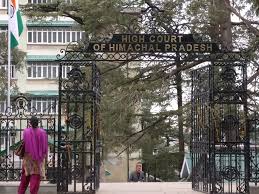
In the case of Anand Moudgil v. State of H.P. and Others, the High Court of Himachal Pradesh addressed a significant conflict of interest regarding the leadership of state and regional transport regulatory bodies.
Case Overview
The petitioner, a prospective transport operator, filed a writ of Quo Warranto challenging the appointment of the Principal Secretary (Transport) and the Director of Transport as Chairmen of the State Transport Authority (STA) and Regional Transport Authorities (RTAs), respectively. He argued that these officials were legally disqualified because they simultaneously served as ex-officio Directors on the Board of the Himachal Road Transport Corporation (HRTC), a state-owned transport undertaking.
The Legal Dispute
The core of the dispute rested on Section 68(2) of the Motor Vehicles Act, 1988, which mandates that no person with a “financial interest” in any transport undertaking shall be appointed or continue as a member of an STA or RTA.
- The State’s Argument: The government contended that “financial interest” refers only to personal pecuniary gain and that senior IAS officers, acting in their official capacity, do not have a personal stake in HRTC. They further argued that a “Chairman” is distinct from a “member” and thus not subject to the same disqualification clause.
- The Petitioner’s Argument: Relying on Supreme Court precedent (Mor Modern Transport Company), the petitioner argued that “financial interest” should be interpreted broadly to include those who manage the finances or bear the accountability of a transport undertaking that competes with private operators.
The Court’s Ruling
Justice Vivek Singh Thakur and Justice Ranjan Sharma quashed the appointments based on several key findings:
- Broad Interpretation of Financial Interest: The Court ruled that “financial interest” includes both direct personal benefit and indirect interest related to the management of an undertaking’s finances. As Directors of HRTC, these officials were responsible for the corporation’s business principles, fleet expansion, and revenue.
- The Chairman is a Member: The Court rejected the state’s attempt to distinguish between the Chairman and other members. It held that the Chairman is inherently a member of the authority and must be impartial and disinterested to ensure fair competition between HRTC and private transporters.
- Institutional Bias: The Court noted that allowing those who manage HRTC to also sit in judgment of its competitors’ permits creates a “conflict between duty on the one hand and interest on the other”.
- Application of the De Facto Doctrine: To prevent “administrative chaos,” the Court invoked the de facto doctrine. This means that while the appointments were illegal, all past orders issued by these officials remain valid and enforceable, though they can still be challenged on independent legal grounds.
Conclusion
The High Court declared the appointments void ab initio and directed the officials to cease acting as Chairmen immediately. The State was ordered to reconstitute the STA and RTAs with eligible, disinterested persons by March 31, 2026. Until then, the authorities are restricted to performing only routine business and cannot make major policy or permit decisions.
STPL (Web) 2026 HP 76
Anand Moudgil V. State of H.P. Through Chief Secretary And Others (D.O.J. 11-03-2026)
Loading Viewer...