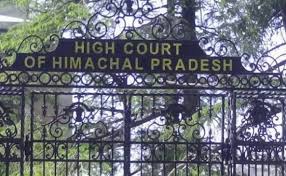


In Balram Kumar vs. State of H.P., the High Court of Himachal Pradesh upheld the conviction of a Gram Panchayat Secretary for bribery, ruling that a citizen forced to pay illegal gratification under extortion cannot be treated as an accomplice whose testimony requires independent corroboration. The Court established that the mere preparation of an official document in records does not absolve an official if the bribe was demanded as a quid pro quo for its physical delivery. Furthermore, the Court reaffirmed that a prosecution sanction is legally presumed valid if it contains detailed factual recitals showing an application of mind, and there is no mandatory requirement for the sanctioning authority to personally depose as a witness.
- Factual Background and Trap Procedure
The appellant, a Panchayat Secretary, was accused of demanding a bribe from an informant (PW1) for the issuance of his son’s birth certificate. After the appellant initially prevaricated and demanded Rs. 3,000 (later reduced to Rs. 2,500), the informant reported the matter to the Vigilance Department. A trap was organized where currency notes treated with phenolphthalein powder were handed to the accused at a tea stall. Upon receiving the signal, police apprehended the accused and conducted a sodium carbonate hand-wash test, which turned pink, confirming he had handled the tainted money.
- Legal Status of the Informant as a Victim
The defense argued that the informant should be treated as an accomplice since he participated in the bribe delivery. The High Court rejected this, holding that:
- A distinction must be made between a “willing” bribe-giver and one who is forced to offer a bribe under threat of loss or harm.
- Ordinarily, a citizen only approaches the authorities when “oppressed by a feeling of being wronged beyond endurance”.
- As a victim of extortion, the informant’s testimony is legally acceptable and should not be lightly brushed aside.
- Rejection of the “No Pending Work” Defense
The appellant contended that the birth certificate had already been generated in the records before the alleged trap, meaning no work was pending. The Court ruled that:
- Proof of the physical preparation of a document does not constitute proof of its delivery to the beneficiary.
- When the allegation involves a corrupt demand for the actual hand-over of a document, the official must provide evidence of receipt by the applicant to invalidate the charge.
- Human Conduct and Anticipatory Document Collection
The defense questioned the informant’s motive, noting his son was only 17 while the minimum age for Army enlistment was 18. The Court held it is normal human conduct for a citizen to compile critical official documents in anticipation of a future event rather than waiting for the exact day of eligibility. This anticipatory action did not render the prosecution’s case implausible.
- Validity of Prosecution Sanction
The Court addressed the challenge to the prosecution sanction, which was granted by a Deputy Commissioner who did not testify in person:
- Presumption of Regularity: Official acts are presumed to be performed regularly in the normal course of business.
- Application of Mind: Because the sanction order explicitly referenced the trap details and forensic reports, it was clear the authority had independently reviewed the file.
- Burden of Proof: Once a detailed sanction is on record, the burden shifts to the accused to prove it was granted mechanically; the absence of the sanctioning authority as a witness does not invalidate the order.
Final Outcome
Finding that the prosecution proved the demand, acceptance, and recovery of the bribe beyond a reasonable doubt, the High Court dismissed the appeal. The sentence of one year of rigorous imprisonment was upheld, with the Court noting that corruption damages the very fabric of society.
STPL (Web) 2026 HP 345
Balram Kumar V. State of H.P. (D.O.J. 23.06.2026)
Loading Viewer...