Voluntarily Causing Hurt : Validity of Conviction

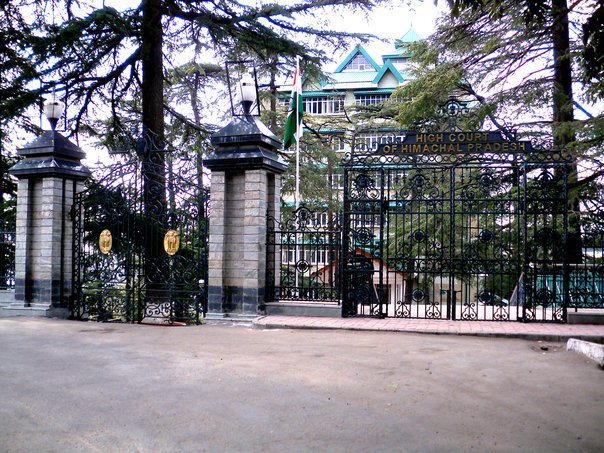
This is the judgment of the High Court of Himachal Pradesh in the case of Prakash Chand vs. State of H.P. (Criminal Appeal No. 300 of 2012), decided on January 1, 2026. The Court dismissed the appeal, upholding the appellant’s conviction for voluntarily causing hurt and his sentence of four months of simple imprisonment.

The key aspects of the case and the Court’s ruling are summarized below:

Case Background and Incident

The dispute arose from an incident on October 24, 2007, when the victim, Kuldeep Singh, went to the appellant’s house to borrow glasses. Following a verbal altercation, the appellant, Prakash Chand, struck the victim on the shoulder with a stick or piece of wood. While the prosecution initially charged the appellant and others with more serious offenses (including attempted murder), the Trial Court found that only the first part of the incident—the assault by Prakash Chand—was proved.

Key Legal Findings

The High Court addressed several legal challenges raised by the appellant:

  • Testimony of Hostile Witnesses: One of the primary eyewitnesses, Satpal (PW3), was declared “hostile” because he did not support the prosecution’s version of a second part of the incident. The Court ruled that the testimony of a hostile witness is not “washed off the record”. Instead, dependable portions that are corroborated by other evidence can still be used to establish guilt.
  • Defective Investigation: The appellant argued for acquittal because the police failed to recover or properly identify the weapon of offense. The Court held that a defective investigation is not a ground for acquittal if the remaining oral and medical evidence is credible. It emphasized that a complainant should not be penalized for the negligence or remissness of an Investigating Officer.
  • Corroboration by Medical Evidence: The Medical Officer (PW6) identified injuries on the victim’s shoulder and scapula that corresponded exactly with the eyewitness accounts of the first stage of the quarrel.
  • Status of Section 313 Statements: The Court noted that an accused’s mere denial of charges in a statement under Section 313 of the Code of Criminal Procedure is not substantive evidence. To rebut the prosecution’s proof, the accused must lead actual evidence, which the appellant failed to do.

Conclusion

The Court found no infirmity in the Trial Court’s decision to convict only the appellant, as the evidence clearly proved his specific role in the assault while the involvement of co-accused in a later stage remained unproven. The four-month simple imprisonment sentence was deemed appropriate given the nature of the injury.

Himachal Pradesh High Court : Prakash Chand V. State of H.P.

STPL (Web) 2026 HP 1

Loading Viewer...

Next Story

Section 313 Admission Alone Cannot Convict

The High Court of Himachal Pradesh allowed a criminal revision petition, set aside the concurrent conviction and sentence of the petitioner under Sections 279 and 304A IPC and Sections 181 and 190(3) of the Motor Vehicles Act, and acquitted him. It held that a statement under Section 313 Cr.P.C. is not substantive evidence and cannot sustain a conviction where there is no prosecution evidence proving that the accused was driving the offending truck.

  • Background and Concurrent Convictions: Following a night-time collision on 8:25 p.m. near Peerthan involving truck HP-12-2588 and an unnumbered motorcycle in which rider Mukesh Kumar died of head injuries, the Judicial Magistrate First Class, Court No. 2, Nalagarh convicted and sentenced the accused on 30.08.2012 / 24.09.2012. The Additional Sessions Judge-I, Solan (camp at Nalagarh) dismissed his appeal on 06.08.2015.
  • Scope of Revisional Jurisdiction: Under Sections 397/401 Cr.P.C. (now Section 438 BNSS), the High Court does not act as an appellate court or re-appreciate evidence merely because another view is possible. Interference is warranted where findings are perverse, grossly erroneous, unreasonable, untenable in law, ignore relevant or consider immaterial material, exercise discretion arbitrarily, or cause a miscarriage of justice, such as convicting without supporting evidence on a vital point.
  • Absence of Prosecution Proof on Driver Identity: Informant Bhag Singh (PW2) stated he could not identify the truck driver who fled and admitted in cross-examination that he could not say who was driving at the time of the accident. The prosecution also did not examine the truck owner to prove the accused was employed as driver, nor did any other witness identify him as the driver.
  • Limits of Section 313 Cr.P.C. Statement: A statement under Section 313 Cr.P.C. is not on oath, is neither substantive evidence nor a substitute for prosecution proof, and cannot form the sole basis of conviction—though inculpatory parts may corroborate proved prosecution evidence. Section 313 exists to let the accused explain proved incriminating circumstances, not to supply an unproved fact like driving the vehicle or rely on cross-examination suggestions contradicted by the site plan (Ext. PW6/B).

Final Order: The High Court set aside the conviction and sentence, acquitted the accused, ordered refund of any deposited fine after limitation (subject to Supreme Court orders in any appeal), and directed a ₹25,000 personal bond with one surety for six months under Section 437-A Cr.P.C. / Section 481 BNSS.

STPL (Web) 2026 HP 802

Joginder Singh vs. State of H.P. (D.O.J. 19.11.2026)

Loading Viewer...

Next Story

AI Clips and Defamation Fail Cognizable FIR Test

The High Court of Himachal Pradesh quashed an FIR registered against the petitioners concerning allegedly false AI-generated videos and photographs circulated on Facebook. It held that false allegations in AI media do not constitute forgery under Section 336(4) of the Bharatiya Nyaya Sanhita, 2023 (BNS) or public mischief under Section 353(1)(b) BNS, and police cannot investigate non-cognizable defamation under Section 356(2) BNS by adding unsupported cognizable offences as a subterfuge.

  • Background of the FIR: An FIR (No. 178 of 2026, dated 02.09.2026) was registered at Police Station Ghumarwin, District Bilaspur, under Sections 351(2), 356(2), and 336(4) BNS over an AI-generated video and photographs circulated on Facebook alleging false scheme benefits to family/friends, money collection/fleeing, and false claims of a government job and directorship. During investigation, police dropped Section 351(2) and added Section 353(1)(b) BNS.
  • No Forgery Under Section 336(4) BNS: Relying on Mohammed Ibrahim, Mir Nagvi Askari, Sheila Sebastian, and Bandekar Bros., forgery requires making a “false document” or electronic record with specific dishonest/fraudulent intent or unauthorized alteration/deception. Merely circulating AI-generated content with allegedly false statements—without showing it was passed off as made or authorized by another person, altered without authority, or executed under deception/incapacity—does not establish Section 336(4) BNS.
  • No Public Mischief Under Section 353(1)(b) BNS: Under Section 353(1)(b) BNS (corresponding to Section 505 IPC, as explained in Kedar Nath Singh), there must be material showing publication/circulation likely to cause public fear or alarm inducing an offence against the State or public tranquillity. Neither the FIR nor the status report showed how allegations of personal favouritism or money depictions caused public fear/alarm or incited such an offence.
  • Bar on Police Probe and Subterfuge for Defamation: Defamation under Section 356(2) BNS (corresponding to Section 500 IPC) is a non-cognizable private dispute governed by Section 222 BNSS (formerly Section 199 CrPC), barring police registration/investigation without a Magistrate’s order. Cognizable offences that are not made out cannot be added as a subterfuge to investigate a non-cognizable defamation grievance.
  • Relief Granted: Applying Bhajan Lal, N. John, and Ajay Malik, the High Court allowed the petition and quashed FIR No. 178 of 2026 along with all consequential proceedings, permitting production of a web-downloaded copy of the judgment.

STPL (Web) 2026 HP 801

Suresh Kumar & Another vs. State of HP & Another (D.O.J. 19.11.2026)

Loading Viewer...

Next Story

Time-Barred Loan Cheque Fails Section 138 Test

The High Court of Himachal Pradesh dismissed a criminal revision petition and upheld the acquittal of an accused in a cheque dishonour case under Section 138 of the Negotiable Instruments Act, 1881. It held that a cheque issued after the three-year limitation period under Article 19 of the Limitation Act, 1963 does not discharge a legally enforceable debt, and rejected an application for additional evidence to prove an unpleaded, unacknowledged entry.

  • Background and Lower Court Orders: The complainant co-operative society alleged that the respondent availed a ₹1,25,000 loan on 29.09.2014 and issued a cheque for ₹2,06,624 on 11.04.2019, which was dishonoured for insufficient funds, leading to a Section 138 complaint after notice on 30.04.2019. Both the Chief Judicial Magistrate First Class, Mandi and the Sessions Judge, Mandi held the debt time-barred and acquitted/upheld acquittal of the accused.
  • Additional Evidence Under Section 432 BNSS / Section 391 CrPC: The complainant sought to exhibit a previously filed account statement showing a ₹500 entry on 07.10.2016. Power under Section 391 CrPC (now Section 432 BNSS) is narrower than Section 311 CrPC, cannot fill lacunae or bypass missed trial opportunities, and does not cover “inadvertence” (a form of negligence) where due diligence is absent and the document would not advance the dispute.
  • Limitation, Part-Payment, and Section 19: Under Article 19 of the Limitation Act, 1963, limitation for money lent runs for three years from the advance (expiring on 28.09.2017 for a loan dated 29.09.2014). To extend limitation under Section 19 (akin to Section 20 of the 1908 Act), payment within limitation must be pleaded/proved and bear a writing in the payer’s hand or signed by the payer—not a mere creditor ledger entry or an account transfer entry (“TFR from DDS-406”) without payment by the debtor.
  • Scope of Section 49 of the H.P. Co-operative Societies Act, 1968: Section 49 excludes the Limitation Act only for proceedings under Sections 69, 73, and 88 of the 1968 Act, leaving limitation applicable elsewhere. Because this prosecution was not under those provisions, the 11.04.2019 cheque was towards a time-barred debt and not a legally enforceable liability under Section 138 of the NI Act.
  • Revisional Standard and Outcome: Revisional interference against an acquittal is limited to manifest error of law or procedure, glaring illegality causing miscarriage of justice, or perverse/shut-out evidence. Finding no infirmity in the concurrent decisions of the courts below, the High Court dismissed the revision and additional evidence prayer.

STPL (Web) 2026 HP 800

Janhit Thrift & Credit Co-operative Society vs. Prabh Dyal (D.O.J. 19.11.2026)

Loading Viewer...

Next Story

Contradictions Uphold NDPS Acquittal on Appeal

The High Court of Himachal Pradesh dismissed the State’s appeal under Section 378 of the Code of Criminal Procedure, 1973 and upheld the acquittal of two accused in an NDPS case involving 4 kg 100 grams of opium and 500 grams of charas. It held that an acquittal reinforces the presumption of innocence into a double presumption and cannot be overturned where a possible view supports acquittal and official witnesses exhibit material contradictions.

  • Background and Trial Outcome: Accused Roop Singh and Om Prakash were prosecuted under Sections 18 and 20 read with Section 29 of the NDPS Act following a recovery near Hasan Valley, District Shimla, on 04.09.2009 during routine patrolling by CID Crime Branch officials. The Special Judge-1, Shimla acquitted both accused on 17.11.2014 in Sessions Trial No. 3-S/7 of 2010 by giving them the benefit of doubt, prompting the State’s appeal.
  • Scope of Appeal Against Acquittal: Under Section 378 Cr.P.C., an acquittal strengthens the presumption of innocence into a double presumption. An appellate court should not overturn an acquittal merely because reappreciation could support another view, and may interfere only in exceptional cases of patent perversity, misreading or omission of material evidence, or where guilt is the only reasonable conclusion.
  • Non-Applicability of Sections 42 and 50: Because the police party had no prior secret information regarding the accused and effected a chance recovery during routine patrolling, Section 42 of the NDPS Act was not attracted. Likewise, because recovery was made from a bag carried in hand rather than from a personal search, Section 50 was not applicable.
  • Material Contradictions in Prosecution Evidence: With no independent witnesses associated, the prosecution relied on official witnesses, whose testimonies conflicted on the bag description (plastic boru/gunny bag versus polythene bag), when and by whom the NCB-1 form in triplicate was delivered to the SHO, the exact spot and completion time, and whether proceedings occurred in natural light or torchlight.
  • Final Decision: Finding the trial court’s appreciation of evidence sound and the prosecution version lacking clear, cogent proof beyond reasonable doubt, the High Court dismissed the appeal and ordered the trial court record to be sent back.

STPL (Web) 2026 HP 799

State of Himachal Pradesh vs. Roop Singh & Anr. (D.O.J. 18.11.2026)

Loading Viewer...

Recent Articles