
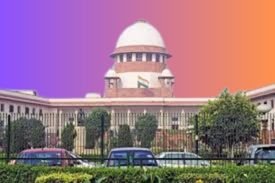
These civil appeals challenged a common judgment and order dated September 15, 2023, passed by the High Court of Patna in connection with arbitral proceedings arising out of a Distribution Franchisee Agreement dated December 31, 2013. The core issues revolved around whether a party can object to a sole arbitrator after participating and consenting to it despite a contractual clause requiring a three-member panel, whether an insolvency proceeding under the IBC against a corporate debtor bars them from continuing arbitration, and which court holds the proper jurisdiction to extend an arbitrator’s mandate under Section 29A of the Arbitration and Conciliation Act, 1996. A two-Judge Bench of the Supreme Court comprising Hon’ble Mr. Justice Ujjal Bhuyan and Hon’ble Mr. Justice Atul S. Chandurkar held that the appellant had waived its right to object to the single arbitrator’s coram through active participation and consent, affirmed that IBC moratorium provisions do not bar a corporate debtor from pursuing recovery claims like arbitration, but clarified that the High Court erred in holding that Section 29A extensions fall under the High Court’s jurisdiction rather than the Principal Civil Court/Commercial Court. Ultimately, because a parallel commercial court order had already validly extended the mandate, the Supreme Court dismissed the appeals and directed the sole arbitrator to conclude the proceedings within six weeks.
1. Background & Factual Matrix
- The appellant (South Bihar Power Distribution Company Ltd.) entered into a tripartite Distribution Franchisee Agreement with India Power Corporation Ltd. and its Special Purpose Vehicle (SPV), India Power Corporation (Bodhgaya) Ltd.
- Disputes arose during implementation, leading to arbitration. Through successive orders of the High Court consented to by both parties, retired judges were appointed as sole arbitrators (initially Justice Shashank Kumar Singh, and later former CJI Justice Dipak Misra).
- After participating for 18 months, filing counter-claims, and consenting to a 6-month extension, the appellant resisted a further extension request and filed a separate case seeking the constitution of a 3-member arbitral tribunal as originally contemplated in the agreement.
- Meanwhile, NCLT initiated Corporate Insolvency Resolution Process (CIRP) against the SPV under the IBC, during which a resolution plan was approved.
- The High Court ruled against the appellant, holding that it had waived its right to object to the sole arbitrator, that the IBC did not bar the SPV from pursuing its claims, and that the High Court had jurisdiction under Section 29A to extend the arbitral mandate.
2. Issue 1: Waiver and Acquiescence regarding the Arbitral Tribunal’s Composition
- Contractual Provision vs. Conduct: Clause 17.2.5 of the agreement provided for a panel of three arbitrators. However, the appellant twice consented before the High Court and before the sole arbitrator to substitute/appoint a sole arbitrator without raising timely objections.
- Statutory Bar: Under Section 4 and Section 16(2) of the Arbitration and Conciliation Act, 1996, a party that proceeds with arbitration without stating its objections to non-compliance of an agreement requirement without undue delay is deemed to have waived its right to object. Filing counter-claims and participating extensively amounts to clear acquiescence.
- Precedent Relied Upon: Citing Union of India v. Pam Development Private Limited, the Court reaffirmed that failure to raise jurisdictional objections at the earliest stage precludes a party from challenging it later. The High Court’s finding on this issue was affirmed.
3. Issue 2: Locus Standi and Impact of the Insolvency and Bankruptcy Code (IBC)
- Scope of Section 14 IBC: The moratorium under Section 14 of the IBC prohibits debt recovery actions against the corporate debtor to protect its assets during insolvency. It does not bar the corporate debtor from pursuing recovery claims or arbitral proceedings that enhance its financial health.
- Authorization: The Resolution Professional, with the approval of the Committee of Creditors under Section 28(1)(h) of the IBC, duly authorized the continuation of the proceedings.
- The Supreme Court concurred with the High Court that the second respondent possessed full locus standi to continue the arbitration.
4. Issue 3: Proper Forum for Extension of Mandate under Section 29A
- Definition of Court: Reviewing precedents (Associated Contractors, Jagdeep Chowgule, Velusamy), the Supreme Court clarified that the “Court” empowered to extend an arbitral mandate under Section 29A(4) is the Principal Civil Court of original jurisdiction in a district (or a High Court only if it exercises ordinary original civil jurisdiction).
- Exhaustion of Section 11 Powers: The High Court or Supreme Court’s power under Section 11 is exhausted upon constituting the arbitral tribunal; they do not retain residual supervisory control as a “court” under Section 2(1)(e) for Section 29A applications.
- Outcome: Consequently, the High Court’s ruling that it possessed jurisdiction under Section 29A was legally incorrect and set aside. However, because a parallel application had already been moved and allowed by the Principal District Judge-cum-Commercial Court, Patna, this technical correction did not alter the practical outcome.
5. Final Directions
- The Supreme Court lifted the stay/embargo on passing an award that had been imposed during the pendency of the proceedings.
- The sole arbitrator was directed to conclude the arbitral proceedings and pass the final award within 6 weeks.
- Both civil appeals were dismissed without costs.
2026 INSC 1165
South Bihar Power Distribution Company Ltd. v. India Power Corporation Ltd. & Anr. (D.O.J. 28.10.2026)
Loading Viewer...