
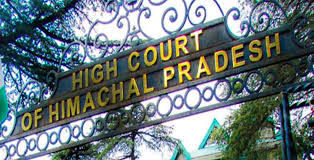
In D.N. Lakhanpal vs. Chief Secretary &Ors., the High Court of Himachal Pradesh ruled that public servants acting in their official capacity are protected from personal liability for administrative decisions made in good faith, such as Departmental Promotion Committee (DPC) determinations. The Court established that under Order 1, Rule 10(2) of the CPC, defendants who are neither “necessary” nor “proper” parties—meaning no effective decree can be passed against them personally and their presence is not required for adjudication—must be struck out from the suit. Furthermore, the Court reaffirmed the “doctrine of merger,” holding that when an initial administrative action is superseded by a subsequent decision, the former loses its independent existence. Condemning the use of “clever drafting” to create an illusory cause of action against retired officers after decades of litigation, the Court dismissed such claims as an abuse of the process of law.
- Factual Background and Deletion Applications
The plaintiff instituted a suit for damages against several defendants, including Defendants No. 4 and 6, who had served as Secretary (Personnel) and Chief Secretary to the Government of Himachal Pradesh. The suit stemmed from a 2001 DPC proceeding where the plaintiff was found “not suitable” for promotion to the post of Director. The applicants (Defendants 4 and 6), who retired in 2010 and 2003 respectively, moved applications under Order 1, Rule 10(2) CPC to have their names deleted from the suit, arguing they were improperly joined and that no cause of action existed against them personally.
- Legal Standard for Necessary and Proper Parties
The High Court applied strict tests to determine the necessity of the defendants’ presence:
- Necessary Parties: Those in whose absence no effective decree can be passed.
- Proper Parties: Those whose presence is required for a complete and effectual adjudication of the controversy. The Court found that since the plaintiff sought no direct relief against these individuals for acts performed in their official capacities, and the controversy pertained to governmental and judicial determinations, they met neither criteria.
- Protection of Public Servants and Vicarious Liability
A central pillar of the judgment was the presumption of legality and good faith attached to official acts.
- Immunity for Official Acts: Public officials cannot be subjected to personal suits for damages simply because a party is dissatisfied with an administrative decision.
- State Liability: If an injury is caused by an official act, the legal remedy lies against the State under the principle of vicarious liability, rather than against the individual officers.
- Fearless Administration: The Court noted that allowing personal litigation for every DPC decision would “paralyze administrative functioning” and deter officers from taking independent actions.
- The Doctrine of Merger
The Court noted that following multiple rounds of litigation, a subsequent DPC was convened in 2015 which reaffirmed the earlier 2001 decision.
- Loss of Independent Existence: Under the doctrine of merger, the 2001 proceedings merged into the 2015 decision.
- Selective Litigation: The Court criticized the plaintiff for selectively suing retired officers from the 2001 DPC while failing to implead the authorities who passed the subsequent 2015 order.
- Abuse of Process and “Clever Drafting”
The High Court emphasized its duty to “pierce the veil of clever drafting” to identify frivolous suits.
- Laches and Estoppel: The plaintiff had litigated his service grievances for nearly two decades (from 1999 to 2023) without ever impleading these defendants personally or alleging personal malice.
- Delayed Cause of Action: Introducing a personal claim for damages decades after the officials’ retirement was deemed a clear afterthought and an abuse of the court’s process.
- Order II Rule 2 CPC: The Court held that since the plaintiff had previously omitted to seek relief against these defendants in related proceedings, he was barred from introducing a fresh, belated cause against them now.
Final Outcome
The High Court concluded that the applicants were improperly joined as defendants as no independent personal liability or enforceable cause of action was disclosed against them. Consequently, the applications were allowed, and the names of Defendants No. 4 and 6 were ordered to be struck off from the array of parties.
STPL (Web) 2026 HP 355
D.N. Lakhanpal V. Chief Secretary &Ors. (D.O.J. 29.06.2026)
Loading Viewer...