
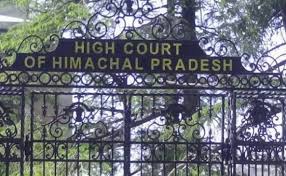
In the case of Brahma Ram vs. Kamla Devi &Ors. (2026), the High Court of Himachal Pradesh upheld the concurrent findings of the lower courts, declaring a propounded Will invalid due to numerous suspicious circumstances.
Case Background
The plaintiff, the sister of the deceased (Puran Chand), challenged a Will dated April 22, 1991, which was produced by the defendant. The plaintiff argued that the Will was forged because her brother had actually died on April 21, 1991, a day before the alleged execution of the document. The defendant maintained that Puran Chand was alive on the 22nd, executed the registered Will in Mandi, and died on April 23, 1991, while undergoing treatment at a hospital.
Suspicious Circumstances surrounding the Will
The Court found that the defendant (the propounder) failed to discharge the heavy legal burden of removing suspicions surrounding the Will’s execution. Key factors included:
- Physical Impossibility: Medical records indicated the deceased suffered from cardio-respiratory failure and was admitted to the hospital 15 days before his death. The Court found it highly improbable that a person in such a critical condition could travel alone to Mandi to execute a Will and return to die within 24 hours.
- Contradictory Recitals: The Will claimed the defendant was taking care of the deceased, yet witnesses (including those for the defense) testified that the deceased lived alone and cooked for himself.
- Unexplained Identification: The Will included an alias for the deceased (“Jogi”) that was later scored off, and no witness could explain why that name was used or that Puran Chand was ever known by that alias.
- Participation of Beneficiaries: Relatives of the beneficiary were found to have taken an active part in the execution and attestation of the Will.
Key Legal Findings
- Admissibility of Public Records: The Court held that the Panchayat death register, which recorded the death as April 21, was a public document admissible under Section 35 of the Indian Evidence Act and carried significant weight.
- Admissions in Pleadings: Under Order 8 Rule 5 of the CPC, the plaintiff’s relationship as the sister was deemed admitted because the defendant did not specifically deny it in his written statement.
- Adverse Inference: The Court ruled that no “adverse inference” could be drawn against the plaintiff for not appearing as a witness because her relationship was not in dispute and the legal burden was on the defendant to prove the Will’s validity.
- Scope of Second Appeal: Reaffirming settled law under Section 100 CPC, the High Court stated it cannot re-appreciate evidence or disturb concurrent findings of fact unless they are “patently perverse”.
Conclusion
The High Court dismissed the appeal, affirming that the Will was a product of suspicious circumstances and that the lower courts had correctly applied the law in declaring it invalid.
STPL (Web) 2026 HP 226
Brahma Ram V. Kamla Devi &Ors. (D.O.J. 12.05.2026)
Loading Viewer...