
Ejectment: TPA – Validity of Short Notice U/s 106(3)

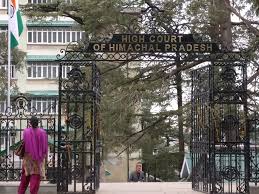
In the case of Lekh Raj v. Kamal Kumar (2026), the High Court of Himachal Pradesh restored a trial court’s decree for the ejectment of a tenant, ruling that a notice to quit is not invalid simply because the period mentioned in it is shorter than the statutory requirement, provided the suit is filed after that period expires.

The following is a summary of the judgment:

Case Background

The plaintiff (Lekh Raj) filed a suit for the recovery of rent arrears and the ejectment of the defendant from a shop in Una, H.P.. The plaintiff served a notice on January 18, 2005, requesting the tenant to vacate by the end of January 2005. While the Trial Court decreed the suit in full, the First Appellate Court set aside the order for possession, concluding that the notice was invalid because it provided only 14 days of notice instead of the 15 days required under Section 106 of the Transfer of Property Act (TPA).

Key Findings of the Court

The High Court set aside the appellate court’s decision based on the following legal principles:

  • Validity of Short Notice (Section 106(3) TPA): The Court highlighted that under the amended Section 106(3) of the TPA, a notice is not deemed invalid merely because the period mentioned falls short of 15 days, as long as the suit or proceeding is filed after the expiry of the 15-day period. In this case, although the notice gave only 14 days, the suit was filed on February 17, 2005—well after the 15-day window from the receipt of the notice.
  • Waiver of Objections: The Court held that any objection regarding the insufficiency or invalidity of a notice must be specifically pleaded in the written statement at the earliest opportunity. Because the defendant failed to specifically challenge the 15-day period in his initial response, the objection was deemed waived and could not be raised for the first time during the appeal.
  • Common-Sense Interpretation: Reaffirming settled law, the Court stated that notices to quit must be construed in a “common sense way” and not in a “hyper-technical” or “hyper-critical” manner with a desire to find faults. The test is what the notice would mean to the specific tenant who is conversant with the facts, not how a stranger would interpret it.
  • Error of the Lower Appellate Court: The High Court found that the First Appellate Court erred by entertaining a plea that had been waived and by failing to account for the legislative intent of the amended TPA, which was meant to “plug the loopholes” and prevent technicalities from defeating substantive justice.

Legal Conclusion

The High Court concluded that the tenancy had been lawfully terminated. The appeal was allowed, the First Appellate Court’s judgment was set aside, and the original decree directing the defendant to hand over vacant possession of the suit premises was restored.

STPL (Web) 2026 HP 135

Lekh Raj (Since Deceased) Through Lrs. V. Kamal Kumar (D.O.J. 22-04-2026)

Loading Viewer...

Next Story

Jurisdictional Limits of Gram Panchayats: High Court Quashes Order on Private Path

Jurisdictional Limits of Gram Panchayats: High Court Quashes Order on Private Path

In the judgment of Amar Chand v. Braham Lal, the High Court of Himachal Pradesh quashed an order by a civil court that sought to enforce a Gram Panchayat’s directive regarding a path on private land. The Court ruled that Gram Panchayats lack the jurisdiction to adjudicate disputes concerning the obstruction of paths on private property, rendering such orders a legal nullity that cannot be enforced.

Case Background: The Panchayat’s Directive

The dispute began when a respondent complained that the petitioner, Amar Chand, was hindering a path located on his private property.

  • The Panchayat Order: On January 13, 2015, Gram Panchayat Kuddi issued an order directing the petitioner to open the path for the general public and threatened fines for future obstructions.
  • Execution in Civil Court: When the petitioner failed to comply, the respondent sought execution of the order under Section 71 of the Himachal Pradesh Panchayati Raj Act, 1994. The Civil Judge at Bilaspur subsequently issued a warrant of attachment against the petitioner’s property to force compliance.

Key Legal Findings: Scope of Section 41

Justice Jiya Lal Bhardwaj set aside the execution order, emphasizing that the Gram Panchayat had “usurped” jurisdiction it did not possess.

  • Limited Judicial Functions: Under Section 41 of the H.P. Panchayati Raj Act, a Gram Panchayat’s judicial jurisdiction is strictly limited to specific minor civil suits (valued under ₹2,000), such as money due on contracts (excluding immovable property), recovery of movable property, and cattle trespass.
  • No Power over Private Land Paths: The Court found that neither the Panchayati Raj Act nor the H.P. Tenancy and Land Reforms Act empowers a Gram Panchayat to determine rights or obstructions related to a path on private land. Such matters are the exclusive domain of Civil Courts and cannot be determined in summary proceedings.
  • A Decree without Jurisdiction is a Nullity: Relying on Supreme Court precedents like JagmittarSain Bhagat v. Director, Health Services, Haryana, the Court held that if an authority lacks “subject matter jurisdiction,” its findings are irrelevant and inexecutable.
  • Waiver Does Not Apply: The respondent argued that the order had become final because the petitioner failed to appeal it. However, the Court ruled that jurisdiction cannot be conferred by consent or by a failure to object; a void order remains a nullity and can be challenged at any stage of the proceedings.

Final Ruling

The High Court concluded that since the Gram Panchayat’s original order was passed without the authority of law, the subsequent execution proceedings in the civil court were also invalid.

The Court’s Directives:

  • Revision Petition Allowed: The petition filed by Amar Chand was allowed.
  • Order Quashed: The Civil Judge’s order dated January 7, 2020, which issued the warrant of attachment and directed the unblocking of the path, was quashed and set aside.

STPL (Web) 2026 HP 166

Amar Chand V. Braham Lal (D.O.J. 27.04.2026)

Loading Viewer...

Next Story

Rash and Negligent Driving: Driving on The Wrong Side

In the judgment of State of H.P. v. Yudhvir Singh, the High Court of Himachal Pradesh set aside a trial court’s acquittal and convicted a driver for rash and negligent driving. The Court ruled that driving on the wrong side of the road constitutes negligence per se and that minor contradictions in testimony due to the passage of time cannot be used to discard a credible prosecution case.

Case Background: The Collision

The incident occurred in December 2008 when the respondent, driving a Mahindra Bolero, hit a motorcyclist from the opposite direction near a factory in Kangra. The motorcyclist (informant) sustained grievous injuries. While the respondent admitted to being the driver, he claimed the accident was caused by the motorcyclist’s own negligence for not looking forward.

Trial Court’s Initial Acquittal

The Trial Court originally acquitted the driver based on three main factors:

  • Witness Credibility: It found minor contradictions in the informant’s testimony regarding who took him to the hospital.
  • Informant’s Attention: An eyewitness (PW3) admitted in cross-examination that the motorcyclist was looking toward the factory just before the hit.
  • Non-examination of Witnesses: The prosecution failed to examine one person who was allegedly present at the scene.

High Court’s Grounds for Reversal

Justice Rakesh Kainthla found the Trial Court’s view to be perverse and contrary to the evidence based on the following legal principles:

  • Wrong-Side Driving as Negligence: The site plan and photographs clearly established that the respondent was driving on the right (wrong) side of the road. The Court held that under Rule 2 of the Rules of the Road Regulations, 1989, a driver must stay to the left. Had the respondent stayed on his side, the accident would not have occurred regardless of where the motorcyclist was looking.
  • Failure of Memory vs. Falsehood: The Court ruled that discrepancies in witness statements (e.g., who provided medical aid) are natural when testifying nearly four years after an incident and do not affect the “core” of the testimony.
  • Procedural Error Regarding Evidence: The High Court noted that the Trial Court improperly used the informant’s previous police statement to discredit him without following the mandatory procedure under Section 145 of the Indian Evidence Act, which requires a witness to be confronted with the specific parts of a statement they are alleged to have contradicted.
  • Adverse Inference: The Court clarified that an “adverse inference” for not examining a witness only applies if the existing evidence is insufficient; here, the site plan and photographs were enough to prove the case.

Final Verdict and Conviction

The High Court allowed the State’s appeal and convicted the respondent under:

  • Section 279 of the IPC (Rash driving on a public way).
  • Section 338 of the IPC (Causing grievous hurt by act endangering life or personal safety).

Separate convictions under Section 337 IPC and Section 184 of the Motor Vehicles Act were deemed unnecessary under Section 71 of the IPC. The respondent was ordered to appear for sentencing on May 12, 2026.

STPL (Web) 2026 HP 165

State Of H.P. V. Yudhvir Singh(D.O.J. 27.04.2026)

Loading Viewer...

Next Story

Industrial Dispute: Belated Reinstatement Claim Dismissed

High Court Dismisses Belated Reinstatement Claim in Labor Dispute

In the judgment of Hari Dass v. Union of India and Others, the High Court of Himachal Pradesh dismissed a writ petition seeking reinstatement and back wages. The Court ruled that the petitioner failed to substantiate his claims with evidence, approached the Court with significant delay, and invoked the wrong legal forum.

The Dispute: Alleged Verbal Termination

The petitioner claimed he was engaged as a worker in 2007 and that his services were verbally and illegally terminated in 2011. He sought a writ of mandamus for re-engagement with full back wages, seniority, and continuity of service, alleging that the respondents had reinstated other similarly situated persons in 2014 while ignoring him.

The respondents contested these claims, stating that the petitioner was a casual paid laborer engaged only from May 21, 2009, to August 10, 2009, and was discharged once the available work was completed.

Key Judicial Findings

Justice Ajay Mohan Goel dismissed the petition based on several critical procedural and substantive grounds:

  • Total Lack of Evidence: The Court noted that the petitioner failed to append a single document or annexure to his petition to prove his period of service or the alleged verbal termination. Consequently, his contentions were entirely unsubstantiated by the record.
  • Delay and Laches: Even if the petitioner’s version of events were true, he approached the Court in 2016 for a termination that allegedly occurred in 2011. The Court found this to be a highly belated approach.
  • Alternative Remedy: The Court held that alleged violations of the Industrial Disputes Act must be agitated before the specific statutory fora (Labor Courts/Tribunals) provided under that Act. A writ petition under Article 226 of the Constitution is not the appropriate vehicle for such disputes, as the Industrial Disputes Act provides both substantive and procedural remedies.
  • Loss of Efficacy due to Age: The petitioner was 53 years old when he filed the petition in 2016 and had reached 63 years of age by the time of the judgment. The Court concluded that the petition had lost its efficacy as the petitioner had passed the typical age of service.

Final Ruling

The High Court concluded that the petition was meritless and dismissed it, along with any pending miscellaneous applications.

STPL (Web) 2026 HP 164

Hari Dass V. Union Of India And Others(D.O.J. 25.04.2026)

Loading Viewer...

Next Story

HP Recruitment & Conditions of Service of Government Employees Act, 2024 Held unconstitutional and ultra vires

In the judgment of Devinder Kumar &Ors. v. State of Himachal Pradesh &Anr. (and hundreds of connected petitions), the High Court of Himachal Pradesh declared the Himachal Pradesh Recruitment and Conditions of Service of Government Employees Act, 2024, to be unconstitutional and ultra vires. The Court quashed the entire Act, ruling that the State cannot use legislation to nullify judicial mandates or exploit employees by denying them service benefits for work performed under “contract” labels.

The Dispute: Legislative Overrule of Seniority Rights

The State enacted the 2024 Act (Act No. 23 of 2025) to retrospectively alter the service conditions of thousands of employees who began their careers on a contract basis.

  • The Act’s Goal: It sought to classify “contract appointments” as a distinct mode of recruitment that did not count as “public service”. Under the Act, seniority, increments, and pension benefits would only accrue from the date of regularization, effectively wiping out years of past contract service.
  • The Retrospective “Substitution”: Section 8 of the Act attempted to retrospectively change all Recruitment and Promotion (R&P) Rules since 2003, replacing the words “on contract basis” with “by regularisation” to circumvent previous court rulings.

Key Judicial Findings

Justice Vivek Singh Thakur and Justice Romesh Verma identified several constitutional failures in the Act:

  • Encroachment on Judicial Power: The Court held that while a legislature can change the basis of a law, it cannot simply declare a binding judicial decision (such as the Taj Mohammad or Lekh Ram cases) as “wrong” or “ineffective”. This was viewed as a direct breach of the Separation of Powers.
  • Violation of Equality (Articles 14 & 16): The Court found that contract employees who were recruited through the same competitive process as regular employees (via the Public Service Commission) were “identically situated”. Denying them seniority while granting it to regular peers was deemed manifestly arbitrary and discriminatory.
  • Financial Constraints are Inadmissible: The State argued the Act was necessary to avoid a “huge burden on the State Exchequer”. The Court rejected this, asserting that paucity of funds is no excuse to shirk statutory duties or deny established legal rights to employees.
  • Constitutional Scheme for Recruitment: The Act created a “mess” by proposing a mode of recruitment where individuals would perform the duties of a government servant but would not technically be “in service” until regularized. The Court ruled this bypassed the constitutional mandate for regular public employment.

Final Ruling and Directives

The High Court concluded that the Act was a “colourable exercise of power” designed to facilitate exploitative labor practices.

  1. Act Quashed: The Himachal Pradesh Recruitment and Conditions of Service of Government Employees Act, 2024, is void ab initio.
  2. Withdrawals Nullified: All State actions based on the Act—such as withdrawing seniority or proposing recoveries of pay—are declared illegal and null.
  3. Mandatory Compliance: The State is directed to extend all service benefits, including seniority and increments, to the affected employees in terms of previous court mandates within three months.

STPL (Web) 2026 HP 163

Devinder Kumar & Ors. V. State Of Himachal Pradesh & Anr.(D.O.J. 25.04.2026)

Loading Viewer...

Recent Articles