
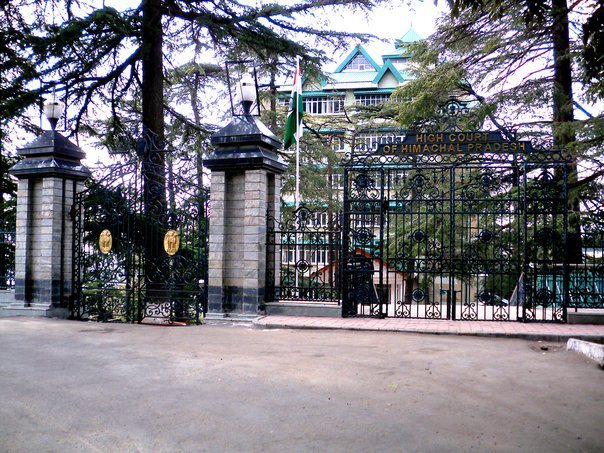
In the case of Sh. Ramesh v. Ram Kumar (2026), the High Court of Himachal Pradesh quashed trial court orders that had “mechanically” directed an accused individual to pay the maximum allowable interim compensation in a cheque dishonor case,.
The following is a summary of the judgment:
Case Background
The respondent filed a complaint under Section 138 of the Negotiable Instruments (NI) Act, alleging that the petitioner, Ramesh, issued a cheque for ₹12,00,000 which was dishonored due to “insufficient funds”,. During the proceedings, the trial court allowed the accused to cross-examine the complainant but simultaneously invoked Section 143-A of the NI Act, ordering the accused to pay 20% of the cheque amount as interim compensation within 60 days,. When the petitioner failed to pay, the court ordered the amount to be recovered as a fine.
Key Legal Findings of the Court
The High Court set aside the trial court’s orders based on several critical legal principles:
- Discretionary, Not Mandatory Power: The Court emphasized that the use of the word “may” in Section 143-A indicates that the power to award interim compensation is discretionary, not mandatory,. It is not required for the court to order payment in every single complaint.
- Violation of Natural Justice: The Court found that the trial court failed to afford the accused a reasonable opportunity to be heard or to file a reply before directing the payment,. The accused had specifically denied ever availing the ₹12,00,000 loan.
- Requirement for a Prima Facie Evaluation: Before ordering interim compensation, the court must evaluate the merits of the complainant’s case and the plausibility of the defense,. The Court noted that the statutory presumption under Section 139 of the NI Act is not, by itself, a sufficient ground to mandate interim payment because it is a rebuttable presumption.
- Need for Reasoned Orders: The Court held that a trial court must record brief reasons for granting interim compensation and for determining the specific percentage (anywhere from 1% to 20%), Awarding the maximum cap of 20% without considering the “attending parameters”—such as the nature of the transaction, the relationship between parties, and the paying capacity of the accused—is legally unsustainable,,.
- Drastic Nature of the Provision: Because Section 143-A allows for a “drastic order” for payment before any final adjudication of guilt is made, the Court ruled that such power must be exercised judiciously and not in a routine or mechanical manner,.
Conclusion
The High Court concluded that the trial court’s orders lacked the application of mind and violated the principles of natural justice,. Consequently, the Court quashed and set aside the orders for interim compensation and directed the trial court to consider the matter afresh after giving both parties a proper hearing,
STPL (Web) 2026 HP 123
Sh. Ramesh V. Ram Kumar (D.O.J. 30-03-2026)
Loading Viewer...