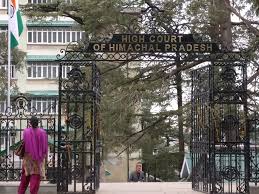


“Catch-Up Rule” vs. Consequential Seniority: High Court Dismisses Seniority Claim by Reserved Category Engineer
In the judgment of Yashpal Dhiman v. State of Himachal Pradesh, the High Court of Himachal Pradesh upheld a final seniority list that placed general category employees above a reserved category petitioner who had been promoted earlier. The Court ruled that in the absence of a specific state policy providing for “consequential seniority,” the “catch-up rule” applies, allowing senior general category candidates to regain their seniority once they are promoted to the same higher grade.
The Dispute: Reversal of Seniority Positions
The petitioner, a member of the Scheduled Caste (SC) category, was appointed as a Junior Engineer in 1979. Following a previous court order, he was promoted to Assistant Engineer (Electrical) effective from December 1991.
- Provisional List: In a 2011 provisional seniority list, the petitioner was assigned Seniority No. 2 because of his early promotion date.
- Final List: In the 2012 final seniority list, his position was shifted to Seniority No. 15, placing several private respondents above him. These respondents were senior to the petitioner in the entry-level (Junior Engineer) grade but had been promoted to Assistant Engineer later than him.
Legal Principles: The “Catch-Up” Rule
Justice Jiya Lal Bhardwaj relied on established Supreme Court precedents, including Ajit Singh (II) and Virpal Singh Chauhan, to resolve the conflict:
- Definition of Catch-Up: If a senior general category candidate at a lower level reaches the promotional level later—but before the reserved candidate is promoted even further—the general candidate regains their seniority over the reserved candidate at that higher level.
- Balancing Rights: This rule is intended to maintain a balance and avoid “reverse discrimination” against general category candidates who were originally senior to the roster-point promotees.
- Seniority is Not Automatic: The Court held that “consequential seniority” (where a reserved candidate keeps their seniority gained through accelerated promotion) is not an automatic constitutional right under Article 16(4-A). It only applies if the State has framed a specific rule or policy to that effect.
State Policy and Lack of Challenge
The Court found that the State of Himachal Pradesh had issued instructions in March 1997 specifically stating that general category candidates regain seniority as per their entry-level positions once they “catch up” in the promotional cadre.
- Unchallenged Instructions: The petitioner did not challenge the validity of these 1997 instructions.
- Administrative Correction: The Court ruled that correcting the provisional seniority list based on settled law and existing state instructions did not violate the principles of natural justice.
Final Ruling
The High Court concluded that the respondent-department committed no error in assigning the petitioner Seniority No. 15. Finding that the “catch-up” rule fully applied in the absence of a contrary state policy for consequential seniority, the Court dismissed the petition.
STPL (Web) 2026 HP 101
Yashpal Dhiman V. State of Himachal Pradesh And Others (D.O.J. 20-03-2026)
Loading Viewer...