

Limits on Disciplinary Authority: High Court Quashes De-Novo Inquiry for PWD Officials
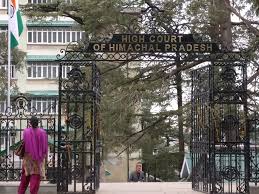
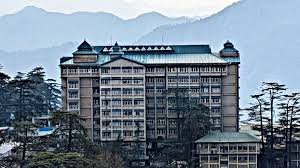
In the judgment of Sanjeev Mahajan and Others v. State of Himachal Pradesh and Others, the High Court of Himachal Pradesh ruled that a disciplinary authority cannot discard a completed inquiry report to order a fresh (de-novo) inquiry simply because the findings are not to its liking. The Court held that under the CCS (CCA) Rules, 1965, the authority is limited to seeking “further evidence” to cure specific defects rather than restarting the entire process.
The Dispute: Dissatisfaction with Inquiry Findings
The petitioners, officials in the Public Works Department (PWD) Kangra Division, faced disciplinary proceedings for alleged negligence in bridge construction. An Inquiry Officer was appointed, conducted a formal investigation, and submitted a report to the Disciplinary Authority in August 2024.
However, in February 2025, the Disciplinary Authority issued an order to conduct a “further de-novo inquiry” through the Commissioner of Departmental Enquiries, effectively setting aside the original proceedings. The State argued that this was necessary due to “procedural, technical and substantive irregularities” in the first report.
Key Legal Principles Established
Justice Ajay Mohan Goel quashed the order for a fresh inquiry, relying on the following legal foundations:
- Rule 15 of CCS (CCA) Rules: The Court clarified that Rule 15 provides for only one inquiry. While a Disciplinary Authority can ask an Inquiry Officer to record further evidence if serious defects occurred or vital witnesses were missed, it has no power to completely ignore a report and start over.
- Prohibition of De-Novo Inquiries: Citing the Supreme Court landmark case K.R. Deb v. Collector of Central Excise, the Court established that a previous inquiry cannot be set aside just because the report “does not appeal” to the Disciplinary Authority.
- Protection Against Harassment: The Court noted that allowing successive de-novo inquiries would lead to the indefinite harassment of employees, as authorities could simply keep ordering new trials until they achieved a desired conviction.
- Procedural Mandate: If the Disciplinary Authority disagrees with an Inquiry Officer’s findings, the proper legal course is to record its own tentative reasons for disagreement and allow the employee to represent their case, rather than ordering a new investigation.
Final Ruling and Directives
The High Court concluded that the order for a de-novo inquiry was “bad in law” and an arbitrary exercise of power.
The Court’s Mandate:
- Quashing of Orders: The Court set aside the February 2025 order for a de-novo inquiry and the subsequent August 2025 order that had dismissed the petitioners’ objections.
- Logical Conclusion: The Disciplinary Authority was directed to take the existing inquiry report to its logical conclusion based on established guidelines.
STPL (Web) 2026 HP 98
Sanjeev Mahajan And Others V. State of Himachal Pradesh And Others (D.O.J. 18-03-2026)
Loading Viewer...