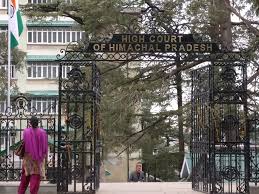
In the case of Ashwani Kumar and Another v. State of H.P. and Another (2026), the High Court of Himachal Pradesh dismissed a writ petition seeking the creation of Law Officer posts and the framing of recruitment rules for such positions within the State’s Forest Department.
The following is a summary of the judgment:
Case Background
The petitioners, a Senior Scale Stenographer and a Senior Assistant in the Forest Department, sought a writ of mandamus to compel the State to create Law Officer posts and designate their current positions as feeder categories for promotion. They argued that several other government departments had already created such posts and that internal departmental proposals had previously recommended the creation of a Legal Cell to handle increasing litigation. The State had rejected these proposals in 2009, stating that legal work was already being managed by an appointed District Attorney.
Key Findings of the Court
The Court rejected the petitioners’ claims based on several established legal principles regarding the separation of powers and administrative discretion:
- Executive Domain over Post Creation: The Court held that the creation of posts, nomenclature, and the framing of Recruitment and Promotion (R&P) Rules fall exclusively within the executive domain. A writ of mandamus cannot be used to compel the government to create specific posts or restructure its cadres.
- Non-Binding Nature of Internal Notings: The petitioners relied on departmental recommendations and file notings that supported the creation of Law Officer posts. The Court clarified that internal file notings are merely expressions of opinion by officers and do not constitute a binding government decision until formally notified by the competent authority.
- Judicial Restraint in Policy Matters: Citing precedents such as P.U. Joshi v. Accountant General, the Court emphasized that it is not the role of statutory tribunals or courts to substitute their views for the State’s regarding recruitment methods or eligibility criteria. The Court must exercise restraint in matters involving administrative exigencies and policy.
- Avenues for Promotion Already Exist: The petitioners’ claim of stagnation was found to be factually unsustainable. The Court noted that the petitioners already had established channels of promotion within their respective categories, and one petitioner had already been promoted to Superintendent Grade-II. Employees have no fundamental right to demand that their current post be linked to a non-existent promotional post.
- Valid Administrative Discretion: The State’s decision to reject the proposal was upheld as a valid exercise of discretion, particularly since the department had already engaged a District Attorney to oversee its legal work.
Conclusion
The Court concluded that the petitioners failed to establish any gross case of arbitrariness or unfairness that would warrant judicial interference. The writ petition was dismissed as being devoid of merit.
STPL (Web) 2026 HP 85
Ashwani Kumar and Another V. State of H.P and Another (D.O.J. 17-03-2026)
Loading Viewer...