

The 15-Day Trap: How Missing a Statutory Appeal Deadline Bars a High Court Challenge
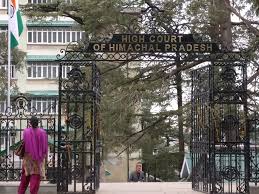
In the case of Smt. Anita Kumari v. State of Himachal Pradesh and Others, the High Court of Himachal Pradesh addressed whether a writ petition is maintainable when a petitioner fails to exhaust a mandatory statutory appeal within the prescribed time limit.
Case Background
The petitioner challenged the appointment of the private respondent as an Anganwari worker at Anganwari Centre Tangling, a selection that was finalized in March 2013. Instead of filing a formal appeal, the petitioner submitted a complaint to the Deputy Commissioner expressing that she was “not satisfied” with the interview process. When this complaint did not result in the set-aside of the appointment, she approached the High Court via a writ petition.
The Mandatory Appellate Procedure
The Court’s decision centered on the strict procedural requirements of the I.C.D.S. Scheme Guidelines:
- Clause 12 Requirement: The policy specifically provides that any person aggrieved by an appointment must file an appeal to the concerned Deputy Commissioner within 15 days.
- Finality of Appointment: If no appeal is preferred within this narrow window, the appointment attains finality and cannot be reopened years later.
The Limitation Bar
A key legal issue was whether the delay in filing an appeal could be excused. Justice Ajay Mohan Goel, citing the precedent in ***Praveena Devi v. State of H.P.***, clarified the following:
- Inapplicability of Section 5: The provisions of Section 5 of the Limitation Act, which allow for the condonation of delay, apply only to court proceedings and not to quasi-judicial authorities like the appellate authority under this scheme.
- No Power to Condone: Because the scheme itself contains no provision for excusing delays, the appellate authority is not competent to condone a delay beyond the 15-day period.
The Court’s Conclusion
The High Court dismissed the petition on the following grounds:
- Failure to Exhaust Remedies: The petitioner did not invoke the mandatory Clause-12 appeal within the 15-day limit, making the writ petition not maintainable.
- Insufficient Allegations: The petitioner’s initial complaint was described as “cryptic,” as it merely stated dissatisfaction without detailing any specific legal infirmity or illegality in the selection process.
- Significant Passage of Time: The Court noted that the private respondent had already been serving in the position for more than 12 years, making it inequitable to entertain such a stale claim.
Ultimately, the Court held that the strict timelines of the recruitment scheme must be adhered to, and the petition was dismissed as devoid of merit.
STPL (Web) 2026 HP 71
Smt. Anita Kumari V. State of Himachal Pradesh And Others (D.O.J.07-03-2026)
Loading Viewer...