
The High Court’s Boundary: Why “Pay and Recover” is Reserved for the Supreme Court
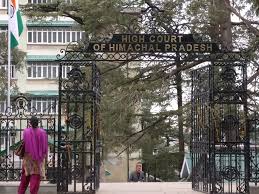
In the case of United India Insurance Company Ltd. v. Puran Chand & Others, the High Court of Himachal Pradesh clarified the limits of liability regarding gratuitous passengers in goods vehicles and the restricted scope of the “pay and recover” principle.
Case Overview
On January 23, 2005, a pickup truck (a goods carriage) met with an accident due to rash and negligent driving, resulting in the death of two women and injuries to two other passengers. The Motor Accident Claims Tribunal (MACT) initially awarded compensation to the victims, directing the United India Insurance Company to pay the amount first and then recover it from the vehicle owner.
The Legal Dispute
The Insurance Company appealed the decision, arguing that:
- The deceased and injured were gratuitous passengers travelling in a goods vehicle without any goods.
- Under Section 147 of the Motor Vehicles Act, an insurer is not liable for passengers in a vehicle constructed solely for carrying goods.
- The Tribunal lacked the authority to issue a “pay and recover” directive.
The Court’s Ruling
Justice Sushil Kukreja modified the Tribunal’s award and exonerated the insurance company based on the following legal principles:
- Definition of Goods Carriage: Under the Motor Vehicles Act, a “goods carriage” is defined as a vehicle used solely for the carriage of goods. The court found that since the passengers were not owners of any goods being transported at the time, they were “gratuitous passengers” for whom the insurer had no statutory liability.
- Scope of Section 147: The court noted that while a 1994 amendment included the “owner of the goods” under insurance coverage, it did not extend to general passengers in a goods vehicle. Therefore, the insurer is not required to indemnify the owner for such risks.
- The Article 142 Limitation: The High Court held that the “pay and recover” principle is an exercise of extraordinary power under Article 142 of the Constitution, which is available only to the Supreme Court of India. Neither the MACT nor the High Court possesses the jurisdiction to direct an insurer to pay compensation when they are not legally liable under the policy.
- Jurisdictional Excess: The court concluded that the Tribunal committed a “grave illegality” by applying a Supreme Court-specific power to fasten initial liability on the insurance company.
Conclusion
The High Court allowed the appeal and modified the award, ruling that the legal representatives of the vehicle owner are solely liable to satisfy the compensation claims. The insurance company was entirely exonerated from liability.
STPL (Web) 2026 HP 65
United India Insurance Company Ltd. V. Puran Chand & Others (D.O.J.05-03-2026)
Loading Viewer...