Land Acquisition: Adverse Possession

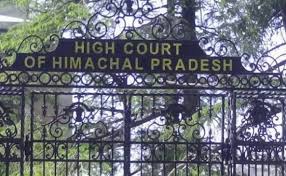
In the judgment of Council of Scientific and Industrial Research (CSIR) v. State of H.P., the High Court of Himachal Pradesh dismissed a series of appeals, ruling that while land acquisition proceedings did not technically “lapse” under modern statutes, the government agency lost its right to the land due to adverse possession by the original occupants following a 30-year delay in taking possession.

The Conflict: Valid Acquisition vs. Decades of Inaction

The case involved land acquired in 1966 for the establishment of a research institute in Palampur.

  • The 1966 Award: The compensation was duly deposited and disbursed in 1966, but the acquiring department (CSIR) failed to take physical possession of the buildings and land as required by the award.
  • The 30-Year Gap: CSIR took no proactive steps to claim the land until 1989—23 years after the award—when it filed a civil suit for possession. That suit was dismissed in 1996, and CSIR waited until 2003 to file further applications before the Collector.

Legal Ruling: Why the Acquisition Did Not “Lapse”

A lower court had originally ruled that the acquisition “lapsed” under Section 24(2) of the 2013 Land Acquisition Act because possession was never taken. However, the High Court corrected this view based on the Supreme Court’s Constitution Bench ruling in ***Indore Development Authority (2020)***:

  • Cumulative Requirements: For an acquisition to lapse under the 2013 Act, the authorities must have failed to both take possession and pay compensation.
  • Valid Deposit: Since the compensation was paid/deposited back in 1966, the acquisition remained legally valid and did not lapse merely because possession was outstanding.

The “Sword” of Adverse Possession

Despite the technical validity of the 1966 acquisition, the Court held that CSIR had forfeited its rights through Article 65 of the Limitation Act.

  • 12-Year Limitation: The right to claim possession of immovable property is extinguished if not exercised within 12 years of the possession becoming “adverse”.
  • Hostile Occupation: In its own legal filings, CSIR admitted that the respondents had remained in open and hostile possession of the land for decades, even raising new constructions while CSIR watched.
  • Adverse Possession as an Offensive Right: Drawing on ***Ravinder Kaur Grewal (2019), the Court emphasized that adverse possession is not just a “shield” for defense but can be used as a “sword” to claim ownership once the original owner’s title is extinguished by time.

Conclusion: A “Travesty of Justice” to Evict Now

The Court described the 30-year delay as a “colossal delay” that could not be countenanced. It concluded that forcing the eviction of the respondents after they had occupied the land for over 60 years would be a “travesty of justice”.

The High Court affirmed that while the acquisition process itself was valid, the respondents had perfected their title through adverse possession, effectively stripping CSIR of any remaining interest in the property.

Himachal Pradesh High Court

Council of Scientific And Industrial Research (Csir)  V. State of H. P. (D.O.J. 28-02-2026)

STPL (Web) 2026 HP 52

Next Story

Service Law: An appointment is reckoned from actual date of joining, not commencement of the recruitment process.

The Appointment Date Reality: Why Recruitment Start Dates Do Not Grant Policy Eligibility

In the case of Dhirender Kumar v. State of Himachal Pradesh and Others, the High Court of Himachal Pradesh clarified that for the purposes of service law and policy eligibility, an appointment is reckoned from the actual date of joining, not the commencement of the recruitment process.

Case Background

The petitioner, Dhirender Kumar, applied for the post of Lecturer (Political Science) following an advertisement in September 2007. While another candidate was initially hired, they resigned, and the petitioner was eventually offered the appointment on December 1, 2008. He served for approximately one year until December 24, 2009, when his services were disengaged upon the arrival of a regular appointee.

The Dispute

The petitioner sought a writ of mandamus to compel the State to re-engage him based on a government policy (Annexure P-6) intended to help PTA (Parent Teacher Association) teachers who were terminated due to the joining of regular incumbents.

  • The Cut-off Barrier: The State argued that the policy explicitly applied only to PTA teachers appointed up to December 30, 2007. Since the petitioner was appointed in late 2008, he fell outside this window.
  • The Petitioner’s Argument: The petitioner contended that because the recruitment process (advertisement and interviews) began before the cut-off date, he should be “deemed” to have been appointed before that date.

The Court’s Ruling

Justice Ajay Mohan Goel dismissed the petition, establishing the following legal principles:

  • Actual Joining vs. Process Initiation: The Court firmly rejected the idea that initiating a recruitment process determines an appointment date. It held that an appointment is only official on the actual date an incumbent joins and becomes part of the service.
  • No Vested Right: The Court ruled that serving for one year (from 2008 to 2009) did not create a vested right for the petitioner to claim re-engagement under a policy for which he was technically ineligible.
  • Mandamus Limitations: A writ of mandamus under Article 226 of the Constitution cannot be issued to override or ignore clear eligibility conditions established in a government policy.

Conclusion

Because the petitioner joined the service nearly a year after the December 2007 cut-off, the High Court found the State’s refusal to re-engage him was not bad in law. The petition was dismissed as the petitioner was not covered by the terms of the policy.

STPL (Web) 2026 HP 69

Dhirender Kumar V. State of Himachal Pradesh And Others (D.O.J. 07-03-2026)

Next Story

Service Law: 30-Year Delay Bars Correction of Birth Date

Too Late for Time Travel: 30-Year Delay Bars Correction of Birth Date

In the case of Lalita Kumari v. State of Himachal Pradesh and Others, the High Court of Himachal Pradesh addressed whether a government employee can seek the correction of their date of birth in official records decades after entering service.

Case Background

The petitioner, an educated teacher, was first appointed as a Voluntary Teacher in March 1992. Her services were regularized as a Junior Basic Teacher (JBT) in August 1998. In 2025—roughly 33 years after her initial appointment and only two years before her scheduled retirement in 2027—she approached the Court to change her recorded date of birth from March 1, 1968, to March 10, 1969. She claimed the original entry was a “bonafide mistake” made by her parents in her school records.

The Legal Conflict

The petitioner sought a writ of mandamus to compel the H.P. Board of School Education and her employer to rectify her matriculation certificate and service book. However, the State opposed the petition based on specific financial regulations and the extreme delay in filing the request.

The Court’s Ruling

Justice Ajay Mohan Goel dismissed the petition, characterizing it as an “abuse of the process of law” for the following reasons:

  • Statutory Limitation (Two-Year Rule): Under Rule 7.1, Note 1(d)(1) of the H.P. Financial Rules, 1971, a declaration of age made at the time of entry into service is deemed conclusive. Any application for correction must be made within two years of entering government service. The petitioner failed to do this in 1992 or 1998.
  • The “Fag End” Principle: The Court emphasized that an employee cannot wait until the “fag end of service” to challenge their birth date. The petitioner offered no explanation for why she remained silent for over three decades.
  • Binding Self-Declaration: The Court noted that the service record entry was based on the petitioner’s own “holding-out” and declarations during her career. As an educated professional, she was expected to be aware of the law and her own records.
  • Supreme Court Precedent: Citing Karnataka Rural Infrastructure Development Ltd. v. T.P. Nataraja (2021), the Court reiterated that even if an employee has cogent evidence (like a birth certificate), a claim for correction can be rejected solely on the grounds of delay and laches.

Conclusion

The High Court concluded that a mandamus cannot be issued to override statutory bars or to entertain stale claims made just before retirement. The petition was dismissed as not maintainable.

STPL (Web) 2026 HP 68

Lalita Kumari V. State of Himachal Pradesh And Others (D.O.J. 05-03-2026)

Next Story

Service Law: When “No Work No Pay” Not Applicable

Exonerated and Entitled: Why “No Work, No Pay” Fails Against Unjust Accusations

In the case of Sh. Surender Pal Chadha v. State of Himachal Pradesh and Another, the High Court of Himachal Pradesh ruled that an employee who is honorably exonerated of disciplinary charges is entitled to the full financial benefits of a promotion that was delayed solely due to those charges,.

Case Overview

The petitioner, Sh. Surender Pal Chadha, was serving as a Headmaster when two complaints were filed against him in 2015 and 2016,. While disciplinary inquiries were pending, a Departmental Promotion Committee (DPC) met to consider promotions to the post of Principal. Because of the ongoing inquiry, the petitioner’s promotion was placed in a “sealed cover,” and his juniors were promoted ahead of him on June 2, 2016,,.

The Dispute

After a thorough inquiry, the petitioner was honorably exonerated, and all notices of penalty were withdrawn,. Following this, the State opened the sealed cover and promoted him to Principal. However, the State granted him the promotion on a “notional basis” from June 2, 2016, and only provided actual financial benefits from November 14, 2018. The petitioner approached the Court seeking actual financial benefits (arrears of salary) from the original date his juniors were promoted,.

The Court’s Ruling

Justice Ajay Mohan Goel allowed the petition, rejecting the State’s defense based on the following legal principles:

  • Failure of “No Work, No Pay”: The State argued that under Fundamental Rule 17(1), an officer can only draw pay from the date they effectively assume charge. The Court held this principle is inapplicable when the employee was willing to work but was prevented from doing so by the State’s own action of initiating baseless proceedings.
  • The Jankiraman Precedent: Citing the Supreme Court decision in Union of India v. K.V. Jankiraman (1991), the Court emphasized that when an employee is completely exonerated and found “not blameworthy in the least,” they must be restored to all benefits they were unjustly kept away from,.
  • Avoiding a “Double Penalty”: The Court observed that the petitioner had already suffered the mental agony of defending himself against false charges. Denying him the actual salary of the higher post after he was cleared would amount to an unfair double penalty.
  • Parity with Juniors: Since the petitioner was ignored for promotion in 2016 only because of the inquiry, and his juniors were given those roles, he was entitled to the same benefits to avoid discrimination,,.

Conclusion

The High Court ordered that the petitioner’s promotion be treated as effective with full consequential benefits (actual pay) from June 2, 2016. The State was directed to complete this process within three months, failing which they would be liable to pay 6% interest on the arrears.

STPL (Web) 2026 HP 67

Sh. Surender Pal Chadha V. State of Himachal Pradesh And Another (D.O.J.05-03-2026)

Next Story

Condonation of Delay: Chalenge – Appeal required

Beyond Interlocutory: Why Condoning Delay is a Conclusive Legal Milestone

In the case of Ashok Rai v. Financial Commissioner (Appeals), Shimla, H.P. and Others, the High Court of Himachal Pradesh clarified that an order condoning delay in a revenue matter is a conclusive determination of rights and must be challenged through a statutory appeal rather than a revision petition.

Case Background

The dispute originated from partition proceedings before an Assistant Collector, who sanctioned a mode of partition in June 2017. A respondent (who was not initially a party) challenged this order before the Sub-Divisional Collector along with an application under Section 5 of the Limitation Act to excuse the delay in filing. On November 7, 2023, the Collector allowed the application, effectively condoning the delay and setting the appeal for a hearing.

The Procedural Conflict

The petitioner, Ashok Rai, filed a revision petition before the Financial Commissioner to challenge the Collector’s decision to condone the delay. However, the Financial Commissioner dismissed the revision, ruling that it was not maintainable because a statutory remedy of appeal was available under Section 14 of the H.P. Land Revenue Act. The petitioner then approached the High Court, arguing that the order condoning delay was merely “interlocutory” and thus not subject to appeal.

The Court’s Ruling

Justice Jyotsna RewalDua dismissed the writ petition, establishing the following legal principles:

  • Statutory Breadth of Section 14: The Court noted that Section 14 of the H.P. Land Revenue Act provides for appeals against the “original or appellate order” of a Revenue Officer without distinguishing between interlocutory and final orders.
  • Conclusive Determination of Rights: The Court rejected the argument that a delay condonation order is interlocutory. It ruled that such an order conclusively decides the issue of limitation between parties. Whether delay is refused (ending the litigation) or granted (establishing the right to be heard on merits), the proceeding regarding limitation stands terminated.
  • Exhaustion of Remedies: Since the Collector passed the order, the proper appellate channel was to the Divisional Commissioner under Section 14(b), not a direct revision to the Financial Commissioner.
  • Protection against Time Bar: While dismissing the petition, the Court ensured the petitioner was not penalized for the procedural error by ordering that the time spent pursuing the revision and the writ petition be excluded when calculating the limitation period for filing the proper appeal.

Conclusion

The High Court affirmed that orders regarding the condonation of delay under the H.P. Land Revenue Act are substantive enough to warrant a statutory appeal. The writ petition was dismissed, and the petitioner was granted liberty to approach the correct appellate forum.

STPL (Web) 2026 HP 66

Ashok Rai V. Financial Commissioner (Appeals), Shimla, H.P And Others (D.O.J.05-03-2026)

Recent Articles