
Justice Over Oversight: High Court Upholds Recalling Witnesses During Final Arguments to Prevent Failure of Justice
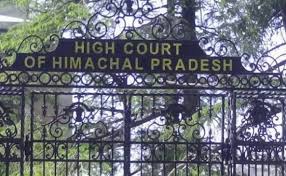
In the judgment of Vijay Singh v. State of HP, the High Court of Himachal Pradesh affirmed the power of a Trial Court to recall material witnesses even at the stage of final arguments. The Court ruled that an administrative oversight by a prosecutor—such as failing to show a weapon of offense to medical and forensic experts—is a rectifiable error rather than an “irreparable lacuna” that would bar the recall.
The Procedural Impasse
The petitioner, accused of murder and other offenses under the IPC and Arms Act, challenged a Trial Court order allowing the prosecution to recall two key witnesses: Dr. Sangeet Dhillon (PW17), who conducted the post-mortem, and Naseeb Singh Patial (PW41), a forensic expert.
- The Oversight: During their initial examination, the prosecution failed to show the recovered revolver and bullets to these witnesses to confirm if the injuries were caused by that specific weapon.
- The Timing: The application to recall was filed after arguments had already partly commenced, roughly 15 to 26 months after the witnesses were first examined.
- The Challenge: The accused argued that the delay was inordinate and that the prosecution was merely trying to fill a “lacuna” in its case, causing grave prejudice to the defense.
Legal Principles: The Scope of Section 311 Cr.P.C.
The Court’s decision centered on a purposive reading of Section 311 of the Cr.P.C. (now Section 348 of the BNSS) and Section 165 of the Evidence Act.
- Wide Discretionary Power: The Court emphasized that the power to recall is phrased in the “widest possible terms” (“at any stage”) and is not constrained by the closure of evidence.
- Mandatory Obligation: The provision is divided into two parts; while the first is discretionary, the second is obligatory, mandating the court to recall a witness if their evidence is “essential to the just decision of the case”.
- The “Discovery of Truth”: The Court held that a trial judge is not a “hapless bystander” but has an active role in unearthing the truth to ensure justice is not derailed by technical errors.
Distinguishing Oversight from a “Lacuna”
A critical aspect of the ruling was the definition of a legal “lacuna”.
- Inherent Weakness: A lacuna refers to an inherent weakness in the prosecution’s case.
- Human Error: In contrast, the failure of a Public Prosecutor to elicit a specific answer or show a physical exhibit is a “fallout of an oversight”. The Court noted that “to err is human” and parties should not be foreclosed from correcting inadvertent mistakes.
- No Prejudice: Correcting such an error does not change the nature of the case but merely allows for the appreciation of existing evidence (like the revolver already on record).
Indispensability of Medical Opinion
The Court highlighted that in cases involving firearms, it is the duty of both the prosecution and the Court to invite a medical witness’s opinion on the weapon of offense.
- Forensic Necessity: Recalling the doctor was essential to confirm if the injuries found during the post-mortem could have been caused by the revolver produced by the prosecution.
- Expert Identification: Recalling the forensic expert was necessary to verify that the revolver currently on record was the same one he had test-fired in the laboratory.
Conclusion
The High Court dismissed the petition, concluding that the essentiality of evidence outweighs the duration of the delay or the stage of the trial. The ruling reinforces that the primary function of a criminal court is the administration of justice rather than counting the errors committed by the parties.
Himachal Pradesh High Court
Vijay Singh V. State of HP (D.O.J. 23-02-2026)
STPL (Web) 2026 HP 36
Loading Viewer...