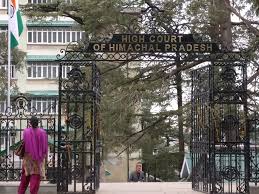

Service Law: Seniority Claim Failed

“Catch-Up Rule” vs. Consequential Seniority: High Court Dismisses Seniority Claim by Reserved Category Engineer

In the judgment of Yashpal Dhiman v. State of Himachal Pradesh, the High Court of Himachal Pradesh upheld a final seniority list that placed general category employees above a reserved category petitioner who had been promoted earlier. The Court ruled that in the absence of a specific state policy providing for “consequential seniority,” the “catch-up rule” applies, allowing senior general category candidates to regain their seniority once they are promoted to the same higher grade.

The Dispute: Reversal of Seniority Positions

The petitioner, a member of the Scheduled Caste (SC) category, was appointed as a Junior Engineer in 1979. Following a previous court order, he was promoted to Assistant Engineer (Electrical) effective from December 1991.

  • Provisional List: In a 2011 provisional seniority list, the petitioner was assigned Seniority No. 2 because of his early promotion date.
  • Final List: In the 2012 final seniority list, his position was shifted to Seniority No. 15, placing several private respondents above him. These respondents were senior to the petitioner in the entry-level (Junior Engineer) grade but had been promoted to Assistant Engineer later than him.

Legal Principles: The “Catch-Up” Rule

Justice Jiya Lal Bhardwaj relied on established Supreme Court precedents, including Ajit Singh (II) and Virpal Singh Chauhan, to resolve the conflict:

  • Definition of Catch-Up: If a senior general category candidate at a lower level reaches the promotional level later—but before the reserved candidate is promoted even further—the general candidate regains their seniority over the reserved candidate at that higher level.
  • Balancing Rights: This rule is intended to maintain a balance and avoid “reverse discrimination” against general category candidates who were originally senior to the roster-point promotees.
  • Seniority is Not Automatic: The Court held that “consequential seniority” (where a reserved candidate keeps their seniority gained through accelerated promotion) is not an automatic constitutional right under Article 16(4-A). It only applies if the State has framed a specific rule or policy to that effect.

State Policy and Lack of Challenge

The Court found that the State of Himachal Pradesh had issued instructions in March 1997 specifically stating that general category candidates regain seniority as per their entry-level positions once they “catch up” in the promotional cadre.

  • Unchallenged Instructions: The petitioner did not challenge the validity of these 1997 instructions.
  • Administrative Correction: The Court ruled that correcting the provisional seniority list based on settled law and existing state instructions did not violate the principles of natural justice.

Final Ruling

The High Court concluded that the respondent-department committed no error in assigning the petitioner Seniority No. 15. Finding that the “catch-up” rule fully applied in the absence of a contrary state policy for consequential seniority, the Court dismissed the petition.

STPL (Web) 2026 HP 101

Yashpal Dhiman V. State of Himachal Pradesh And Others (D.O.J. 20-03-2026)

Loading Viewer...
Next Story

Rejection of Plaint : Illusory Cause of Action and Unilateral Public Notices Cannot Extend Time Limits

In a Civil Appeal against a High Court order affirming the Trial Court’s refusal to reject a plaint under Order VII Rule 11 of the Civil Procedure Code (CPC), a Supreme Court Bench comprising Justice J.B. Pardiwala and Justice K. Vinod Chandran set aside the lower courts’ orders and rejected the plaint. The Apex Court held that where the cause of action extracted in the plaint itself conclusively establishes that the suit is hopelessly barred by limitation, the court cannot hesitate to reject the plaint under Order VII Rule 11(d). It further ruled that self-serving public notices issued after years of inaction cannot create a fresh cause of action to bypass the law of limitation.

  1. Factual Background
  • Joint Venture Agreements: On August 18, 2014, the parties entered into two Memorandum of Joint Venture Agreements for constructing eight flats across two vacant sites. Per the contract, the defendant (landowner) was to get 56% share, while the plaintiffs (developers) were entitled to a 44% undivided share in the land and super built-up area.
  • Cancellation & Exchange of Notices: Disputes arose regarding construction timelines. The defendant issued a written communication on April 20, 2016, cancelling the Joint Venture Agreements, followed by a lawyer’s notice on July 22, 2016. Rebuttals and further legal notices were exchanged between the parties up through November 22, 2016.
  • Belated Suit & Public Notice: After nearly six years of inaction, the plaintiffs issued a public notice on June 08, 2022, cautioning third parties against purchasing the property. Thereafter, in October 2022, they filed a suit (O.S. No. 632 of 2022) seeking division and allotment of their 44% share.
  • Order VII Rule 11 Application: The defendant filed an application for rejection of the plaint under Order VII Rule 11 CPC on the ground of limitation. The Trial Court rejected the application holding limitation to be a mixed question of fact and law, and the High Court affirmed this view.
  1. Legal Analysis & Supreme Court Findings
  • Averments in Plaint are Determinative: Reaffirming the settled principle in Shri Mukund Bhavan Trust v. Shrimant Chhatrapati Udayan Raje Pratapsinh Maharaj Bhonsle (2024), the Court reiterated that while considering an Order VII Rule 11 application, only the averments made in the plaint and documents annexed therewith are germane.
  • Crux of Cause of Action Paragraph: Perusing Paragraph 17 of the plaint, the Court observed that the cause of action explicitly accrued on April 20, 2016 (when the JV was cancelled) and, at the latest, on November 22, 2016 (the last legal notice exchanged between the parties).
  • No Fresh Cause of Action: The Court rejected the plaintiffs’ argument that issuing a public notice on June 08, 2022, revived the cause of action. A unilateral, self-serving public notice issued after years of delay cannot create a fresh cause of action to extend the period of limitation.
  • Illusion of Possession Dispelled: The Court noted that while plaintiffs claimed to have completed construction and possessed 44% of the area, their explicit prayer seeking “division and allotment” of the 44% share defeated their claim of being in active possession.
  1. Final Directions
  • Plaint Rejected: The orders of the Trial Court and High Court were set aside, and the plaint in O.S. No. 632 of 2022 pending before the Additional District and Sessions Judge, Chengalpattu, was formally rejected.
  • Appeal Allowed: Civil Appeal No. 11194 of 2026 was allowed.

2026 INSC 908

N. Asha Devi v. R. Aravind Kumar & Anr. (D.O.J. 17.08.2026)

Loading Viewer...

Next Story

Enforcing Attendance: Consequences of Jumping Bail and Trial Court Discretion

This criminal miscellaneous petition challenged an order passed by the trial court which remanded an accused to judicial custody and called for a reply from the complainant after the accused voluntarily appeared following the issuance of non-bailable warrants. The High Court of Himachal Pradesh ruled that an accused who violates bail conditions by failing to appear cannot claim bail as a matter of right under Section 478 of the Bharatiya Nagarik Suraksha Sanhita (BNSS). The Court underscored that complainants are necessary parties entitled to notice on subsequent bail applications when trial progress has been obstructed, and declined to interfere with the trial court’s discretion under its extraordinary inherent jurisdiction.

  • Background Context: A complaint under Section 138 of the Negotiable Instruments Act was pending against the petitioner. After failing to appear for recording statements, non-bailable warrants were issued against him. The petitioner subsequently appeared voluntarily, filed an application for cancellation of the warrants under the BNSS, and challenged his remand and the directive to issue notice to the complainant.
  • Grievance of the Petitioner: The petitioner contended that the trial court erred in ordering notice to the complainant—arguing the matter was strictly between the court and the accused—and asserted that his remand to judicial custody amounted to punitive detention and a violation of Article 21.
  • Legal Principle Established: The High Court clarified that an accused who jumps bail loses the absolute right to claim bail under Section 478(2) of the BNSS, and trial courts possess the discretion to refuse bail or remand the individual. Furthermore, because the default directly stalls the proceedings, the complainant maintains a valid locus standi to be heard.
  • Final Decision: The High Court dismissed the petition, holding that the trial court’s order involved no abuse of process, while expressing hope that the trial court would expedite the pending application.

STPL (Web) 2026 HP 624

Pradeep v. State of H.P. and Anr. (D.O.J. 25.08.2026)

Loading Viewer...

Next Story

Advocate: Breach of Client Confidentiality vs. Unclean Hands: Limits of Public Disclosures & Misconduct

In a cross-proceeding arising out of a disciplinary order of the Bar Council of India (BCI), a three-judge Bench of the Supreme Court, authored by Justice Vikram Nath, upheld the BCI’s finding of professional misconduct against Advocate Rizwan Siddiquee for disclosing privileged client communications on national television. The Court maintained his two-year suspension from practice along with monetary penalties, while simultaneously dismissing the client’s appeal for enhancement of punishment and compensation due to her suppression of facts and “unclean hands”. Expressing strong disapproval of both parties for abusing judicial machinery and wasting public time for eleven years, the Court imposed exemplary costs of ₹5,00,000/- on each party.

  1. Factual Background
  • Advocate-Client Relationship: The appellant (Rehana Khan) engaged the respondent (Advocate Rizwan Siddiquee) as her counsel during 2013–2014 regarding allegations against a senior police officer (Additional Commissioner of Police, Mumbai).
  • Legal Notice & FIR: A legal notice dated July 15, 2014, was issued to the officer through the respondent’s office. Subsequently, on July 24, 2014, the appellant lodged an FIR alleging rape against the police officer, naming the respondent as a person acting under the officer’s influence.
  • Media Broadcasts & Disclosures: In August 2014, following media coverage and searches at his office, the respondent appeared on news channels (‘Aaj Tak’ and ‘Zee News’). During the broadcast, he disclosed details of personal conversations, played recorded audio, and publicly characterized his former client’s rape complaint as false and publicity-driven.
  • BCI Proceedings: The appellant filed a complaint under Section 35 of the Advocates Act, 1961. On August 11, 2025, the Disciplinary Committee of the BCI held the advocate guilty of professional misconduct and ordered:
    • Removal/suspension of his name from the Bar roll for 2 years.
    • Fine of ₹3,00,000/- payable to the complainant.
    • ₹2,00,000/- to be deposited in the BCI Welfare Fund.
  • Cross-Appeals: Both parties challenged the BCI order—the appellant sought permanent debarment and ₹2 Crore compensation, while the advocate sought complete exoneration.
  1. Key Findings of the Supreme Court
  • Absolute Sanctity of Client Confidentiality: The Court rejected the advocate’s plea that he was defending his reputation against allegations made in the FIR. An advocate’s duty of confidentiality is not contingent upon a client’s continued good behavior. Even if a client turns adversary, privileged communications received during professional engagement cannot be disclosed to television channels or the public.
  • Rejection of Procedural Hardship Plea: The advocate’s argument of being denied a fair hearing (ex parte order) was dismissed as a “flimsy afterthought,” given his active participation in evidence recording and prior knowledge of the proceedings.
  • Doctrine of Unclean Hands: The client’s plea for enhanced punishment and massive compensation was rejected because she was less than candid before the Court. The record showed her voluntary media appearances, active discussions regarding trapping the officer, and failure to challenge the trial court’s order discharging the police official in 2015.
  • Scathing Indictment of Both Litigants: The Bench observed that neither party left the Court with credit, holding that judicial machinery cannot be used as a facility to settle personal scores or salvage reputations imperiled by their own actions.
  1. Final Directions
  • Orders Upheld: BCI’s order dated August 11, 2025 (2-year suspension and financial penalties) was fully affirmed.
  • Appeals Dismissed: All cross-appeals (Civil Appeal No. 12256/2025, Civil Appeal No. 7959/2026, and T.C. (C) No. 30/2026) were dismissed.
  • Exemplary Costs: Both the appellant and respondent were directed to pay costs of ₹5,00,000/- each to the Supreme Court Legal Services Committee within four weeks.

2026 INSC 907

Rehana Khan v. Rizwan Siddiquee (D.O.J. 21.08.2026)

Loading Viewer...

Next Story

Determining Territorial Jurisdiction: Evaluating Plaint Averments for Return of Plaint

This civil miscellaneous petition filed under Article 227 of the Constitution challenged an order dismissing an application under Order 7, Rule 10 of the CPC for the return of a plaint due to lack of territorial jurisdiction. The High Court of Himachal Pradesh affirmed that while evaluating territorial jurisdiction under Section 20 of the CPC, courts must restrict their inquiry strictly to the averments made in the plaint, excluding any defense raised by the defendants. Since a vital part of the agreement—the initiation of the gold kitty scheme—took place at the plaintiff’s business premises within the local limits of the trial court, the court possessed valid territorial jurisdiction, and supervisory interference under Article 227 was unwarranted.

  • Background Context: The plaintiff filed a suit for mandatory injunction and alternative recovery of Rs. 65,28,000 for unreturned gold deposited under a kitty scheme. The defendants filed an application under Order 7, Rule 10 of the CPC seeking return of the plaint, arguing that they operated from Jalandhar, Punjab, and that no part of the cause of action arose within Kullu, Himachal Pradesh. The trial court dismissed this application.
  • Grievance of the Petitioners: The petitioners contended that the trial court erred in retaining jurisdiction since their business operations and headquarters are located outside the state in Jalandhar.
  • Legal Principle Established: The High Court reiterated that territorial jurisdiction is determined exclusively by reading the plaint averments and identifying the bundle of facts (cause of action). Because the contract/scheme was initiated and negotiated when the defendants approached the plaintiff at his shop in Bhuntar, Kullu, a material part of the cause of action arose locally. Furthermore, the supervisory powers under Article 227 cannot be invoked as an appellate forum to re-appreciate facts or correct minor errors.
  • Final Decision: The High Court dismissed the petition, upholding the trial court’s order that retained the suit for adjudication on its merits.

STPL (Web) 2026 HP 623

Rajesh Verma & Ors. v. Narender Rana @ Bittu Rana (D.O.J. 25.08.2026)

Loading Viewer...

Recent Articles