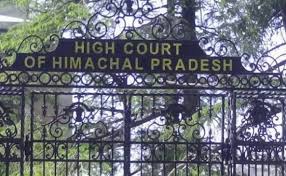


In D.K. Sharma and Others v. H.P. State Pollution Control Board and Others, the High Court of Himachal Pradesh quashed administrative decisions denying pay parity to Board employees, ruling that historical pay structures established between a statutory board and the State government must be maintained across successive revisions. The Court established that while pay fixation is an executive function, administrative orders that are unreasoned, cryptic, or ignore material facts are subject to judicial review. It further clarified that an employer cannot weaponize financial constraints to selectively deny benefits to a specific category of employees when parity has been the long-standing norm.
- Historical Pay Parity and the ACPS Dispute
The petitioners, serving as Assistant Environmental Engineers (AEEs) and Environmental Engineers (EEs), sought pay parity with their counterparts (Assistant and Executive Engineers) in the State Government. Since the Board’s inception in 1974, it had consistently adopted State pay scales. However, following the 1996 pay revision, the State introduced a multi-tier Assured Career Progression Scheme (ACPS) allowing higher scales after 4, 9, and 14 years of service. While the Board adopted the entry-level revised scales, it deviated from the State’s pattern by refusing to grant the petitioners the corresponding higher time-scale advancements.
- Invalidity of Unreasoned Administrative Orders
The Board had repeatedly rejected the petitioners’ representations through “cryptic” decisions in 2005 and 2009 without assigning any objective or logical reasons. The Court emphasized that:
- Duty to Reason: An administrative authority must record and communicate reasons for rejecting long-standing claims.
- Judicial Intervention: Although courts generally defer to executive expertise in pay fixation, they must intervene when a decision is patently unreasonable, unjust, or prejudicial to a section of employees.
- Abuse of Discretion: Rejecting a claim “for now” by simply reiterating old decisions without fresh application of mind constitutes an arbitrary exercise of power.
- Automatic Extension of Parity
The Court ruled that when an anomaly in a general pay revision is rectified for State employees, that correction should automatically and uniformly extend to corresponding Board employees to preserve established structural equivalence. The Board’s defense—that it had granted an alternative set of internal increments (at 8 and 16 years)—was rejected as a justification for denying state-sanctioned career progression, though the Board was permitted to adjust any overlapping financial benefits during final calculations.
- Rejection of Financial Constraints as a Defense
The Court invoked Supreme Court precedents to clarify that financial straits or organizational losses cannot be used as a selective ground to deny benefits to a specific group of similarly situated employees. It noted that the Board’s own financial records showed it was paying significant income tax, undermining any claim of an inability to meet the financial burden of the pay revision.
- Final Outcome and Directions
Finding the Board’s actions to be irrational and discriminatory, the High Court allowed the petition and issued the following directions:
- Quashing of Orders: The rejection orders from 2005 and 2009 were quashed and set aside.
- Grant of Parity: The respondents were directed to treat the petitioners at par with State engineers and grant them the multi-tier scales w.e.f. January 1, 1996.
- Financial Redress: All consequential arrears must be paid within three months, failing which the Board shall pay 6% interest per annum from the date of the judgment until actual payment.
STPL (Web) 2026 HP 298
D.K. Sharma And Others V. H.P. State Pollution Control Board And Others (D.O.J. 25.06.2026)
Loading Viewer...