

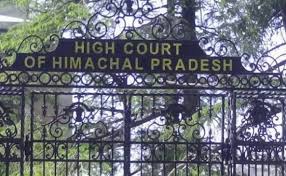
In Shri Gaurav Gaur vs. State of Himachal Pradesh and Others, the High Court of Himachal Pradesh dismissed a writ petition challenging the removal of a Veterinary Pharmacist who gained employment using a forged 12th-grade certificate. The Court established that under Rule 15(2) of the CCS (CCA) Rules, 1965, a delinquent employee who fails to file a written representation against an inquiry report waives their right to challenge the inquiry’s factual or procedural findings at the appellate or writ stage. Furthermore, the Court clarified that when a Disciplinary Authority concurs with a well-reasoned inquiry report, the resulting order is not required to be voluminous or “pages and pages” long; its validity is judged by its substantive reasoning and core gist rather than its physical length.
- Factual Background and Allegations of Fraud
The petitioner was initially engaged as a Panchayat Veterinary Assistant and later regularized as a Veterinary Pharmacist in 2020. In 2023, he was suspended following allegations that the 12th-standard (10+2) certificate he submitted from the National Institute of Open Schooling (NIOS) was fake. A departmental inquiry revealed that the roll number on his certificate actually belonged to a different individual, and NIOS confirmed that the document was not genuine and did not match their database.
- Procedural Waiver under Rule 15(2)
Following the inquiry, the Disciplinary Authority forwarded the report to the petitioner, granting him the mandatory 15-day window to submit a written representation. The petitioner chose not to file any response. The High Court ruled that:
- Forwarding the report is a procedural safeguard allowing an employee to contest findings before action is taken.
- By remaining silent, the employee forfeits the right to mount a belated attack against the inquiry’s mechanics in a writ petition.
- The Disciplinary Authority is then justified in evaluating the record based strictly on the uncontested material before it.
- Challenge to “Non-Speaking” Administrative Orders
The petitioner argued that his removal was illegal because the orders passed by the Disciplinary and Appellate Authorities were “non-speaking” and “unreasoned”. He contended that the authorities failed to provide detailed, multi-page justifications for the penalty. The Court rejected this “hyper-technical” argument, holding that:
- Administrative and quasi-judicial orders are judged by their structural reasoning, not their length.
- Where an authority entirely concurs with a detailed inquiry report, there is no legal necessity to write an exhaustive or voluminous order.
- The concise nature of the orders did not render them legally infirm because the underlying fraud was undeniably proved and verified.
- Gravity of Misconduct in Public Employment
The Court emphasized that gaining government employment through the strength of a fabricated certificate is a grave charge that strikes at the root of the appointment. The inquiry proved that the petitioner not only used a fake certificate for his initial job but also used it to undergo a Veterinary Pharmacist Diploma Course, thereby causing a loss to the public exchequer.
Final Outcome
Finding that the petitioner’s fraudulent entry into service was substantiated by NIOS and that he had failed to utilize the statutory opportunity to contest the inquiry findings, the High Court concluded that the judicial conscience was satisfied. The petition was dismissed, and the orders for his removal from service were upheld.
STPL (Web) 2026 HP 323
Shri Gaurav Gaur V. State of Himachal Pradesh And Others (D.O.J. 19.05.2026)
Loading Viewer...