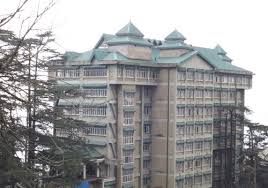

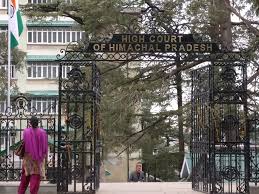
The case of Gandho Ram v. State of Himachal Pradesh reaffirms that both work-charge service and daily wage service must be counted toward the qualifying period for pensionary benefits for Class-III employees, matching the protections already afforded to Class-IV employees.
Factual Background
- Service History: The petitioner was engaged as a daily wage Mason in 1991 and put in the required 240 days of service annually. He was moved to the work-charge/regular establishment on January 1, 2001, regularized on July 28, 2003, and retired on June 30, 2010.
- The Dispute: The State denied his pension because his work-charge and regular service totaled only nine years and six months, falling short of the mandatory 10-year threshold. The State further argued that Supreme Court precedents regarding the counting of daily wage service applied only to Class-IV workers, not Class-III employees like the petitioner.
Key Legal Findings
Justice Ajay Mohan Goel ruled in favor of the petitioner, citing several established legal principles:
- Work-Charge Inclusion: Following the precedent in State of H.P. v. Matwar Singh, the Court held that work-charge status followed by regularization must be counted as qualifying service for pension.
- Equal Protection for Class-III: The Court clarified that the issue of whether Class-III employees are entitled to the same benefits as Class-IV is “no longer res-integra” (no longer open to dispute). It ruled that the benefit of counting daily wage service (where five years of daily wage equals one year of qualifying service) applies equally to Class-III staff.
- Qualifying Threshold: By adding two years derived from his ten years of daily wage service (1991–2001) to his nine years and six months of work-charge/regular service, the petitioner clearly exceeded the 10-year requirement for a pension.
- Continuous Cause of Action: While the State argued the claim was delayed, the Court held that pension is a “continuous cause of action”. However, to balance the delay in filing, the Court restricted the payment of actual financial arrears to begin from January 1, 2018, rather than his 2010 retirement date.
Conclusion
The Court allowed the petition, directing the State to calculate the petitioner’s eligibility by including his daily wage and work-charge service. The State was ordered to pay all arrears from 2018 within three months and commence regular monthly pension payments starting in May 2026.
STPL (Web) 2026 HP 181
Gandho Ram V. State of Himachal Pradesh And Others (D.O.J. 09.04.2026)
Loading Viewer...