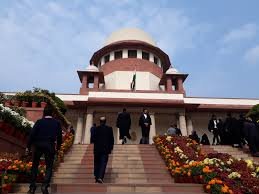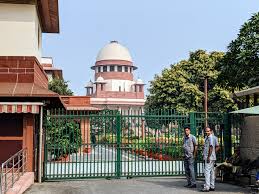


The Supreme Court considered an appeal filed by an Indian Police Service (IPS) officer, who was serving as the Commissioner of Police, Greater Chennai, at the relevant time, challenging adverse remarks made against him by the Madras High Court in a habeas corpus proceeding. The High Court had set aside a preventive detention order passed under the Tamil Nadu Act 14 of 1982 against a builder accused of cheating and forgery, while severely criticizing the appellant. During the Supreme Court proceedings, the appellant realized his error, filed an affidavit expressing deep regret for defending a flawed order, and tendered an unconditional apology. Accepting the apology and noting the appellant’s assurance to exercise greater care in discharging statutory powers, the Supreme Court expunged the adverse remarks from the High Court’s judgment while keeping the setting aside of the detention order intact.
1. Factual and Procedural Background
- The Detention Order: The appellant, as Commissioner of Police, Greater Chennai, passed a detention order on September 22, 2025, classifying a real estate company director as a “Goonda” under the Tamil Nadu Prevention of Dangerous Activities Act, 1982, following multiple criminal cases involving apartment booking fraud, forgery, and mortgage of properties without delivery.
- High Court Proceedings: The detenue’s daughter filed H.C.P. No. 2066 of 2025 before the Madras High Court, which quashed the detention order and passed strong adverse remarks against the appellant across several paragraphs (paras 6, 8, 10, and 19 to 23).
- Appeal and Apology: Aggrieved by the professional repercussions of these remarks, the officer appealed to the Supreme Court. Represented by senior counsel, the appellant acknowledged his failure to accept his error when summoned by the High Court and submitted an affidavit tendering an unconditional apology.
2. Key Observations of the Supreme Court
- Responsibility in Preventive Detention: The Court reiterated that statutory powers affecting individual liberty must be exercised with utmost circumspection, strict compliance with the law, and careful appreciation of facts.
- Senior Police Responsibility: Officers holding senior administrative positions are expected to fully comprehend the gravity of duties entrusted to them. However, an apology cannot be treated as a mere substitute for due care.
- Acceptance of Apology: Recognizing the appellant’s genuine remorse, his undertaking to exercise greater caution in future official functions, and the submission of a formal unconditional apology, the Court deemed it fit to grant relief regarding the remarks.
3. Final Directions
- Expunction of Remarks: The adverse remarks made against the appellant in paragraphs 6, 8, 10, and 19 to 23 of the Madras High Court’s judgment dated May 29, 2026, were formally ordered to be expunged.
- Detention Order Unaffected: The Court explicitly clarified that expunging the remarks against the police officer does not affect the High Court’s core decision to set aside the preventive detention order itself.
- Disposal: The criminal appeal was accordingly disposed of.
2026 INSC 1186
A. Arun v. Varsha Sharma & Ors. (D.O.J. 02.11.2026)
Loading Viewer...