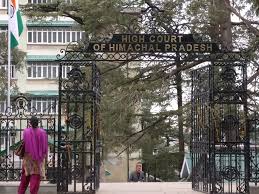

Registered General Power of Attorney Has Presumption of Validity

In the case of Darshna Devi &Ors. vs. Raghubir Singh (Deceased) through LRs &Ors. (2026), the High Court of Himachal Pradesh addressed the validity of a registered General Power of Attorney (GPA) and a subsequent sale deed executed under its authority.

Case Background

The original plaintiff, Achhar Singh, challenged a General Power of Attorney he had executed in favor of defendant No. 5. He alleged that the document was intended only for assistance in partition proceedings but was instead used to execute a sale deed in favor of the defendant’s sons (defendants Nos. 1 to 4) without his consent or receipt of any sale consideration. The plaintiff sought to have the sale deed declared null and void, or alternatively, to recover the sale amount of Rs. 96,500.

Key Legal Issues and Findings

The High Court focused on the legal status of registered documents and the burden of proof required to challenge them:

  • Presumption of Validity: Under Section 60 of the Registration Act and Section 35 of the Indian Evidence Act, a registered document carries a strong presumption that it was validly executed and that its contents were explained to the executant.
  • Burden of Proof: The Court held that the burden lies heavily on the party challenging a registered document to prove fraud, misrepresentation, or incapacity with cogent evidence.
  • Capacity of the Executant: While the Trial Court initially viewed the plaintiff as an “illiterate and rustic villager,” the High Court noted evidence showing he was actually a contractor familiar with legal affairs and court proceedings. Consequently, he was deemed capable of understanding the nature of the GPA.
  • Validity of the Sale: The Court found that the GPA was validly executed and empowered the attorney to sell the land. Therefore, the subsequent sale deed was also legally valid.
  • Non-payment of Consideration: The Court observed that while the sale was valid, the defendants failed to prove that the sale price had actually been paid to the plaintiff.

Conclusion and Final Order

The High Court dismissed the appeal and upheld the First Appellate Court’s decision. The Court ruled that:

  1. The sale deed remained valid, and the defendants (the purchasers) were the rightful owners of the property.
  2. Because the sale was valid, the plaintiff was not entitled to an injunction to protect his possession.
  3. The plaintiff’s only remedy was the recovery of the sale consideration (Rs. 96,500) with 9% interest per annum, as the failure to pay the principal does not invalidate the transfer of title under these circumstances.

STPL (Web) 2026 HP 212

Darshna Devi &Ors. V. Raghubir Singh (Deceased) Through Lrs&Ors. (D.O.J. 05.05.2026)

Loading Viewer...

Next Story

Criminal Procedure: Court power to take additional documents on record during Proceedings.

In the case of Roopa Devi vs. Ram Kumar Verma and Ors. (2026), the High Court of Himachal Pradesh addressed the limitations of the court’s power to take additional documents on record during criminal proceedings.

Case Background

The petitioner (Roopa Devi) challenged an order passed by a Judicial Magistrate in a criminal case involving allegations under Sections 500 and 501 of the IPC. The lower court had allowed an application filed by the accused under Section 311 of the CrPC, permitting them to place on record a copy of a challan, FIR, and other investigation proceedings against the petitioner before the trial had effectively commenced.

Key Legal Issues and Findings

The High Court quashed the lower court’s order based on the following legal principles:

  • Misuse of Section 311 CrPC: The Court clarified that Section 311 of the CrPC is specifically designed to empower a court to summon, recall, or re-examine witnesses. It does not grant the court the power to take additional documentary evidence on record.
  • Proper Procedure (Section 91 CrPC): The Court noted that the appropriate remedy for summoning or producing documents is Section 91 of the CrPC.
  • Timing for Defense Evidence: Importantly, the Court held that an accused cannot invoke Section 91 to produce material before the prosecution’s evidence has closed. The law does not grant the accused a right to file documents at the stage of framing charges or taking cognizance; such evidence can only be led later during the defense evidence stage.
  • No “Mini-Trial” at Framing of Charge: Citing Supreme Court precedents, the Court emphasized that at the stage of framing charges, the trial judge must only examine the material provided by the prosecution to determine if there are sufficient grounds to proceed. The court should not conduct a “mini-trial” by evaluating the accused’s defense material at that threshold.

Conclusion

The High Court found that the trial court erred in allowing the accused to place documents on record under Section 311 CrPC, especially since the petitioner’s evidence had not yet commenced. Consequently, the High Court allowed the petition and quashed the order dated November 25, 2023.

STPL (Web) 2026 HP 220

Roopa Devi V. Sh. Ram Kumar Verma And Ors. (D.O.J. 04.05.2026)

Loading Viewer...

Next Story

Assault and criminal intimidation: Acquittal is reasonable and justified view

In the case of State of H.P. vs. Ravi Dogra (2026), the High Court of Himachal Pradesh dismissed an appeal by the State and upheld the acquittal of an accused charged with assault and criminal intimidation.

Case Background

The prosecution alleged that on May 31, 2009, the informant (Ranbir Singh) confronted the accused, Ravi Dogra, because the accused’s factory laborers were defecating in the informant’s field. According to the informant, the accused responded by abusing him and attacking him with a sickle, causing injuries to both of his hands. The accused was subsequently charged under Sections 323, 324, and 504 of the IPC.

Key Reasons for Acquittal

The High Court agreed with the Trial Court that the prosecution’s case was filled with inconsistencies and lacked sufficient evidence:

  • Shifted Narrative and Location: The initial police entry recorded that the informant was being beaten by 2–3 persons outside a motor workshop. However, in court, the story changed to a single assailant (the accused) attacking him near his house.
  • Questionable Motive: Both the informant and other witnesses admitted that the informant had sold the land in question approximately 1.5 years before the incident. The Court found that if he no longer owned the land, he had no logical reason to complain about open defecation.
  • Lack of Physical Evidence: The Investigating Officer failed to find any signs of open defecation at the site or a path leading from the accused’s house to the informant’s field.
  • Medical Discrepancies: The informant claimed he was struck twice with a sharp sickle. However, medical evidence showed only one incised wound (caused by a sharp weapon) and one abrasion (caused by a blunt weapon). The Court noted that in the case of a sharp weapon, the law presumes the sharp side was used unless the prosecution specifically proves otherwise.
  • Absence of Independent Witnesses: Although the incident allegedly took place at night in a heavily populated bazaar with many people and laborers nearby, the prosecution failed to examine any independent witnesses.

Legal Principles Applied

The High Court emphasized that its power to interfere with an acquittal is limited. Under settled law, an appellate court can only overturn an acquittal if the lower court’s judgment is “patently perverse” or based on a gross misreading of evidence. If two reasonable views of the evidence are possible, the view that favors the accused’s acquittal must be upheld.

Conclusion

Finding that the Trial Court had taken a reasonable and justified view of the various infirmities in the case, the High Court dismissed the State’s appeal. The accused was directed to furnish bail bonds under Section 437-A of the CrPC to ensure his appearance should the matter be appealed further to the Supreme Court.

STPL (Web) 2026 HP 219

State of H.P.  V. Ravi Dogra (D.O.J. 08.05.2026)

Loading Viewer...

Next Story

Rash and Negligent Driving: Sentence Reduced

In the case of Jai Pal vs. State of H.P. (2026), the High Court of Himachal Pradesh addressed a criminal revision petition regarding a conviction for rash and negligent driving that resulted in injuries to a pedestrian.

Case Background

In February 2009, during the Shivratri festival in Chirgaon Bazaar, the petitioner was driving a Bolero camper. While reversing the vehicle in the crowded market, he hit a pedestrian, causing both simple and grievous injuries,. The Trial Court convicted him under Sections 279, 337, and 338 of the IPC, and the Appellate Court later modified the sentence to three months of simple imprisonment,.

Key Legal Findings

The High Court’s decision focused on the following legal principles:

  • Violation of Road Regulations: The Court held that the petitioner violated Rule 31 of the Road Regulations 1989, which mandates that a driver must ensure a path is clear before reversing,. The Court emphasized that a crowded bazaar requires extra precautions, and the driver’s failure to ensure safety was the “proximate cause” of the accident,.
  • Narrow Revisional Jurisdiction: Under Section 397 CrPC, the Court noted its power is limited to correcting patent defects or errors of law,. It refused to re-evaluate factual findings regarding the traffic conditions or the driver’s negligence because the lower courts’ findings were not “perverse”,,.
  • Double Punishment for the Same Act: The Court found that punishing the accused under both Section 337 (negligently causing simple hurt) and Section 338 (negligently causing grievous hurt) for the same transaction was impermissible,. Since Section 338 is an aggravated form of Section 337, the sentence for the minor offense was set aside under the principles of Section 71 IPC,,.
  • Denial of Probation: The petitioner’s request for the benefit of the Probation of Offenders Act was rejected,. Citing Supreme Court precedents like Dalbir Singh v. State of Haryana, the Court ruled that due to the “alarming rise in road accidents,” the benevolent provisions of probation should generally not be extended to offenses involving rash and negligent driving,,.

Conclusion and Final Order

The High Court partly allowed the revision petition,. While it upheld the convictions under Sections 279 and 338 of the IPC and maintained the three-month imprisonment sentence, it set aside the sentence under Section 337 IPC

STPL (Web) 2026 HP 218

Jai Pal V. State of H.P. (D.O.J. 08.05.2026)

Loading Viewer...

Next Story

Amendment of Plaint: After the trial had already concluded

In the case of Chander Jot Singh vs. Dharam Singh & Others (2026), the High Court of Himachal Pradesh dismissed a petition challenging a lower court’s refusal to allow an amendment to a lawsuit after the trial had already concluded,.

Case Background

The petitioner (plaintiff) had originally filed a suit in 2011 for the specific performance of a sale agreement dated December 16, 2008,. After 11 years of litigation, the Trial Court dismissed the suit in June 2022,. While the case was on appeal, the plaintiff filed an application under Order VI Rule 17 of the CPC to amend his original complaint,.

The Proposed Amendment

The plaintiff sought to introduce facts regarding a registered Power of Attorney executed on the same day as the sale agreement,. He claimed that:

  • He had paid the full sale consideration of Rs. 6,30,000 at the time of the agreement,.
  • The Power of Attorney was an important document that had been handed to his previous counsel but was inadvertently omitted from the original pleadings due to a “bona fide mistake” by the lawyer,.

Court’s Legal Findings

The High Court upheld the First Appellate Court’s decision to reject the amendment based on several key legal principles:

  • Requirement of Due Diligence: Under the proviso to Order VI Rule 17 CPC, once a trial has commenced, an amendment can only be allowed if the party demonstrates that, despite due diligence, the matter could not have been raised earlier,,.
  • Insufficiency of Blaming Counsel: The Court ruled that simply blaming a lawyer for “inadvertence” or “oversight” does not satisfy the legal requirement for due diligence,. It noted that the case was pending for over a decade, providing ample time for the plaintiff to ensure all relevant facts were pleaded,.
  • Preventing “Floodgates”: The Court observed that if such amendments were allowed after a trial is lost, it would open the floodgates for every unsuccessful litigant to try and “fill up the lacuna” in their case by claiming counsel negligence,,.
  • Limited Scope of Article 227: The High Court emphasized that its supervisory jurisdiction under Article 227 of the Constitution is narrow,. It cannot act as a second appellate court to re-evaluate facts unless there is a gross abuse of jurisdiction or a manifest error of law, neither of which were present here,,.

Conclusion

The High Court concluded that the First Appellate Court had rightly appreciated the facts and that the proposed amendment was a “feeble attempt” to salvage a dismissed suit,. The petition was dismissed, and the parties were directed to continue with the existing appeal proceedings,

STPL (Web) 2026 HP 217

Chander Jot Singh V. Dharam Singh & Others (D.O.J.08.05.2026)

Loading Viewer...

Recent Articles