
Rash and Negligent Driving/Death by Negligence – Case fails

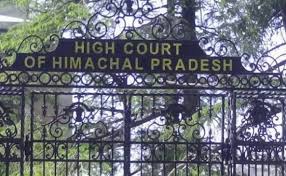
In State of H.P. vs. Amar Singh, the High Court of Himachal Pradesh upheld the acquittal of a truck driver accused of causing death and injury by driving with a wooden plank projecting from his vehicle,. The Court established that in cases relying on circumstantial evidence, the prosecution must satisfy the “Panchsheel” (five golden principles) of proof, showing that the facts are consistent only with the hypothesis of guilt and exclude every other rational conclusion,,. Furthermore, the Court ruled that testimony regarding facts disclosed by a third party who was not examined as a witness constitutes inadmissible hearsay, and an alleged extrajudicial confession cannot be relied upon if it was omitted from the witness’s initial statement to the police, as such an omission constitutes a material improvement,,.

  1. The “Panchsheel” of Circumstantial Evidence

The Court reaffirmed the strict legal standards for convicting an individual based solely on circumstantial evidence,. It emphasized that the mental distance between “may be guilty” and “must be guilty” is long and divides vague conjectures from sure conclusions,,. To secure a conviction, the prosecution must satisfy five conditions:

  • The circumstances must be fully established and not merely “proved by probability”.
  • The facts must be consistent only with the guilt of the accused.
  • The circumstances must be of a conclusive nature.
  • They must exclude every other possible hypothesis except the one to be proved.
  • There must be a complete chain of evidence that leaves no reasonable ground for a conclusion consistent with innocence.
  1. Inadmissibility of Hearsay Testimony

A pivotal part of the prosecution’s case was the testimony of witness Ali Hassan (PW1), who claimed that his conductor, Laddi, told him the accused had taken a wooden plank from their truck to tie down a tarpaulin,. The Court rejected this evidence as hearsay because:

  • The object of the evidence was to prove the truth of the statement made by a person (Laddi) who was not called as a witness.
  • Hearsay is fundamentally unreliable because it cannot be tested by cross-examination and dilutes the truth with each repetition.
  • Since the prosecution failed to examine Laddi, the circumstance of the accused taking the plank remained unproven.
  1. Failure to Conclusively Identify the Vehicle

Despite the fatal nature of the accident, the prosecution failed to link the specific truck (HP-18-4841) to the crime scene:

  • Eyewitness Testimony: Witnesses who saw the accident or were hit by the projecting plank (PW8, PW13) could not provide the registration number of the offending vehicle.
  • Contradictory Evidence: A security guard (PW2) who saw the accused’s truck leave the loading yard immediately before the accident did not notice any object projecting from its body.
  • The Court held that the omission to observe a projecting plank at the point of departure created significant fatal doubt in the prosecution’s narrative.
  1. Rejection of the Extrajudicial Confession

The prosecution relied on a confession allegedly made by the accused to Ali Hassan (PW1) the day after the accident,. The Court discarded this confession based on established legal principles:

  • Material Improvement: PW1 admitted he did not mention this confession in his original statement to the police,. The Court ruled that the omission of a vital fact in an initial police statement amounts to a contradiction that renders the subsequent testimony unreliable.
  • Lack of Probability: The Court found it “highly improbable” that the accused would confess to a person who was not a close confidant and who could not have offered any legal or personal assistance.
  1. Final Outcome

The High Court concluded that suspicion, however strong, cannot replace proof beyond a reasonable doubt. Finding that the chain of circumstances was incomplete and the evidence legally infirm, the Court upheld the Appellate Court’s decision to acquit the accused and dismissed the State’s appeal.

STPL (Web) 2026 HP 328

State of H.P. V. Amar Singh (D.O.J. 15.06.2026)

Loading Viewer...

Next Story

When Test Identification Parade Required

In State of H.P. vs. Anwar Singh, the High Court of Himachal Pradesh dismissed an appeal against the acquittal of a motorcyclist accused of rash driving and causing injury, ruling that identifying a stranger for the first time in court (dock identification) without a prior Test Identification Parade (TIP) is a “highly suspect” and “meaningless” piece of evidence. The Court established that in “clueless crimes” where the offender is initially unknown, investigating officers are duty-bound to provide a step-by-step explanation of how the  accused was traced to exclude the possibility of an innocent person being wrongly branded a culprit. Furthermore, the Court held that an unexplained discrepancy between the vehicle registration number mentioned in the FIR and the vehicle actually seized by the police creates a vital loophole that justifies an acquittal.

  1. Factual Background and Acquittal

The case originated from a 2008 incident where a schoolgirl was hit by a motorcycle near Samala Stadium, resulting in simple injuries. The motorcyclist fled the scene, and an FIR was registered based on a registration number (HP-10A-0556) provided by the informant. After a trial, the Judicial Magistrate First Class acquitted the accused, citing a lack of proper identification and a material discrepancy in the vehicle’s registration number. The State appealed this decision, arguing that the trial court had erred in its appreciation of the evidence.

  1. Parameters for Intervening in Acquittals

The High Court reaffirmed that an appellate court must be “extremely cautious” when interfering with a judgment of acquittal. Interference is only permissible if the judgment is patently perverse, based on a misreading or omission of material evidence, or if no two reasonable views are possible. If the trial court’s conclusion is a plausible and reasonable one based on the evidence, the appellate court cannot overturn it simply because an alternative view holding the accused guilty is also possible.

  1. Discrepancy in Vehicle Registration

A major infirmity in the prosecution’s case was the conflict regarding the offending vehicle:

  • The Discrepancy: The FIR specifically identified the motorcycle as HP-10A-0556, yet the police seized and presented a case against a motorcycle with registration number HP-10A-0558.
  • Lack of Explanation: The prosecution failed to produce the informant to explain the error or verify if the original number mentioned in the FIR belonged to a different vehicle.
  • Mechanical Evidence: The mechanical examination report of the seized motorcycle (HP-10A-0558) failed to record any dents or damages that would link it to a recent accident, further weakening the connection between the seized vehicle and the crime.
  1. Flaws in Witness Identification

The Court highlighted that the accused was a total stranger to the witnesses prior to the accident.

  • Dock Identification: The witnesses identified the accused for the first time “in the dock” during the trial. The Court ruled that such identification is a weak piece of evidence because witnesses often assume the police have caught the right person, leading them to testify with a certainty they may not actually possess.
  • Absence of TIP: The Court held that when an offender is unknown, a Test Identification Parade (TIP) should ideally be conducted during the investigation to corroborate the identity. Without a TIP, the subsequent identification in court was deemed “meaningless” and insufficient to sustain a conviction.
  1. Duty of Investigating Officers in “Clueless Crimes”

The High Court emphasized that in cases where the identity of the offender or the vehicle is initially uncertain, the investigation must have a clear “rhythm”. Investigating officers must explicitly narrate and explain the step-by-step progress that led them to the specific accused. Because the investigator in this case failed to explain how he traced the accused or resolved the registration number error, the Court found the prosecution’s narrative to be discredited.

Final Outcome

Finding that the trial court had taken a reasonable and possible view of the evidence, the High Court concluded that no interference was required. The appeal was dismissed, and the acquittal of the respondent was upheld.

STPL (Web) 2026 HP 329

State of H.P. V. Anwar Singh (D.O.J. 15.06.2026)

Loading Viewer...

Next Story

Rash and Negligent Driving/Death by Negligence – Case fails

In State of H.P. vs. Amar Singh, the High Court of Himachal Pradesh upheld the acquittal of a truck driver accused of causing death and injury by driving with a wooden plank projecting from his vehicle,. The Court established that in cases relying on circumstantial evidence, the prosecution must satisfy the “Panchsheel” (five golden principles) of proof, showing that the facts are consistent only with the hypothesis of guilt and exclude every other rational conclusion,,. Furthermore, the Court ruled that testimony regarding facts disclosed by a third party who was not examined as a witness constitutes inadmissible hearsay, and an alleged extrajudicial confession cannot be relied upon if it was omitted from the witness’s initial statement to the police, as such an omission constitutes a material improvement,,.

  1. The “Panchsheel” of Circumstantial Evidence

The Court reaffirmed the strict legal standards for convicting an individual based solely on circumstantial evidence,. It emphasized that the mental distance between “may be guilty” and “must be guilty” is long and divides vague conjectures from sure conclusions,,. To secure a conviction, the prosecution must satisfy five conditions:

  • The circumstances must be fully established and not merely “proved by probability”.
  • The facts must be consistent only with the guilt of the accused.
  • The circumstances must be of a conclusive nature.
  • They must exclude every other possible hypothesis except the one to be proved.
  • There must be a complete chain of evidence that leaves no reasonable ground for a conclusion consistent with innocence.
  1. Inadmissibility of Hearsay Testimony

A pivotal part of the prosecution’s case was the testimony of witness Ali Hassan (PW1), who claimed that his conductor, Laddi, told him the accused had taken a wooden plank from their truck to tie down a tarpaulin,. The Court rejected this evidence as hearsay because:

  • The object of the evidence was to prove the truth of the statement made by a person (Laddi) who was not called as a witness.
  • Hearsay is fundamentally unreliable because it cannot be tested by cross-examination and dilutes the truth with each repetition.
  • Since the prosecution failed to examine Laddi, the circumstance of the accused taking the plank remained unproven.
  1. Failure to Conclusively Identify the Vehicle

Despite the fatal nature of the accident, the prosecution failed to link the specific truck (HP-18-4841) to the crime scene:

  • Eyewitness Testimony: Witnesses who saw the accident or were hit by the projecting plank (PW8, PW13) could not provide the registration number of the offending vehicle.
  • Contradictory Evidence: A security guard (PW2) who saw the accused’s truck leave the loading yard immediately before the accident did not notice any object projecting from its body.
  • The Court held that the omission to observe a projecting plank at the point of departure created significant fatal doubt in the prosecution’s narrative.
  1. Rejection of the Extrajudicial Confession

The prosecution relied on a confession allegedly made by the accused to Ali Hassan (PW1) the day after the accident,. The Court discarded this confession based on established legal principles:

  • Material Improvement: PW1 admitted he did not mention this confession in his original statement to the police,. The Court ruled that the omission of a vital fact in an initial police statement amounts to a contradiction that renders the subsequent testimony unreliable.
  • Lack of Probability: The Court found it “highly improbable” that the accused would confess to a person who was not a close confidant and who could not have offered any legal or personal assistance.
  1. Final Outcome

The High Court concluded that suspicion, however strong, cannot replace proof beyond a reasonable doubt. Finding that the chain of circumstances was incomplete and the evidence legally infirm, the Court upheld the Appellate Court’s decision to acquit the accused and dismissed the State’s appeal.

STPL (Web) 2026 HP 328

State of H.P. V. Amar Singh (D.O.J. 15.06.2026)

Loading Viewer...
Next Story

Forgery/Cheating: Offence not Made out

In Santosh Kumar Chaudhary vs. State of H.P. &Anr., the High Court of Himachal Pradesh acquitted a Tehsildar previously convicted of corruption and forgery, ruling that executing a document with false contents is not the same as creating a “false document” under the Indian Penal Code,. The Court established that if an official performs a duty in their own name and capacity—even if in violation of administrative bans—the act does not constitute forgery unless they impersonated another or claimed authority they knew they did not possess,. Furthermore, the Court held that the attestation of a mutation is a fiscal act that does not confer title, and thus cannot be deemed cheating without specific evidence of fraudulent inducement or illegal gratification,,. Finally, the Court quashed the conviction on procedural grounds, finding the prosecution sanction defective because the authority merely signed a pre-prepared draft without a conscious application of mind to the actual facts of the case,

  1. Factual Background and Trial Court Conviction

The case involved the allegedly illegal sale of evacuee property (land belonging to the custodian department) in District Una. A Naib Tehsildar (Sales), Ramesh Kumar Chaudhary, issued a sale certificate to a co-accused, while the appellant, Santosh Kumar Chaudhary (then a Tehsildar), attested the mutation based on that certificate,,. The prosecution alleged the sale certificate was “bogus” because the consideration was never deposited in the treasury and the sale violated a government ban,. The Trial Court convicted the appellant of cheating, criminal conspiracy, and misconduct under the Prevention of Corruption Act, sentencing him to one year of rigorous imprisonment,.

  1. Legal Distinction: False Contents vs. False Document

The High Court focused on whether the acts satisfied the definition of forgery under Sections 463 and 464 of the IPC,.

  • Definition of Forgery: To commit forgery, one must make a “false document” with the intent to cause injury or support a claim,.
  • The “False Document” Test: Relying on Supreme Court precedents, the Court ruled that a document is only “false” if a person pretends to be someone else or claims to be authorized by someone they are not,.
  • Application: Since the officials involved issued and attested the documents in their own official capacities, the documents were not “forged” in the eyes of the law,,. Even if the contents were false or the sale was unauthorized, such acts might invite service penalties but do not constitute criminal forgery,.
  1. Failure to Prove Cheating and Conspiracy

The Court found the charges of cheating (Section 420 IPC) unsustainable for several reasons:

  • Purpose of Mutation: Mutation proceedings are conducted for fiscal purposes (updating land revenue records) and do not confer or take away legal title to property,.
  • Absence of Mens Rea: The prosecution failed to provide evidence that the appellant had a fraudulent or dishonest intention at the time of the attestation,.
  • No Illegal Gratification: There was no testimony suggesting the appellant received any illegal money or bribe for his actions,.
  • Conspiracy: The Court ruled that conspiracy cannot be inferred solely because the independent acts of officials resulted in a loss to the State; there must be evidence of a “meeting of minds” to perform an illegal act, which was absent here,.
  1. Defective Prosecution Sanction

The High Court highlighted a “foundational” flaw regarding the sanction to prosecute the appellant under the Prevention of Corruption Act,.

  • Mechanical Approval: The sanctioning authority admitted in cross-examination to signing a draft prepared by the office,,.
  • Factual Errors: The resulting sanction order contained significant errors, such as claiming the Tehsildar “entered” the mutation when he actually “attested” it,.
  • Lack of Authority: The witness was unsure if he was even the competent authority to grant sanction for a Class-I officer,. The Court held that such a “non-application of mind” rendered the sanction invalid,.

Final Outcome

The High Court concluded that the Trial Court had erred in its appreciation of both the law and the facts. The appeal was allowed, the judgment of conviction was set aside, and the appellant was acquitted of all charges.

STPL (Web) 2026 HP 327

Santosh Kumar Chaudhary V. State of H.P. &Anr. (D.O.J. 15.06.2026)

Loading Viewer...

Next Story

Image 2

Recent Articles