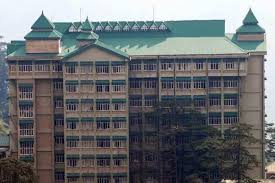

In Sunita Devi vs. State of Himachal Pradesh &Ors., the High Court of Himachal Pradesh ruled that the police are legally authorized to present an investigative report (challan) directly before a Gram Panchayat for offenses specified under Schedule III of the Himachal Pradesh Panchayati Raj Act, 1994. The Court clarified that Section 34 of the Act creates an absolute statutory bar preventing regular courts from taking cognizance of such cases, meaning the police do not need to follow a “circuitous route” through a Judicial Magistrate to reach the local council. Furthermore, the Court established that an underlying civil or property dispute does not provide immunity for criminal acts of violence; where medical evidence establishes physical injury, the criminal prosecution must proceed regardless of the dispute’s “civil color”.
- Factual Background
The case arose from a property-centric altercation in District Bilaspur, where the complainant alleged that while he was repairing a window, the petitioner (Sunita Devi) and others objected and physically assaulted his family with sticks. An FIR was registered under Sections 115(2) (voluntarily causing hurt), 352 (intentional insult), and 351(2) (criminal intimidation) of the Bharatiya Nyaya Sanhita (BNS). Following the investigation, the police determined these offenses fell under Schedule III of the Himachal Pradesh Panchayati Raj Act, 1994, and presented the final challan directly to the Gram Panchayat Kothi.
- Challenge to the Procedure of Filing Challans
The petitioner moved the High Court under Section 528 of the BNSS to quash the proceedings, raising two primary legal contentions:
- Procedural Illegality: The petitioner argued that under Section 35 of the Act, the police have no autonomous power to file a case directly with a Gram Panchayat. It was claimed that the police must first file before a Judicial Magistrate, who alone has the power to transfer a case to the Panchayat.
- Civil Dispute Defense: The petitioner asserted the matter was purely civil in nature and that the complainant had given it a “criminal color” merely to harass her.
- Statutory Interpretation of the Panchayati Raj Act
The High Court rejected the petitioner’s procedural arguments by analyzing the interplay between Sections 34 and 35 of the Act:
- Bar on Regular Courts: Section 34 mandates that no regular court shall take cognizance of cases triable by a Gram Panchayat unless specifically authorized.
- Section 35 Clarification: The Court held that while Section 35 provides a mechanism for a Magistrate to transfer a case if they discover its triable status during proceedings, it does not mandate that all cases must start in a Magistrate’s court.
- Exclusive Jurisdiction: Since the offenses involved were exclusively listed in Schedule III, the police’s action in filing directly before the competent Gram Panchayat was found to be statutorily sound and free from infirmity.
- Primacy of Criminal Infractions over Civil Disputes
Regarding the attempt to characterize the case as a civil matter, the Court held:
- No Shield for Violence: A person cannot use a civil or property disagreement as a mask for committing criminal acts.
- Remedy for Civil Injury: Parties aggrieved by civil injuries must seek relief through civil courts rather than taking the law into their own hands.
- Medical Corroboration: The Medico-Legal Certificate (MLC) on record clearly showed that the complainant and his family had sustained physical injuries, establishing a prima facie criminal case.
Conclusion
The High Court concluded that there was no illegality in the Gram Panchayat taking cognizance of the matter. Consequently, the petition for quashing the FIR and the trial was dismissed, with the Court directing that the trial proceed on its merits based on the evidence.
STPL (Web) 2026 HP 324
Smt. Sunita Devi V. State of Himachal Pradesh &Ors. (D.O. J. 13.05.2026)
Loading Viewer...