

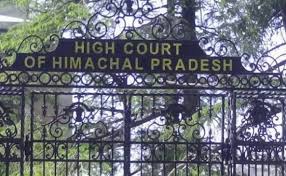
In State of Himachal Pradesh vs. Rakesh Kumar &Anr., the High Court of Himachal Pradesh upheld the acquittal of two individuals accused of possessing 3.800 kg of charas under the NDPS Act,. The Court ruled that a 300-gram weight discrepancy between the contraband measured at the crime scene and the quantity analyzed by the forensic laboratory constitutes a significant variance that breaks the link of custody and creates fatal doubt,,. Furthermore, the Court established that when official police witnesses provide irreconcilable contradictions regarding basic logistics—such as travel modes, arrival times, and the geography of the crime scene—the structural foundation of the prosecution’s case is compromised,,.
- Fatal Discrepancy in Contraband Weight
The prosecution’s case centered on the alleged recovery of 3.800 kg of charas on October 9, 2009,. However, the State Forensic Science Laboratory (SFSL) report recorded the weight as only 3.500 kg,.
- Significant Variance: The Court held that a 300-gram difference is not a “minor error”,.
- Broken Chain of Custody: Because there was no substantial time gap between the recovery and the dispatch to the laboratory, this discrepancy created a reasonable doubt as to whether the material analyzed was the same as the material seized,.
- Irreconcilable Contradictions Among Police Witnesses
The Court identified “deep contradictions” among the four official police witnesses (PW-3, PW-9, PW-11, and PW-15) regarding the execution of the operation,:
- Logistical Inconsistencies: Witnesses contradicted each other on whether they traveled from Shimla to Solan individually or together, and whether they used a Maruti 800 car or a police Gypsy,,,.
- Timing Discrepancies: There were conflicting accounts regarding arrival times at the CID unit and the time officials departed the crime scene,,.
- Scene Descriptions: Witnesses provided clashing testimony about the location’s landmarks, specifically whether there was a petrol pump and active shops or merely closed kiosks/khokhas,,,.
- Hostile Independent Witnesses and Pre-written Memos
To satisfy procedural mandates, the police associated two independent public witnesses (PW-1 and PW-14) during the search,.
- Denial of Recovery: Both witnesses turned hostile, flatly denying that any interception or recovery occurred in their presence,.
- Coerced Signatures: The witnesses testified that their signatures were obtained by police under pressure on already-written documents at alternative locations, such as a building basement and a roadside eatery (dhaba), rather than at the alleged crime scene,,,.
- Standard of Proof in Appeals Against Acquittal
The Court reaffirmed that in an appeal against an acquittal, the high court must exercise restraint.
- Double Presumption: The initial presumption of innocence is doubly reinforced and fortified by a trial court’s order of acquittal,,.
- Threshold for Interference: Unless the trial court’s view is found to be “completely perverse” or “legally untenable,” the appellate court will not interfere merely because a different conclusion might be possible,.
Final Outcome
The High Court concluded that the combination of the weight variance, hostile independent witnesses, and irreconcilable police contradictions meant the State miserably failed to prove its case beyond a reasonable doubt,. The appeal was dismissed, and the respondents were discharged from their bail bonds.
STPL (Web) 2026 308
State of Himachal Pradesh. V. Rakesh Kumar &Anr. (D.O.J. 03.06.2026)
Loading Viewer...