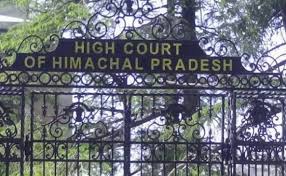

NDPS: Framing of Charges: only required to determine existence of a prima facie case based on “grave suspicion”

In Ankit Pachwaria vs. State of H.P. and Sarvagya Sharma vs. State of H.P., the High Court of Himachal Pradesh dismissed revision petitions challenging the framing of charges under Sections 20 and 29 of the NDPS Act. The Court reaffirmed that at the stage of framing charges, the trial judge is only required to determine the existence of a prima facie case based on “grave suspicion” rather than proof of guilt beyond reasonable doubt. Crucially, the Court clarified that while a judge must record reasons for discharging an accused, there is no statutory mandate to provide a detailed, reasoned order when choosing to frame a charge. Additionally, the Court ruled that in cases of “chance recovery” from a vehicle on a public road, the strict procedural requirements of Section 42 of the NDPS Act regarding prior information do not strictly apply, and any alleged non-compliance is a matter to be adjudicated during the full trial rather than at the discharge stage.

  1. Factual Background and Recovery

The case arose from a police “Naka” (checkpost) search conducted on May 25, 2023. Police stopped a private vehicle and, noting the suspicious behavior of the occupants, conducted a search that led to the recovery of 328 grams of charas. The petitioners, who were the driver and passenger, were arrested and subsequently charged with offenses under the Narcotic Drugs and Psychotropic Substances (NDPS) Act.

  1. Legal Standard for Framing Charges

The petitioners contended that the trial court failed to properly evaluate the evidence before framing charges. The High Court rejected this, emphasizing established legal principles:

  • Prima Facie Opinion: At this initial stage, the court must form a presumptive opinion on whether the factual ingredients of the offense exist.
  • No Meticulous Analysis: It is impermissible for a court to undertake a “threadbare analysis” of the evidentiary value or determine if the trial is “sure to end in a conviction”.
  • Sift and Weigh: While the court may sift the evidence to see if grounds for proceeding exist, it cannot evaluate the “pros and cons” or the probability of the defense, as those are matters for the final trial.
  1. Distinction Between Discharge and Framing Charges

A primary argument raised by the petitioners was that the trial court’s order was not a “speaking order” and failed to address their specific grounds for discharge. The High Court clarified the statutory scheme:

  • Section 227 vs. Section 228: Under the law, a judge is only required to record reasons if they decide to discharge an accused (Section 227/239).
  • No Mandatory Reasons for Charges: There is no legal requirement to write a detailed, reasoned order when framing a charge (Section 228/240). The act of framing the charge itself serves as a prima facie order indicating the judge’s satisfaction with the record.
  • Avoiding Roadblocks: Forcing courts to write exhaustive interlocutory orders at this stage adds “unnecessary extra work” and risks the premature disclosure of the judicial mind regarding final guilt.
  1. Compliance with Section 42 of the NDPS Act

The petitioners argued that the police failed to comply with Section 42 of the NDPS Act, which they claimed was fatal to the case. The Court held:

  • Chance Recovery: Because the contraband was found during a routine check rather than based on “prior information,” the strictures of Section 42 do not apply.
  • Matter of Trial: Even if there were procedural lapses in search and seizure, such issues are questions of fact involving appreciation of evidence and cannot be used as a ground for discharge.
  1. Defective Investigation and Adverse Inference

The petitioners pointed to gaps in the investigation, such as the failure to collect CCTV footage. The Court ruled:

  • No Adverse Inference: An adverse inference for “withholding evidence” can only be drawn if the prosecution possesses evidence and refuses to produce it. It does not apply to evidence that was never collected.
  • Tainted Probe vs. Acquittal: A perfunctory or “slipshod” investigation is not a sufficient ground for discharge; rather, the court must evaluate the remaining evidence with greater circumspection during the trial.
  1. Limitations of Revisional Jurisdiction

The High Court emphasized that its revisional powers are deeply restricted. It cannot act as an appellate court to re-appreciate facts or seek out minor inconsistencies. Intervention is only warranted if the allegations are “patently absurd” or the foundational ingredients of the offense are entirely missing—conditions that were not met in this case.

STPL (Web) 2026 HP 306

Ankit Pachwaria V. State of H.P. (D.O.J. 02.06.2026)

Loading Viewer...

Next Story

High Court Dismisses Challenge to Dismissal of Section 91 Cr.P.C. Application

This criminal petition was filed under Section 482 of the Code of Criminal Procedure (Cr.P.C.) to set aside an order dated February 7, 2026, passed by the Judicial Magistrate First Class, Shimla, which dismissed an application filed under Section 91 of the Cr.P.C. for the seizure of documents. The High Court of Himachal Pradesh evaluated the legal scope of Section 91, reaffirming that the expression “any person” does not extend to an accused person, that applications seeking documents must establish strict relevancy through a speaking order, and that superior courts should rarely interfere with the discretionary powers of trial courts regarding the summoning or seizing of documents. Finding no merit in the petitioner’s arguments, the High Court dismissed the petition.

  • Factual Background:
    • The petitioner filed an application under Section 91 of the Cr.P.C. before the Trial Court, asserting that the police had failed to conduct a proper investigation, did not seize vital evidence, and that fake experience certificates were created.
    • The petitioner sought an order to seize or deposit various documents allegedly in the custody of school authorities and the accused.
    • The Trial Court dismissed the application, classifying it as vague and baseless, leading to the present challenge.
  • Inapplicability of Section 91 Cr.P.C. to Accused Persons:
    • Citing Supreme Court precedent (State of Gujarat v. Shyamlal Mohanlal Choksi), the High Court reiterated that the words “any person” in Section 91 do not include an accused person.
    • Terms like “attend and produce” are inept for an accused, and compelling an accused to produce documents would violate protections against self-incrimination.
  • Requirement of Relevancy and Speaking Orders:
    • A document can only be summoned under Section 91 if it is proven relevant and necessary or desirable for the inquiry, trial, or proceedings.
    • Vague and omnibus applications cannot be entertained, and the trial court’s satisfaction regarding the necessity of documents must be clearly reflected in a speaking order.
  • Non-Interference with Trial Court Discretion:
    • Relying on established jurisprudence (Collector of Customs v. L.R. Melwani), the High Court emphasized that the decision to summon or seize documents lies strictly within the discretion of the trial court.
    • Superior courts must refrain from interfering with this discretion absent compelling reasons, as unnecessary interventions impede trial progress and waste public resources.
  • Final Ruling:
    • The High Court found no illegality, perversity, or error in the Trial Court’s order dismissing the application.

The petition was accordingly dismissed, and trial court records were ordered to be sent back forthwith.

STPL (Web) 2026 HP 405

Ashish Sharma v. P. Sofat (D.O.J. 23.07.2026)

Loading Viewer...

Next Story

Upholding Justice: Acquittal Affirmed in NDPS Case Due to Fatal Procedural Flaws and Section 50 Infractions

This criminal appeal was filed by the State of Himachal Pradesh under Section 378 of the Code of Criminal Procedure, challenging the judgment dated March 9, 2015, passed by the Special Judge-II, Kullu, whereby the respondent-accused was acquitted of charges under Section 20 of the Narcotic Drugs and Psychotropic Substances (NDPS) Act for the alleged recovery of 354 grams of charas. The High Court evaluated the mandatory safeguards under Section 50 of the NDPS Act, the impropriety of offering multiple or unauthorized options to an accused, and severe investigative discrepancies. Finding that the statutory provisions and independent witness requirements were blatantly violated, the High Court dismissed the appeal and upheld the acquittal.

  • Factual Background:
    • On February 23, 2013, a police patrolling party intercepted the respondent-accused at a rain shelter in village 16 Miles, where he allegedly displayed suspicious behavior.
    • Upon personal search, 350 grams of charas was purportedly recovered from his sports shoes.
    • The Trial Court acquitted the accused, prompting the State’s appeal.
  • Violation of Section 50 and Impermissible Multiple Options:
    • Although the initial option given by the Investigating Officer (IO) was for a search before a Magistrate or Gazetted Officer, the accused was taken to Police Station Manali on the directions of a superior officer (SDPO/Gazetted Officer), who then offered a second, fresh option to be searched before him or someone else.
    • Citing Supreme Court precedents (such as Ranjan Kumar Chadha and Parmanand), the High Court reiterated that giving unauthorized, multiple, or secondary options vitiates the consent and breaches the mandatory framework of Section 50 of the NDPS Act.
  • Failure to Produce Before Nearest Gazetted Officer or Magistrate:
    • The IO failed to make efforts to contact the nearest Gazetted Officer (Fisheries Officer at Patlikuhal, 4 to 5 km away) and instead transported the accused 12 km away to Manali solely to comply with superior police directives, abdicating independent statutory discretion.
  • Contradictions and Lack of Independent Witnesses:
    • Material contradictions surfaced regarding efforts to procure independent local witnesses, with spot witnesses contradicting the IO’s claims.
    • Key official witnesses (HC Narayan Chand and HHC Lal Singh) were either given up or not examined, leaving glaring gaps in the prosecution’s narrative.
  • Discrepancies in Recovery Evidence:
    • Photographic evidence (Ext. P-6 to Ext. P-8) directly contradicted the oral testimony of police witnesses regarding the location and lighting/daylight conditions during the seizure.
    • Entries in the NCB Form failed to corroborate the prosecution’s version regarding the documentation of the accused.
  • Final Ruling:
    • The High Court concluded that the Trial Court’s view was plausible, reasonable, and fortified by the presumption of innocence.

The appeal filed by the State was dismissed, and the acquittal of the respondent-accused was affirmed.

STPL (Web) 2026 HP 404

State of Himachal Pradesh v. Ram Lal (D.O.J. 23.07.2026)

Loading Viewer...

Next Story

Acquittal Upheld in NDPS Case Due to Procedural Lapses and Doubtful Recovery

This criminal appeal under the Narcotic Drugs and Psychotropic Substances (NDPS) Act was filed by the State against the acquittal of the respondents by the Trial Court. The High Court of Himachal Pradesh evaluated the evidence and held that an order of acquittal fortifies the presumption of innocence, which should not be interfered with unless found perverse or arbitrary. Finding multiple discrepancies, non-association of independent witnesses despite habitation nearby, and serious doubts regarding the production and handling of the case property, the appellate court dismissed the appeal and upheld the acquittal.

  • Factual Background:
    • On February 18, 2011, a police team laid a checkpoint (nakka) at Gajedi Bypass Road and intercepted a motorcycle carrying three persons (Dalip Singh, Krishan Dutt, and Sunil Kumar).
    • The police allegedly recovered 1 kg and 700 grams of charas from a backpack carried by Krishan Dutt.
    • The Trial Court acquitted the respondents of charges under Sections 20 and 29 of the NDPS Act, leading to the State’s appeal.
  • Non-Association of Independent Witnesses:
    • Although official witnesses claimed the place was secluded and independent witnesses were unavailable, cross-examination revealed that there were residential houses, shops, a restaurant, and active vehicular traffic near the spot.
    • The complete failure to associate independent witnesses, despite their availability, requires rigorous scrutiny of official testimony.
  • Investigation Discrepancies and Withholding of Witnesses:
    • Key material witnesses, including the driver of the official vehicle and HC Dev Raj (who supposedly signed recovery memos and guided the site plan), were either not cited or dropped without valid explanation.
    • Contradictions emerged regarding the timeline of events, the preparation of documents on the vehicle’s bonnet in the dark without lighting arrangements, and discrepancies in official computer entries concerning special reports.
  • Doubtful Handling and Production of Case Property:
    • Physical examination of the case property by the High Court and Trial Court records showed irregularities regarding when the parcel was opened and sealed, weakening the authenticity of the recovery.
  • Final Ruling:
    • The cumulative effect of these infirmities, contradictions, and procedural gaps created strong suspicion regarding the prosecution’s narrative.
    • The High Court concluded that the prosecution failed to prove its case beyond reasonable doubt, affirmed the trial court’s judgment, extended the benefit of doubt to the respondents, and dismissed the appeal.

STPL (Web) 2026 HP 403

State of Himachal Pradesh v. Krishan Dutt & Ors. (D.O.J. 23.07.2026)

Loading Viewer...

Next Story

Land Acquisition: Uniform Land Valuation and Pre-Notification Damages

This Regular First Appeal under Section 54 of the Land Acquisition Act, 1894 was filed by the State against an award enhancing compensation for acquired land. The High Court of Himachal Pradesh held that when an entire land block is acquired and utilized as a single unit for a common public purpose, its classification into different categories loses significance, and the market value must be assessed uniformly based on the highest rate available. Furthermore, invoking Order XLI Rule 33 of the CPC, the Court ruled that even in the absence of cross-objections, a landowner is entitled to additional interest by way of damages at the rate of 15% per annum for pre-notification dispossession.

  • Factual Background: The State issued a notification under Section 4 of the Land Acquisition Act on July 30, 2008, to acquire land in Village Annu for constructing a road. The Land Acquisition Collector awarded compensation categorized by land classification. On a reference petition, the Reference Court enhanced the compensation to a uniform rate of Rs. 50,000/- per biswa, prompting the State to appeal.
  • Uniform Rate and Single Unit Valuation:
    • The High Court noted that the Reference Court erred in relying on an unrelated award from another village to fix the rate at Rs. 50,000/-.
    • Instead, relying on the one-year average market value from the adjoining Mauza Jungle Shalli Teer, the highest approved rate for the best category of land stood at Rs. 20,974.58 per biswa.
    • Citing established jurisprudence (Gulabi v. State of H.P. and Dinesh Chhetry v. State of H.P.), the Court ruled that because the land was acquired as a single unit for a road, classification distinctions become irrelevant, and the highest rate must be applied uniformly.
  • Power of Appellate Court under Order XLI Rule 33:
    • The respondent argued that possession of the land was taken prematurely in 1988–89 without cross-objections filed.
    • The High Court affirmed that Order XLI Rule 33 of the CPC confers powers of the widest amplitude to do complete justice and prevent inconsistency or inequality, allowing relief even without a formal cross-appeal.
  • Damages for Pre-Notification Dispossession:
    • Because the State took physical possession of the land in 1988–89 but issued the Section 4 notification only in 2008, the landowner was deprived of the property for decades.
    • Following Supreme Court precedents (Madishetti Bala Ramul, Tahera Khatoon, and Balwan Singh), the Court awarded additional interest by way of damages for use and occupation at the rate of 15% per annum from the actual year of dispossession (1988–89) until the Section 4 notification date (July 30, 2008).

Final Disposition: The State’s appeal was partly allowed, modifying the market value to a uniform rate of Rs. 20,974.58 per biswa along with all statutory benefits (solatium and statutory interest) and pre-notification damages at 15% per annum.

STPL (Web) 2026 HP 402

State of HP and Others v. Yoginder Chand (D.O.J. 22.07.2026)

Loading Viewer...

Recent Articles