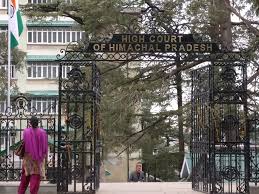
In the case of The Executive Engineer, I & P.H. Division, Dalhousie vs. Jeevan Singh (2026), the High Court of Himachal Pradesh upheld a Labour Court order granting a workman wages for the period between his court-ordered reinstatement and his actual re-engagement.
Case Background and Timeline
The respondent-workman’s services were terminated in November 2000, which he successfully challenged before the Labour Court. On May 20, 2013, the Labour Court issued an award quashing his retrenchment and directing the State to re-engage him “forthwith”.
Despite this clear directive, the State did not re-engage the workman until February 22, 2019. During this six-year interval, the State unsuccessfully challenged the original award through a writ petition, a Letters Patent Appeal (LPA), and a Special Leave Petition (SLP) to the Supreme Court. The State only implemented the award after the executing court issued warrants of attachment against the department’s moveable property.
Key Legal Findings
The High Court dismissed the State’s petition and affirmed the workman’s entitlement to ₹16,32,795 in wages plus 6% interest based on the following principles:
- Inapplicability of “No Work No Pay”: The Court ruled that the principle of “no work no pay” is not applicable when the employer’s inaction or deliberate delay keeps a workman out of service through forced unemployment.
- Impact of Litigation and Stays: Relying on the Supreme Court precedent in D.N. Krishnappa v. Deputy General Manager, the Court held that an employee should not suffer financial loss simply because an employer chooses to challenge a reinstatement order. Even if a stay is granted during litigation, the workman is entitled to wages for that period once the reinstatement order attains finality.
- Employer’s Failure to Act: The Court noted that the award had never been stayed during the various appeals. Furthermore, the workman had repeatedly approached the department for re-engagement but was verbally refused due to the pending litigation.
- Undisputed Computation: The State did not dispute the specific computation of wages provided by the workman for the period from May 2013 to February 2019.
Conclusion
The High Court concluded that the denial of wages for the intervening period was unjustified. Because the State failed to re-engage the workman “forthwith” as originally ordered in 2013, it was legally obligated to pay full wages for the years he was kept out of service.
STPL (Web) 2026 HP 216
The Executive Engineer, I & P.H, Division, Dalhousie V. Jeevan Singh (D.O.J. 07.05.2026)
Loading Viewer...