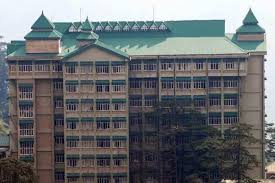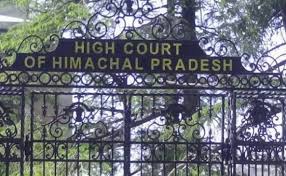


In State of Himachal Pradesh vs. Rahul Malhotra, the High Court of Himachal Pradesh set aside a discharge order, ruling that the framing of charges under Section 304-AA of the IPC (causing death while driving a public service vehicle in a state of intoxication) does not require the prosecution to prove a specific numerical threshold of blood alcohol concentration. The Court established that at the preliminary stage of a trial, the mere presence of alcohol in medical samples following a fatal accident involving a public vehicle constitutes a prima facie “state of intoxication”. Furthermore, the Court held that determining whether a driver’s mental faculties or motor skills were actually impaired—specifically when the alcohol level is below the common 80 mg% threshold—is a question of fact that must be adjudicated through expert testimony during a full trial rather than through a “deep-dive” appraisal at the discharge stage.
- Factual Background and Initial Discharge
The case involved a December 2019 accident where the respondent, driving a commercial taxi, lost control and plunged into a river, resulting in one death and multiple injuries. A medical examination conducted immediately after the accident revealed an alcohol concentration of 72.62 mg% in his blood and 260.48 mg% in his urine. While the Trial Court framed charges for rash and negligent driving (Sections 279 and 304-A IPC), it discharged the accused under the more stringent Section 304-AA, reasoning that his blood alcohol was below the 80 mg% level often cited in precedents as the threshold for severe impairment of driving skills.
- Statutory Requirements of Section 304-AA IPC
The High Court emphasized that Section 304-AA is a special provision targeting the high responsibility of those operating public service vehicles, which includes taxis. To invoke this section, the prosecution must satisfy two baseline elements:
- The accused was driving or attempting to drive a public service vehicle in a state of intoxication.
- The act resulted in a death not amounting to culpable homicide or a life-threatening injury. The Court noted that the statute does not prescribe a rigid numerical minimum of blood alcohol to define “intoxication” specifically for the purpose of framing charges.
- Distinction Between Prima Facie Case and Final Proof
The Court highlighted the circumscribed jurisdiction of a judge at the stage of framing charges. It ruled that:
- Limited Evaluation: The court is only required to see if the basic ingredients of the offense are visible on the record.
- Impermissibility of Meticulous Appraisal: It is legally improper to perform a “threadbare analysis” of medical reports or calculate exact behavioral impairment to drop a charge prematurely.
- Trial as the Proper Forum: Whether 72.62 mg% of alcohol actually impaired the accused’s mental faculties is a matter to be decided in the totality of evidence during the trial.
- The Role of Expert Witnesses
The Court rejected the accused’s argument that the charge should be dropped because the medical officer failed to explicitly state that he was “under the influence of liquor” in the initial notes. The High Court clarified that the examining medical professional is the appropriate expert to depose during the trial regarding how the recorded alcohol levels impacted the driver’s specific motor skills at the time of the accident.
- Presumption under the Motor Vehicles Act
The State argued that the “state of intoxication” should be interpreted in light of Section 185 of the Motor Vehicles Act, which sets a threshold of 30 mg per 100 ml for a criminal offense. The High Court agreed that since the accused’s levels (72.62 mg%) significantly exceeded this statutory mark, there was more than sufficient evidence to conclude he was intoxicated for the purpose of proceeding with a trial under the IPC.
Final Outcome
Finding the Trial Court’s discharge order to be a procedural error, the High Court allowed the State’s revision petition. The order of discharge was quashed, and the Trial Court was directed to proceed with the trial against the accused under all sections, including Section 304-AA of the IPC.
STPL (Web) 2026 HP 322
State of Himachal Pradesh V. Rahul Malhotra (D.O.J. 18.05.2026)
Loading Viewer...