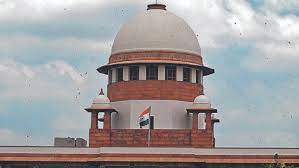
Curbing High Court Interference in Anti-Corruption FIRs

This batch of seven criminal appeals was filed by the State of Karnataka against the common judgment and orders passed by the High Court of Karnataka, which had quashed six First Information Reports (FIRs) registered against police officials, including an Assistant Commissioner of Police and a Police Inspector. The FIRs involved allegations under the Prevention of Corruption Act, 1988 (PC Act) and Section 384 read with Section 34 of the Indian Penal Code, 1860 (IPC). The High Court had originally quashed the proceedings on grounds of unexplained delay, lack of direct demand and recovery, potential second FIR multiplicity, and perceived malafides.

The Supreme Court allowed the State’s appeals, holding that the High Court had severely overstepped its jurisdiction under Section 482 of the Code of Criminal Procedure, 1973 (CrPC) by conducting a “mini-trial” at the threshold stage. The apex court reiterated that issues such as delay, lack of direct recovery, or absence of direct bribe acceptance are matters of evidence to be evaluated during trial or discharge stages, and they cannot serve as grounds for quashing an anti-corruption FIR.

  • Limits of Section 482 CrPC:
    • The extraordinary power to quash an FIR must be exercised sparingly and with great circumspection.
    • At the threshold stage, courts must only examine whether the contents of the FIR prima facie disclose a cognizable offence, rather than evaluating evidence or conducting a mini-trial.
  • Relevance of Demand, Recovery, and Delay:
    • Absence of proof regarding the demand of illegal gratification or its personal recovery cannot form the basis for quashing an FIR, though they may be grounds for discharge or ultimate acquittal.
    • Similarly, delay in registering an FIR for major offences cannot interdict an investigation unless the explanation is completely untenable, which is a matter for the trial court to decide after recording evidence.
  • Indirect Gratification and Second FIRs:
    • Under Explanation 2 to Section 7 of the PC Act, actual exchange of a bribe or direct receipt by the public servant is not a mandatory prerequisite; solicitation or attempting to obtain an undue advantage through intermediaries is equally culpable.
    • Multiple FIRs do not automatically constitute illegal second FIRs if the subsequent filings pertain to a larger issue of widespread systemic corruption rather than a restricted individual incident.
  • Judicial Restraint in Corruption Cases:
    • Constitutional courts must display zero tolerance toward corruption.
    • High Courts should adopt a hands-off approach and permit corruption investigations under the PC Act to reach their logical conclusion instead of quashing FIRs prematurely.

2026 INSC 766

State of Karnataka & Anr. v. Prabhu Shankar & Anr. (D.O.J. 30.07.2026)

Loading Viewer...

Next Story

Supreme Court Acquits Appellant in the Absence of Corroborating Circumstances Beyond Last Seen Theory

In this criminal appeal, the Supreme Court addressed whether a conviction for murder can be sustained solely on the basis of a weak “last seen” theory without any other corroborating incriminating circumstances. The appellant, who was the son-in-law of PW1, was convicted alongside other co-accused based on testimonies of witnesses including PWs 1 to 4, some of whom were initially declared hostile before turning to implicate the accused. Although the appellant had already been released on remission, he pursued the appeal seeking a clean acquittal. The Supreme Court allowed the appeal and set aside the conviction, holding that the testimonies regarding the last seen theory did not inspire confidence and that a conviction cannot rest merely on the last seen theory in the complete absence of other incriminating evidence.

  • Unreliable Testimony: The testimonies of witnesses (PW1 to PW4), some of whom were initially declared hostile before alleging assault by PW1’s husband and the appellant, failed to inspire judicial confidence.
  • Limitation of the Last Seen Theory: A conviction cannot be based solely on the last seen theory without any other supporting incriminating circumstances.
  • Acquittal Granted: The Supreme Court set aside the judgments of the lower courts and granted a clear acquittal to the appellant, directing the cancellation of any bonds executed for earlier remission releases.

2026 INSC 780

Munu Sen v. The State of Chhattisgarh (D.O.J. 29.07.2026)

Loading Viewer...

Next Story

Proving Adultery at the Threshold: Supreme Court Rules on Interim Maintenance and Private Investigation Evidence

In this criminal appeal, the Supreme Court examined whether a husband’s application under Section 125(4) of the Code of Criminal Procedure, 1973 (CrPC) alleging adultery by the wife can be deferred until the final adjudication of the main maintenance proceedings, or if it must be considered at the threshold when determining interim maintenance. The appellant-husband had opposed interim maintenance by presenting electronic evidence (photographs and videos) indicating an adulterous relationship, but the lower courts dismissed his application on the grounds that such allegations could only be proved during final trial. The Supreme Court allowed the appeal, set aside the High Court’s order, and remanded the matter to the Trial Court. The Court held that if a husband presents clear, cogent, and ex-facie evidence at the threshold establishing adultery, interim maintenance can be barred or suspended, and such applications cannot be routinely postponed to the final judgment. Additionally, the Supreme Court highlighted the legal lacuna surrounding unregulated private detective agencies and directed that a copy of the judgment be forwarded to the Ministry of Law and Justice and the Law Commission of India for appropriate legislative consideration.

  • Nature and Object of Section 125 CrPC: Proceedings under Section 125 CrPC are summary and civil in nature, designed to prevent vagrancy, destitution, and neglect by ensuring a dignified life for dependents through social justice.
  • Bar Under Section 125(4) CrPC: Section 125(4) acts as an exception, explicitly barring a wife from receiving maintenance (interim or final) if she is living in adultery, refuses to live with her husband without sufficient reason, or lives separately by mutual consent.
  • Timing of Section 125(4) Adjudication: An application under Section 125(4) does not have to wait until the final conclusion of the main petition. If the husband produces ex-facie, clear evidence establishing adultery or mutual consent at the threshold, interim maintenance is impacted; if evidence requires formal proof, interim maintenance continues in the interregnum until the Section 125(4) application is decided.
  • Evidentiary Standard for Electronic Records: Evidence procured through private investigators (such as digital photographs and videos) must satisfy strict admissibility and verification standards, including compliance with Section 65B of the Indian Evidence Act / Bharatiya Sakshya Adhiniyam (BSA) and the foundational tests of relevancy and accuracy.
  • Need for Regulation of Private Investigators: Acknowledging the absence of statutory regulation for private detective agencies in India, the Supreme Court directed the Ministry of Law and Justice and the Law Commission of India to examine the framework for regulating private investigators, balancing evidence collection with privacy and data protection rights.

2026 INSC 778

Himanshu Chordia v. State of Rajasthan & Anr. (D.O.J. 31.07.2026)

Loading Viewer...

Next Story

Supreme Court Bars Late-Stage Counter-Claim Court Fee Deposit After Conclusion of Evidence

In this civil appeal, the Supreme Court examined the legality of an order permitting a defendant to pay court fees on a counter-claim with a delay of four years, specifically after the entire evidence in the suit had been closed. When the written statement and counter-claim were initially filed, the defendant did not pay the required court fees due to financial constraints, and only the written statement was taken on record, leaving the counter-claim non-existent. Years later, after the plaintiff’s evidence and the cross-examination of PW1 concluded, the trial court permitted the defendant to deposit the court fees and prosecute the counter-claim. The Supreme Court allowed the appeal and set aside the orders of the High Court and Trial Court, holding that since the counter-claim was never formally on record and the trial had already concluded, introducing it at that belated stage violated the strict parameters of Order VI Rule 17 of the Civil Procedure Code, 1908 (CPC), as no due diligence or foundational grounds were established.

  • Non-Existence of Counter-Claim Without Court Fees/Taking on Record: Where a defendant fails to pay court fees upon raising a counter-claim and explicitly requests the court to take only the written statement on record due to lack of financial capacity, the counter-claim does not legally exist on record.
  • Limits of Section 149 CPC: While Section 149 CPC grants courts the discretionary authority to allow the payment of deficient court fees at any stage of the suit, it presupposes that the pleading or claim itself is validly and properly on record.
  • Application of Order VI Rule 17 CPC Post-Trial: Introducing a counter-claim after the conclusion of trial amounts to an amendment of the pleadings. Under the proviso to Order VI Rule 17 CPC, such amendments post-commencement of trial are barred unless the party proves that, despite due diligence, they could not have raised the matter earlier.
  • Prejudice to the Plaintiff: Permitting a counter-claim after the entire evidence is closed causes severe prejudice, as the plaintiff has had no opportunity to adduce evidence to controvert the new claims.
  • Final Direction of the Supreme Court: The Supreme Court allowed the appeal, set aside the High Court’s affirmation of the trial court’s order, and directed that the suit shall proceed and be adjudicated strictly without the counter-claim.

2026 INSC 777

IJM Corporation Berhad v. M/s Lakshmi Sai Constructions Company and Anr. (D.O.J. 28.07.2026)

Loading Viewer...

Next Story

Navigating Discretionary Equity: Supreme Court Restores Trial Court Decree Denying Specific Performance

In this civil appeal arising from a property transaction spanning over two decades, the Supreme Court examined the limits of appellate interference with the discretionary and equitable relief of specific performance under Section 20 of the Specific Relief Act, 1963. The sole appellant (original defendant) had entered into an agreement to sell a property in Udhagamandalam for ₹2,25,00,000, but the transaction collapsed amid allegations of bounced cheques, mutual lack of candor, inconsistent pleadings, and criminal complaints. While the trial court decreed only a refund of the advance amount of ₹85,00,000 with interest, the High Court reversed it and granted specific performance. The Supreme Court allowed the appeals, set aside the High Court’s judgment, and restored the trial court’s decree. It held that the plaintiffs failed to prove continuous readiness and willingness, approached the court with unclean hands due to retaliatory criminal proceedings, took contradictory stances regarding property assignment, and that the long passage of time combined with the advanced age of the appellant rendered specific performance inequitable.

  • Scope of Order XLI Rule 22 CPC: A respondent supporting a decree can impugn an adverse finding without filing cross-objections, provided they seek no relief beyond what the decree already grants.
  • Maintainability Without Declaration: Where an agreement does not confer a contractual right of unilateral termination, such termination amounts to repudiation, and the aggrieved party may sue for specific performance without seeking a separate declaratory relief as to the invalidity of the cancellation.
  • Continuous Readiness and Willingness: The plaintiff in a specific performance suit must prove continuous readiness and availability of funds from the date of the agreement up to the date of the decree. Dishonour of advance cheques and absence of concrete fund-raising material at the time of the suit demonstrate a lack of continuous financial readiness.
  • Conduct and “Clean Hands” Principle: Specific performance is an equitable and discretionary remedy. Plaintiffs who adopt contradictory stands across litigation (such as blowing hot and cold regarding assignment of rights) and file retaliatory criminal complaints seeking recovery of money rather than upholding the contract are not entitled to equitable relief.
  • Hardship and Delay: An inordinate lapse of time (over two decades), coupled with the advanced age of the vendor and the death of a key plaintiff, constitutes severe hardship and makes specific performance inequitable, warranting the restoration of the trial court’s alternative remedy of refund with interest.

2026 INSC 776

V.N.A.S. Chandran v. S. Venila and Others (D.O.J. 31.07.2026)

Loading Viewer...

Recent Articles