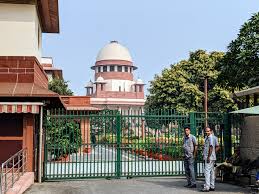


This criminal appeal arose from a common judgment of the Bombay High Court which addressed the tragic homicidal death of Smt. Vimalbai within nine months of her marriage to the appellant, Ramkishan. The Supreme Court evaluated connected appeals challenging concurrent convictions under Sections 498-A (cruelty), 304-B (dowry death), and 302 (murder) of the Indian Penal Code, 1860 (IPC). The husband had raised a fabricated defense claiming his wife suffered an epileptic seizure during sexual intercourse. The Supreme Court reaffirmed that when an unnatural death occurs within the privacy of a matrimonial home under exclusive custody, Section 106 of the Evidence Act shifts a heavy burden onto the husband to offer a credible explanation. Because the appellant offered a demonstrably false explanation instead of discharging this burden, and because continuous dowry harassment was established by multiple witnesses, the Supreme Court dismissed the appeals and upheld the life sentence for murder alongside the convictions for dowry harassment.
- Factual Matrix & Prosecution Case:
- Vimalbai was married to Ramkishan on May 12, 1995.
- Within nine months, on February 1, 1996, she died an unnatural, homicidal death due to “asphyxia due to throttling” inside her matrimonial home.
- The prosecution established persistent mental and physical torture by the husband and his relatives over unlawful dowry demands, including cash of Rs. 50,000/-, a television, a tape deck, and a plot of land.
- The Defense’s False Plea:
- The husband, Ramkishan, claimed his wife suffered sudden giddiness and an epileptic seizure resulting in a locked jaw and death while they were engaged in sexual intercourse.
- Medical testimony comprehensively refuted this defense, confirming internal neck injuries, fractured hyoid bone cartilage, and signs characteristic of manual throttling rather than an epileptic fit.
- Application of Section 106 of the Evidence Act & Precedent:
- Invoking principles from Trimukh Maroti Kirkan v. State of Maharashtra, the Court underscored that crimes committed inside the secrecy of a house place a corresponding burden on the inmates to offer a cogent explanation.
- The introduction of a patently false explanation by the husband served as a crucial incriminating link completing the chain of circumstantial evidence for murder.
- Statutory Presumptions under Section 113-B:
- Because the death occurred within seven years of marriage and was preceded by proven cruelty concerning dowry demands, the statutory presumption of a dowry death remained un-rebutted by the defense.
- Final Disposition:
- The Supreme Court dismissed the appeals, noting that the appeal concerning co-appellant Digambar stood abated due to his passing during the pendency of the proceedings.
- The conviction and life sentence imposed on Ramkishan under Section 302 of the IPC, alongside the joint convictions under Sections 498-A and 304-B read with Section 34 of the IPC, were firmly upheld. The appellants were directed to surrender within four weeks.
2026 INSC 1187
Ramkishan Digambar Jadhav v. The State of Maharashtra (With Criminal Appeal No. 962 of 2014) (D.O.J. 02.11.2026)
Loading Viewer...