
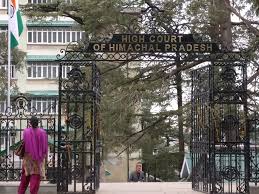
In Bidhia vs. Ghungar, the High Court of Himachal Pradesh restored a trial court decree favoring the eldest brother’s claim as the sole tenant and subsequent owner of family land, ruling that entries in the record-of-rights (Jamabandi) carry a statutory presumption of correctness that cannot be rebutted by mere oral testimony. The Court established that admissions made by a party, such as the respondents’ previous formal declarations of being “landless” to obtain government land, constitute substantive evidence that provides the “best proof” of facts and can be used as evidence proprio vigore without the need for confrontation. Furthermore, the Court reaffirmed that Civil Court jurisdiction is barred under Sections 112 and 115 of the H.P. Tenancy and Land Reforms Act regarding the validity of proprietary rights conferment, unless there is a proven violation of fundamental judicial procedure or natural justice.
- Factual Background and Successive Claims
The litigation involved two consolidated suits regarding land originally tenanted by Hardeo. Upon Hardeo’s death, his eldest son, Bidhia, claimed he was the sole tenant and had acquired proprietary rights to 5/8th of the land under the H.P. Tenancy and Land Reforms Act. His brothers (Ghungar, Khemdi, and Faquir) contested this, alleging that Bidhia had surreptitiously substituted his name for their father’s in the revenue records and that they remained joint tenants.
- Presumption of Correctness in Revenue Records
A central issue was the validity of the Jamabandi entries from 1952-53 onwards, which showed Bidhia as the sole tenant. The Court held:
- Statutory Presumption: Under Section 45 of the H.P. Land Revenue Act, revenue entries are presumed true.
- Documentary vs. Oral Evidence: The Court emphasized the “golden rule” that “witnesses may lie, but the documents do not”. Oral testimony was deemed insufficient to rebut the integrity of official records that had remained unchallenged for decades.
- Acquiescence: Neither the original landlord (Bhagat Ram) nor the father (Hardeo) challenged Bidhia’s status as the sole tenant during their lifetimes, despite being present for revenue proceedings.
- Admissibility and Weight of Admissions
The Court relied heavily on statements made by Ghungar and Faquir in 1975 when they applied for “Nautor” (government land).
- Substantive Evidence: In those applications, the brothers had formally stated they were landless and not tenants of any land.
- Best Proof: Under the Indian Evidence Act, such admissions are the best evidence against the maker. The Court ruled these admissions were decisive and demolished the brothers’ subsequent claims of joint tenancy.
- Bar of Civil Court Jurisdiction
The Court addressed the legal bar to challenging the conferment of proprietary rights sanctioned in 1976.
- Limited Scope: Jurisdiction of a Civil Court is barred by Sections 112 and 115 of the H.P. Tenancy and Land Reforms Act regarding orders passed by Land Reforms Officers.
- Failure to Plead Exceptions: Because the respondents failed to plead or prove any violation of the principles of natural justice or fundamental judicial procedures, the Civil Court had no authority to invalidate the proprietary rights already conferred upon Bidhia.
- Abandonment and Relinquishment of Tenancy
The Court considered the provisions of the Punjab Tenancy Act regarding the abandonment of tenancy. It noted that it was legally permissible for a tenant (Hardeo) to relinquish or abandon tenancy. Given that the younger brothers were minors and Bidhia was the only one capable of cultivating the land at the time of the father’s incapacity, the theory of exclusive induction of Bidhia as a tenant was found probable and supported by the landlord’s consent.
Final Outcome
The High Court concluded that the Appellate Court had erred by misreading the admissions and ignoring the statutory presumptions attached to the revenue records. The appeals were allowed, the Appellate Court’s judgment was set aside, and the Trial Court’s decree in favor of Bidhia was restored.
STPL (Web) 2026 HP 364
Bidhia Alias Bidhi Chand (Since Deceased) Through His Lrs. V. Ghungar (Since Deceased) Through His Lrs& Others. (D.O.J. 02.07.2026)
Loading Viewer...