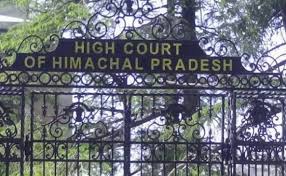


In State of Himachal Pradesh vs. Surender Pal, the High Court of Himachal Pradesh upheld the acquittal of a husband accused of abetting his pregnant wife’s suicide, ruling that general domestic bickering, marital discord, or “snap-shows of anger” do not meet the legal threshold for instigation under Section 306 of the IPC,. The Court established that for a conviction of abetment, the prosecution must provide concrete and convincing proof of a positive overt act—proximate to the occurrence—that reveals a clear mens rea to drive the victim to a point where they have no alternative but to end their life,,. Furthermore, the Court reaffirmed that vague and generalized allegations of matrimonial cruelty under Section 498A, unsupported by specific material particulars or independent pre-incident complaints, are insufficient to sustain a criminal prosecution and cannot override the presumption of innocence reinforced by a trial court’s acquittal,,.
- Factual Background and Prosecution Case
The State appealed a 2013 judgment acquitting the respondent of charges under Sections 306 (Abetment of suicide) and 498A (Matrimonial cruelty) of the IPC,. The prosecution alleged that the deceased, who was pregnant at the time, consumed poison due to constant domestic harassment and beatings by her husband,. The case primarily relied on a distress call made by the deceased to her father a day before her death and testimonies from her parents and uncle,.
- Legal Ingredients of Abetment (Sections 306 and 107 IPC)
The Court conducted an extensive analysis of the statutory requirements for abetment, concluding that:
- Direct or Indirect Incitement: There must be proof of a positive act of instigation or incitement that is closely linked in time to the suicide,.
- Mens Rea Requirement: The accused must have a deliberate intention to goad, provoke, or urge the deceased to commit suicide,. Mere harassment or using abusive language does not inherently constitute abetment,.
- The Threshold of Proximity: Allegations of harassment are unsustainable unless there is an offending action proximate to the time of occurrence that compels the suicide,.
- Consideration of “Hypersensitivity”
The Court emphasized that each individual’s “suicidability pattern” is different. If a victim is hypersensitive to ordinary petulance or common domestic differences, the law does not readily find an accused guilty of abetment,. The evidence must show that the accused created an unbearable situation where a similarly circumstanced person would perceive no other option but death,.
- Failure of Evidence for Matrimonial Cruelty (Section 498A)
The High Court found the prosecution’s allegations regarding cruelty to be legally insufficient:
- Vague Accusations: Witnesses (PW-1, PW-2, and PW-3) failed to specify distinct, material instances of torture in the FIR or their depositions.
- Contradictory Admissions: The father of the deceased (PW-1) admitted during cross-examination that there were no demands for dowry or money by the accused or his family.
- Absence of Proof: The Investigating Officer (PW-15) admitted that the investigation found no proof of an overt act of cruelty and that no complaints were ever made to the local Panchayat or police prior to the incident,.
- Standards for Appellate Intervention in Acquittals
Exercising jurisdiction under Section 378 of the Cr.P.C., the Court reiterated that an acquittal reinforces the presumption of innocence,. The High Court will only interfere if the trial court’s findings are patently perverse, illegal, or suffer from a total non-appreciation of material evidence. Finding that the medical evidence showed no marks of violence and that the prosecution failed to establish a direct nexus between the husband’s conduct and the suicide, the Court determined the acquittal was a reasonable view,,.
Final Outcome
The High Court concluded that the prosecution failed to prove the essential legal ingredients of the charges. Consequently, the appeal was dismissed, and the judgment of acquittal was reaffirmed,
STPL (Web) 2026 HP 301
State of Himachal Pradesh V. Surender Pal (D.O.J. 30.05.2026)
Loading Viewer...