

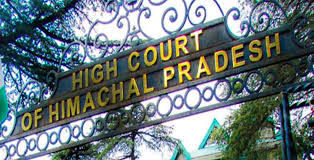
This criminal appeal was preferred by the State of Himachal Pradesh against the judgment of acquittal dated August 14, 2013, passed by the Special Judge, Kullu, in a case registered under Sections 20 and 29 of the NDPS Act, 1985. The prosecution alleged that 500 grams of charas was recovered from knee caps worn by Surender Kumar and Amit Rathi each (total 1 kg), and that Jai Singh supplied the contraband. The High Court of Himachal Pradesh (comprising Hon’ble Mr. Justice Vivek Singh Thakur and Hon’ble Mr. Justice Ranjan Sharma) dismissed the State’s appeal and upheld the acquittal. The Court ruled that the prosecution’s case was severely undermined by manipulated consent memos bearing pre-recorded penal sections prior to search, contradictory endorsements by the Executive Magistrate, hostiles and self-contradictory testimonies, and unproven disclosure statements and call records.
1. Factual Background
- Interception & Search Option: On February 13, 2011, police intercepted Surender Kumar and Amit Rathi at Banjar bus stand. They were issued notices under Section 50 of the NDPS Act and consented to a search before a Magistrate.
- Recovery: They were taken to the residence of Executive Magistrate (Naib Tehsildar Bishan Dass), who instructed them to move to the Police Station due to rain. Upon search, 500 grams of charas was allegedly recovered from under the knee caps of each accused.
- Co-Accused Link: The prosecution claimed the duo made disclosure statements naming Jai Singh as their supplier. Jai Singh was subsequently arrested, and police relied on call detail records (CDRs) to establish conspiracy.
2. Key Legal Observations & Findings
- Manipulated Consent Memos (Section 50, NDPS Act):
- The Section 50 consent memos prematurely listed “under Section 20 of the NDPS Act” at the top before any search or recovery took place. At that stage, police could not have known what specific substance would be found.
- The Magistrate signed and endorsed the recovery of charas on the initial consent memos, even though he was not present when options were given at the bus stand. This established that the documents were manipulated after the fact.
- Failure of Co-Accused Disclosure & Magistrate’s Refusal:
- The prosecution relied on Section 27 disclosure statements to implicate Jai Singh. However, Magistrate Bishan Dass categorically testified in court that the accused were never produced before him on February 15, 2011, nor were any disclosure statements made in his presence, stripping these statements of evidentiary value.
- Hostile Witnesses & Unreliable Official Testimonies:
- The sole independent witness (PW-2) gave self-contradictory statements, eventually admitting he was called to the police station merely to sign pre-prepared documents.
- Police officials gave conflicting accounts regarding where the ruqua was prepared (Bus Stand vs. Police Station) and whether the SHO was present. Furthermore, SHO Surender Pathak testified that parcels bore seal ‘H’, whereas prosecution records and FSL reports stated seal ‘T’.
- Unproven Call Detail Records (CDRs):
- The CDRs intended to prove conspiracy under Section 29 were neither exhibited in court nor supported by mandatory statutory certification. Police failed to seize subscriber documentation or verify SIM ownership.
- Presumption of Innocence in Appeal Against Acquittal:
- Reaffirming principles under Section 419 BNSS (Section 378 Cr.P.C.), the Court observed that an acquittal double-fortifies the presumption of innocence. Interference is unjustified absent patent illegality or perversity.
3. Conclusion
- Given the pervasive contradictions, evidence manipulation, and procedural lapses, the High Court held that the benefit of the doubt must extend to the accused. The appeal filed by the State was dismissed, and trial court bail bonds were discharged.
STPL (Web) 2026 HP 717
State of Himachal Pradesh v. Surender Kumar and Others (D.O.J. 01.10.2026)
Loading Viewer...






