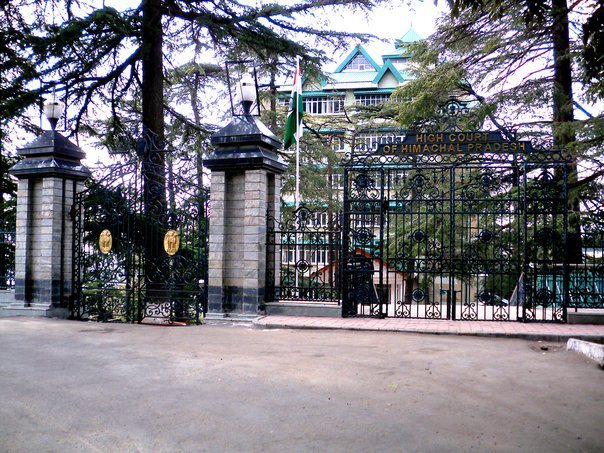
Acquittal in a Murder Case Due to Inconsistent Dying Declarations and Child Witness Testimony

This criminal appeal challenged the judgment of conviction and sentence dated 12.07.2024 passed by the Additional Sessions Judge, Sarkaghat, District Mandi, H.P., whereby the appellant (Ashok Kumar) was convicted under Section 302 of the IPC and sentenced to imprisonment for life for allegedly murdering his wife by setting her on fire. The prosecution’s case rested heavily on an oral dying declaration reportedly made by the deceased to her parents while being transported in an ambulance, alongside alternative allegations in the FIR pointing toward suicide or dowry harassment. The High Court of Himachal Pradesh allowed the appeal, setting aside the conviction and acquitting the appellant. The Court held that the prosecution failed to prove its case beyond a reasonable doubt because the First Information Report contained inconsistent and shifting versions (suicide vs. homicide), the oral dying declaration lacked corroboration and credibility, and the couple’s minor son—testifying as a competent child witness—categorically stated that the incident was an accident that occurred while boiling milk rather than an intentional act by his father.

  • Contradictory and Unreliable FIR Versions: The FIR lodged by the father of the deceased contained shifting and alternative hypotheses—alternately alleging suicide due to cruelty, or homicide by pouring liquid—which indicated that the family was unsure of the true cause and that the case was built on an afterthought.
  • Inconsistent Dying Declarations: At the first instance, the victim gave a statement in the hospital in the presence of a doctor stating that she caught fire accidentally due to a gas leakage while heating milk for her daughter and that her husband tried to save her. The subsequent oral dying declaration alleged to have been made in an ambulance while on oxygen support lacked corroboration and medical/independent witness backing.
  • Credible Testimony of the Child Witness: The couple’s minor son (PW-12), who was present at the scene and found competent to testify, stated clearly that his father did not commit any crime and that his mother caught fire accidentally while boiling milk. Because the prosecution neither declared him hostile nor contradicted him with a prior police statement, his testimony remained binding and credible.
  • Absence of Forensic Proof for Accelerants: Although partial traces were found, medical and post-mortem reports did not note any characteristic smell or definitive presence of kerosene on the body or clothing of the victim, weakening the prosecution’s theory of accelerant-based murder.
  • Extension of Benefit of Doubt: Due to glaring inconsistencies in the prosecution narrative, the unreliability of key family witnesses, and the exculpatory testimony of the child witness, the Court extended the benefit of doubt to the appellant, setting aside his conviction and directing his immediate release.

STPL (Web) 2026 HP 599

Ashok Kumar versus State of Himachal Pradesh (D.O.J. 12.08.2026)

Loading Viewer...
Next Story

Supreme Court Upholds Partnership Registration but Dismisses Recovery Suit as Barred by Limitation

This civil appeal challenged a First Appellate Court judgment that had reversed the trial court’s dismissal of a money recovery suit and decreed the claim in favor of the respondent partnership firm. While the Supreme Court agreed that the plaintiff-firm’s registration had been legally proved via a Memorandum of Registration and additional certified documents, it ruled that the underlying recovery claim based on specific invoices was barred by limitation under the Limitation Act, 1963. Consequently, the Supreme Court allowed the appeal and dismissed the plaintiff’s suit on the ground of limitation.

  • Trial Court and First Appeal Findings: The trial court had dismissed the respondent’s recovery suit under Section 69(2) of the Indian Partnership Act, 1932, holding that the firm’s registration was unproven. However, the First Appellate Court reversed this, held that Exhibit-8 (Memorandum of Registration) and additional documents under Order XLI Rule 27 conclusively established registration, and decreed the suit for 24,36,105/- with interest.
  • Status of Partnership Registration: The Supreme Court affirmed the First Appellate Court’s finding on the firm’s registration, noting that Exhibit-8 issued by the Registrar of Firms, West Bengal, along with the certified copy of Form-VIII, clearly established that the respondent was a registered partnership firm with registration number L73931.
  • Analysis of Limitation and Invoices: Examining the nature of the suit, the Court observed that the recovery was sought on the strength of individual bills/invoices rather than a mutual, open, and current running account.
  • Inapplicability of Section 14 and Acknowledgment: The Court noted that even if the time spent prosecuting a prior winding-up petition before the Company Court was excluded under Section 14 of the Limitation Act, the filing date (10.02.2009) still fell outside the limitation period for the primary bills dated 30.01.2006, while the remaining unpaid bills dated up to 06.03.2007 were similarly time-bound when the suit was instituted on 05.06.2010. Furthermore, reply communication (Annexure P-18) did not constitute an acknowledgment of the disputed debt.
  • Final Ruling: The Supreme Court allowed the appeal, setting aside the First Appellate Court’s judgment granting recovery, and firmly dismissed the respondent’s suit as barred by limitation, despite ruling in favor of the plaintiff on the issue of partnership registration.

2026 INSC 839

Mageba Bridge Products Private Limited v. M/s. Trade Centre (D.O.J. 12.08.2026)

Loading Viewer...

Next Story

Supreme Court Upholds Maintainability of Composite Appeal Against Common Judgment in Consolidated Suits

This civil appeal addresses whether a composite appeal filed under Section 96 of the Code of Civil Procedure, 1908, is maintainable against a common judgment rendered in two civil suits filed by the same plaintiff that were clubbed together and tried on common evidence. The Supreme Court held that where all necessary requirements—such as payment of requisite court fees for both decrees, filing certified copies of both decrees, and a clear prayer to set aside the common judgment—are fulfilled, a composite appeal is entirely maintainable. The Court set aside the High Court’s decision which had non-suited the appellants on technical grounds, emphasizing that procedural rules are the handmaid of justice and form must not override substance.

  • Filing of Suits and Consolidation: The plaintiff filed two separate suits—one for declaring a registered sale deed null and void, and another for permanent injunction. Upon request, both suits were clubbed by the trial court, common evidence was recorded, and both were dismissed via a common judgment dated 07.12.1990.
  • Composite Appeal and First Appellate Court Ruling: The unsuccessful plaintiff filed a single composite appeal under Section 96 of the Code, paying court fees for both decrees, attaching certified copies of both decrees, and praying to set aside the common judgment. The first appellate court allowed the appeal and decreed both suits.
  • High Court Interference: The High Court of Karnataka allowed the second appeals filed by the defendants, holding that a single composite appeal against a common judgment in two separate suits was untenable, thereby leaving the appellants remediless without a decision on merits.
  • Validity of Composite Appeal: The Supreme Court observed that all statutory prerequisites under Section 96 read with Order XLI Rule 1 of the Code were fully met, and any missing separate memorandum was merely a curable defect of form rather than substance.
  • Inapplicability of Res Judicata: Citing precedents such as Narhari v. Shankar, the Court reiterated that the principle of res judicata does not apply within the same consolidated proceedings or where a common judgment is appealed against, as there are no independent prior decisions.
  • Final Ruling: The Supreme Court allowed the civil appeals, set aside the High Court’s judgment, and restored the second appeals to the High Court for fresh adjudication on merits.

2026 INSC 838

Bassanna Since Deceased by LRs. and Others v. Bhimanna and Others (D.O.J. 12.08.2026)

Loading Viewer...

Next Story

This appeal arose from a judgment of the High Court of Orissa at Cuttack, which had mistakenly accepted a self-serving statement of account produced by a debtor trust and scaled down loan dues based on an isolated bank certificate. The Supreme Court examined the standard accounting practices of banking institutions—specifically the maintenance of suspense accounts for interest accrued post-NPA classification—and corrected the financial ledger calculations, ultimately setting aside the High Court’s orders and restoring the order passed by the Debts Recovery Appellate Tribunal (DRAT), Kolkata. Loan Disbursal and NPA Classification: United Bank of India (predecessor of Punjab National Bank/PNB) sanctioned a loan of 5 crore to the Trust on 27.06.2011, which later became a non-performing asset (NPA) on 30.06.2017. Proceedings Before the DRT: The bank filed O.A. No. 258 of 2018 before the Debts Recovery Tribunal (DRT), Cuttack, to recover outstanding dues. On 05.02.2021, the DRT allowed the application directing recovery of a specified residual sum. Appellate Intervention (DRAT): Upon appeal, the DRAT, Kolkata, factored in subsequent deposits and calculated the total dues payable by the Trust as 54,90,413/-, along with pendente lite and future simple interest at 9% per annum from 05.02.2018 until realization. PNB accepted this appellate order. High Court Error: The Trust challenged the DRAT order before the High Court via W.P. (C) No. 32036 of 2023. The High Court relied heavily on a certificate dated 24.12.2020 issued by PNB and reduced the liability to 29,55,678.02 paisa, subsequently dismissing PNB’s recall application. Supreme Court’s Analysis of Accounts: The Supreme Court evaluated the statement of account and noted that as of 30.06.2017 (the NPA date), the principal loan amount plus interest stood at 1,25,30,842/-. Following banking norms, interest after NPA classification is maintained separately in a suspense account and does not vanish. Rejection of Debtor’s Calculation: The Supreme Court held that the Trust’s attempt to present a self-serving statement showing a negative balance and claiming an excess refund was patently erroneous and mischievous. Final Ruling: The Supreme Court allowed the appeals, set aside the High Court’s orders dated 11.01.2024 and 14.05.2024, and fully restored the DRAT’s order dated 01.09.2023 determining the dues at 54,90,413/- with 9% simple interest. 2026 INSC 836 Punjab National Bank v. M/s. Allied Educational Trust & Ors. (D.O.J. 12.08.2026)

This appeal addressed the correct customs tariff classification of imported ‘Dryview 6850 Laser Imagers W/3D’ under the Customs Tariff Act, 1975. After facing concurrent adverse findings from the Assistant Commissioner, the Commissioner (Appeals), and the Customs, Excise and Service Tax Appellate Tribunal (CESTAT), the importer approached the Supreme Court. The Supreme Court evaluated whether the laser imagers qualified as independent diagnostic apparatus or as accessories compatible with machines spanning different tariff headings, ultimately dismissing the appeal and upholding their re-classification under the residuary heading CTH 9033 00 00.

  • Import and Dispute: Carestream Health India Pvt. Ltd. imported laser imagers from China and initially classified them under Customs Tariff Heading (CTH) 9018 90 19 as “other diagnostic instruments and apparatus”. Revenue authorities rejected this, re-classifying them under residuary CTH 9033 00 00 as unspecified accessories for Chapter 90 machines.
  • Functionality of the Laser Imager: The imported device uses photothermographic technology to develop digital images onto film from inputs received from diagnostic equipment like MRIs, CT scans, and X-ray systems. However, it possesses no independent diagnostic skills or capabilities of its own.
  • Rejection of Importer’s Stand: The Supreme Court held that the laser imager cannot be termed a “diagnostic apparatus” per se because it lacks independent diagnostic capabilities, functioning instead as an accessory that prints data transmitted from diagnostic machinery.
  • Application of Chapter 90 Rules: Examining Note 2(b) and Rule 2(c) of Chapter 90, the Court noted that Rule 2(b) applies to accessories suitable for use “solely or principally” with machines under the same tariff heading.
  • Multi-Heading Compatibility: Because the laser imagers were compatible with machines falling under disparate tariff headings (such as CTH 9018 for MRIs/Ultrasound and CTH 9022 for CT/X-ray apparatus), they could not be funneled into CTH 9018 under Rule 2(b).
  • Final Ruling: The Supreme Court affirmed the concurrent findings of the lower authorities and CESTAT, ruling that multi-heading compatible accessories naturally fall under the residuary heading CTH 9033 00 00, thereby dismissing the importer’s appeal.

2026 INSC 837

M/s. Carestream Health India Pvt. Ltd. v. Commissioner of Customs (D.O.J. 12.08.2026)

Loading Viewer...

Next Story

Supreme Court Restores DRAT’s Calculation on Bank Dues and Suspense Accounts

This appeal arose from a judgment of the High Court of Orissa at Cuttack, which had mistakenly accepted a self-serving statement of account produced by a debtor trust and scaled down loan dues based on an isolated bank certificate. The Supreme Court examined the standard accounting practices of banking institutions—specifically the maintenance of suspense accounts for interest accrued post-NPA classification—and corrected the financial ledger calculations, ultimately setting aside the High Court’s orders and restoring the order passed by the Debts Recovery Appellate Tribunal (DRAT), Kolkata.

  • Loan Disbursal and NPA Classification: United Bank of India (predecessor of Punjab National Bank/PNB) sanctioned a loan of 5 crore to the Trust on 27.06.2011, which later became a non-performing asset (NPA) on 30.06.2017.
  • Proceedings Before the DRT: The bank filed O.A. No. 258 of 2018 before the Debts Recovery Tribunal (DRT), Cuttack, to recover outstanding dues. On 05.02.2021, the DRT allowed the application directing recovery of a specified residual sum.
  • Appellate Intervention (DRAT): Upon appeal, the DRAT, Kolkata, factored in subsequent deposits and calculated the total dues payable by the Trust as 54,90,413/-, along with pendente lite and future simple interest at 9% per annum from 05.02.2018 until realization. PNB accepted this appellate order.
  • High Court Error: The Trust challenged the DRAT order before the High Court via W.P. (C) No. 32036 of 2023. The High Court relied heavily on a certificate dated 24.12.2020 issued by PNB and reduced the liability to 29,55,678.02 paisa, subsequently dismissing PNB’s recall application.
  • Supreme Court’s Analysis of Accounts: The Supreme Court evaluated the statement of account and noted that as of 30.06.2017 (the NPA date), the principal loan amount plus interest stood at 1,25,30,842/-. Following banking norms, interest after NPA classification is maintained separately in a suspense account and does not vanish.
  • Rejection of Debtor’s Calculation: The Supreme Court held that the Trust’s attempt to present a self-serving statement showing a negative balance and claiming an excess refund was patently erroneous and mischievous.
  • Final Ruling: The Supreme Court allowed the appeals, set aside the High Court’s orders dated 11.01.2024 and 14.05.2024, and fully restored the DRAT’s order dated 01.09.2023 determining the dues at 54,90,413/- with 9% simple interest.

2026 INSC 836

Punjab National Bank v. M/s. Allied Educational Trust & Ors. (D.O.J. 12.08.2026)

Loading Viewer...

Recent Articles

This appeal arose from a judgment of the High Court of Orissa at Cuttack, which had mistakenly accepted a self-serving statement of account produced by a debtor trust and scaled down loan dues based on an isolated bank certificate. The Supreme Court examined the standard accounting practices of banking institutions—specifically the maintenance of suspense accounts for interest accrued post-NPA classification—and corrected the financial ledger calculations, ultimately setting aside the High Court’s orders and restoring the order passed by the Debts Recovery Appellate Tribunal (DRAT), Kolkata. Loan Disbursal and NPA Classification: United Bank of India (predecessor of Punjab National Bank/PNB) sanctioned a loan of 5 crore to the Trust on 27.06.2011, which later became a non-performing asset (NPA) on 30.06.2017. Proceedings Before the DRT: The bank filed O.A. No. 258 of 2018 before the Debts Recovery Tribunal (DRT), Cuttack, to recover outstanding dues. On 05.02.2021, the DRT allowed the application directing recovery of a specified residual sum. Appellate Intervention (DRAT): Upon appeal, the DRAT, Kolkata, factored in subsequent deposits and calculated the total dues payable by the Trust as 54,90,413/-, along with pendente lite and future simple interest at 9% per annum from 05.02.2018 until realization. PNB accepted this appellate order. High Court Error: The Trust challenged the DRAT order before the High Court via W.P. (C) No. 32036 of 2023. The High Court relied heavily on a certificate dated 24.12.2020 issued by PNB and reduced the liability to 29,55,678.02 paisa, subsequently dismissing PNB’s recall application. Supreme Court’s Analysis of Accounts: The Supreme Court evaluated the statement of account and noted that as of 30.06.2017 (the NPA date), the principal loan amount plus interest stood at 1,25,30,842/-. Following banking norms, interest after NPA classification is maintained separately in a suspense account and does not vanish. Rejection of Debtor’s Calculation: The Supreme Court held that the Trust’s attempt to present a self-serving statement showing a negative balance and claiming an excess refund was patently erroneous and mischievous. Final Ruling: The Supreme Court allowed the appeals, set aside the High Court’s orders dated 11.01.2024 and 14.05.2024, and fully restored the DRAT’s order dated 01.09.2023 determining the dues at 54,90,413/- with 9% simple interest. 2026 INSC 836 Punjab National Bank v. M/s. Allied Educational Trust & Ors. (D.O.J. 12.08.2026)