
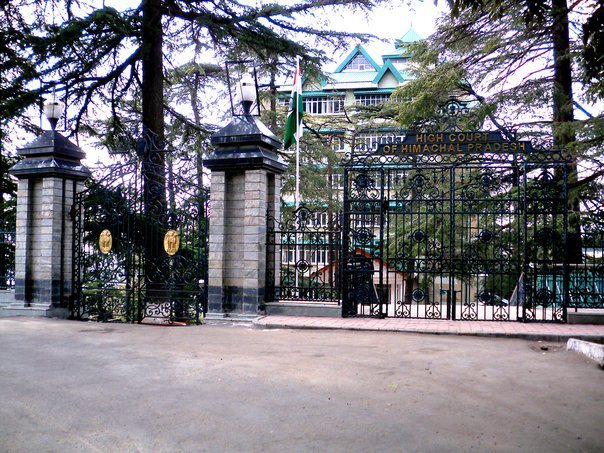
In this suo motu Public Interest Litigation, the Himachal Pradesh High Court addressed the severe ecological degradation and fish mortality in the Uhl River caused by unscientific and delayed de-silting operations at the Shanan Hydroelectric Project (Barot Dam). The Court observed that project proponents accumulated silt over many years and undertook flushing during the peak trout breeding and lean season (November to February), causing Total Suspended Solids (TSS) levels to spike dramatically and turning the river into a “perpetual sandstorm” that choked aquatic life. Emphasizing that economic considerations cannot prevail over environmental rights and ecological health, the Division Bench issued comprehensive directions to protect the designated cold-water trout habitat. The Court ordered strict prohibitions on de-silting during the breeding season, mandated environmental water flows, applied the “Polluter Pays Principle” by directing environmental compensation and restocking of trout species, and established a local River Monitoring Committee for ongoing oversight.
- Protection of Trout Habitat & Ecological Priority: The Uhl River is a national-importance cold-water trout habitat. The Court underscored that marine life should not be sacrificed for commercial convenience, and economic considerations of power projects cannot override environmental rights and river health.
- Application of the Polluter Pays Principle: Upholding environmental accountability, the project proponent was ordered to deposit Rs. 12,00,000/- with the Department of Fisheries to fund the replenishment and graded restocking of Brown and Rainbow Trout. The Court also left open statutory appellate remedies regarding penalties imposed by the State Pollution Control Board.
- Strict Breeding Season and Flow Restrictions: De-silting is strictly prohibited before March 1st of every year to avoid the peak trout breeding season (November to February) under the Himachal Pradesh Fisheries Act, 1976. Project proponents must strictly maintain the mandatory minimum 15% environmental flow downstream without hoarding water.
- Monitoring and Institutional Oversight: To ensure compliance, the State was directed to establish a River Monitoring Committee chaired by the Deputy Commissioner, including representatives from Fisheries, Electricity, and the project proponent. Furthermore, project proponents were ordered to install real-time monitoring sensors to track TSS discharge parameters, with compliance affidavits to be submitted to the Court.
STPL (Web) 2026 HP 456
Court on its own motion v. State of HP and Others(D.O.J. 08.04.2026)
Loading Viewer...