Admissions made by a party is a best evidemce

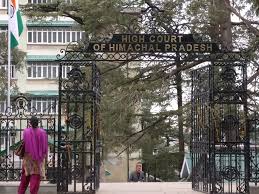
In Bidhia vs. Ghungar, the High Court of Himachal Pradesh restored a trial court decree favoring the eldest brother’s claim as the sole tenant and subsequent owner of family land, ruling that entries in the record-of-rights (Jamabandi) carry a statutory presumption of correctness that cannot be rebutted by mere oral testimony. The Court established that admissions made by a party, such as the respondents’ previous formal declarations of being “landless” to obtain government land, constitute substantive evidence that provides the “best proof” of facts and can be used as evidence proprio vigore without the need for confrontation. Furthermore, the Court reaffirmed that Civil Court jurisdiction is barred under Sections 112 and 115 of the H.P. Tenancy and Land Reforms Act regarding the validity of proprietary rights conferment, unless there is a proven violation of fundamental judicial procedure or natural justice.

  1. Factual Background and Successive Claims

The litigation involved two consolidated suits regarding land originally tenanted by Hardeo. Upon Hardeo’s death, his eldest son, Bidhia, claimed he was the sole tenant and had acquired proprietary rights to 5/8th of the land under the H.P. Tenancy and Land Reforms Act. His brothers (Ghungar, Khemdi, and Faquir) contested this, alleging that Bidhia had surreptitiously substituted his name for their father’s in the revenue records and that they remained joint tenants.

  1. Presumption of Correctness in Revenue Records

A central issue was the validity of the Jamabandi entries from 1952-53 onwards, which showed Bidhia as the sole tenant. The Court held:

  • Statutory Presumption: Under Section 45 of the H.P. Land Revenue Act, revenue entries are presumed true.
  • Documentary vs. Oral Evidence: The Court emphasized the “golden rule” that “witnesses may lie, but the documents do not”. Oral testimony was deemed insufficient to rebut the integrity of official records that had remained unchallenged for decades.
  • Acquiescence: Neither the original landlord (Bhagat Ram) nor the father (Hardeo) challenged Bidhia’s status as the sole tenant during their lifetimes, despite being present for revenue proceedings.
  1. Admissibility and Weight of Admissions

The Court relied heavily on statements made by Ghungar and Faquir in 1975 when they applied for “Nautor” (government land).

  • Substantive Evidence: In those applications, the brothers had formally stated they were landless and not tenants of any land.
  • Best Proof: Under the Indian Evidence Act, such admissions are the best evidence against the maker. The Court ruled these admissions were decisive and demolished the brothers’ subsequent claims of joint tenancy.
  1. Bar of Civil Court Jurisdiction

The Court addressed the legal bar to challenging the conferment of proprietary rights sanctioned in 1976.

  • Limited Scope: Jurisdiction of a Civil Court is barred by Sections 112 and 115 of the H.P. Tenancy and Land Reforms Act regarding orders passed by Land Reforms Officers.
  • Failure to Plead Exceptions: Because the respondents failed to plead or prove any violation of the principles of natural justice or fundamental judicial procedures, the Civil Court had no authority to invalidate the proprietary rights already conferred upon Bidhia.
  1. Abandonment and Relinquishment of Tenancy

The Court considered the provisions of the Punjab Tenancy Act regarding the abandonment of tenancy. It noted that it was legally permissible for a tenant (Hardeo) to relinquish or abandon tenancy. Given that the younger brothers were minors and Bidhia was the only one capable of cultivating the land at the time of the father’s incapacity, the theory of exclusive induction of Bidhia as a tenant was found probable and supported by the landlord’s consent.

Final Outcome

The High Court concluded that the Appellate Court had erred by misreading the admissions and ignoring the statutory presumptions attached to the revenue records. The appeals were allowed, the Appellate Court’s judgment was set aside, and the Trial Court’s decree in favor of Bidhia was restored.

STPL (Web) 2026 HP 364

Bidhia Alias Bidhi Chand (Since Deceased) Through His Lrs.  V. Ghungar (Since Deceased) Through His Lrs& Others. (D.O.J. 02.07.2026)

Loading Viewer...
Next Story

Piecemeal litigation constitutes an abuse of the judicial process

In Aryan vs. State of HP, the High Court of Himachal Pradesh dismissed a successive petition to quash an FIR, ruling that piecemeal litigation constitutes an abuse of the judicial process,. The Court established that while second petitions under Section 482 of the Cr.P.C. are not blanketly prohibited, they are only maintainable if the petitioner proves a substantive and material change in circumstances that did not exist during the first filing,,. Reaffirming the statutory bar under Section 362 of the Cr.P.C., the Court held that inherent powers cannot be used to circumvent the prohibition against a court reviewing its own final orders based on pre-existing material,,.

  1. The Prohibition of Piecemeal Litigation

A litigant invoking the inherent jurisdiction of the High Court is legally required to raise all available pleas at the first instance,. The source material emphasizes that approaching the court with “installment pleas” allows an accused to effectively stall proceedings to suit their own convenience, which is a clear abuse of process,,.

  1. Legal Threshold for Successive Petitions

While there is no absolute rule against successive petitions, their maintainability depends entirely on the facts and circumstances of the individual case,,. The petitioner bears the onus to show that a genuine change in circumstances has occurred since the dismissal or withdrawal of the previous petition,,. A second petition cannot be used to raise pertinent grounds that were tangibly available during the adjudication of the first petition.

  1. Subsequent Events vs. Supplementary Evidence

The Court clarified that “subsequent events” or a “change in circumstances” must be material and substantive. The source material identifies specific actions that do not meet this threshold:

  • Reiterated Complaints: A new complaint that merely reiterates facts already known or previously alleged does not constitute a fresh cause of action,,.
  • Supplementary Charge Sheets: Documents that merely provide results of forensic analysis (such as a laboratory report) for evidence that was already part of the record are considered supplements to existing evidence rather than material changes justifying a new petition,,.
  1. Inherent Powers and the Bar of Review

Under Section 362 of the Cr.P.C., a court is expressly barred from reviewing its own judgment or final order except to correct clerical or arithmetical errors,. The High Court cannot use its inherent powers under Section 482 to override this statutory bar or to re-adjudicate a matter based on materials that were already subsisting during previous proceedings,,,.

  1. Failure to Exercise Granted Liberty

In this specific instance, the petitioner had previously withdrawn a writ petition with the specific liberty to raise his contentions during the framing of charges in the Trial Court. By instead filing multiple successive petitions for quashing in the High Court without a material change in facts, the petitioner acted in gross disregard of the law and the liberty granted to him,.

STPL (Web) 2026 HP 363

Aryan V. State of HP&Ors. (D.O.J. 02-07.2026)

Loading Viewer...

Next Story

Multiple reliefs arising from the same cause of action: Must sue for all such reliefs in a single proceeding.

In Dr. Vinod Kumar vs. State of Himachal Pradesh and Others, the High Court of Himachal Pradesh dismissed a writ petition seeking to declare a suspension period invalid, ruling that the petition was barred by the principle of Order II Rule 2 of the Code of Civil Procedure (CPC). The Court established that a petitioner who is entitled to multiple reliefs arising from the same cause of action must sue for all such reliefs in a single proceeding. If a party omits a relief that was available at the time of a previous filing without obtaining the court’s leave, they are legally prohibited from instituting a subsequent petition to claim that omitted relief. Consequently, because the petitioner failed to challenge his suspension on the specific ground of a failure to review within 90 days in his earlier 2021 writ petition, he was precluded from raising that issue five years later.

1. Factual Background and Reliefs Sought

The petitioner was placed under suspension on July 3, 2020, and the suspension was later revoked on March 10, 2021. In the present petition, he sought a declaration that the period from July 3, 2020, to March 9, 2021, was illegal and punitive because the suspension order was not reviewed within the mandatory 90-day window prescribed by Rule 10(6) of the CCS (CCA) Rules. He further requested that this period be treated as “duty period” for all purposes and that he be paid full salary and interest.

2. History of Earlier Litigation

The Court noted that the petitioner had previously filed a writ petition (CWP No. 555 of 2021) in January 2021. In that earlier litigation, he had specifically challenged:

  • The original suspension order dated July 3, 2020.
  • The charge-sheet served to him in August 2020.
  • The preliminary inquiry being conducted against him.

3. Omission of Available Relief

The High Court identified that as of January 2021 (when the first petition was filed), more than 90 days had already elapsed since the suspension order was issued. Therefore, the legal ground that the suspension had become non-est due to a lack of timely review was fully available to the petitioner at that time. However, the petitioner chose not to agitate this specific issue or seek the related financial reliefs in the first round of litigation.

4. Application of Order II Rule 2 CPC

The Court analyzed the procedural mandate of Order II Rule 2 (3) of the CPC, which prevents the fragmentation of claims.

  • Mandatory Joinder of Claims: A person entitled to more than one relief for the same cause of action must sue for all of them together.
  • Consequence of Omission: If a relief is omitted without the express leave of the Court, the party is barred from suing for that specific relief in the future.
  • Abuse of Process: The Court emphasized that allowing a party to approach the Court piecemeal for reliefs that were originally available constitutes an abuse of the judicial process.

Final Outcome

The High Court concluded that since the petitioner failed to include the “90-day review” challenge in his earlier petition despite having the opportunity to do so, the current petition was not maintainable under the law. Finding the petition hit by the provisions of Order II Rule 2, the Court dismissed the writ petition and all pending miscellaneous applications.

STPL (Web) 2026 HP 362

Dr. Vinod Kumar V. State of Himachal Pradesh And Others (D.O.J. 01.07.2026)

Loading Viewer...

Next Story

Attempt to Murder: Material Contradictions and Inconsistencies

In Ashwani Kumar vs. State of Himachal Pradesh, the High Court of Himachal Pradesh set aside a trial court’s conviction under Sections 307, 325, 323, and 506 of the IPC, ruling that material contradictions and inconsistencies in witness testimonies regarding the timing and location of an incident create a fatal doubt in the prosecution’s narrative. The Court established that to secure a conviction for attempt to murder (Section 307 IPC), the state must prove the accused possessed the specific intention or knowledge to cause death, which cannot be inferred from a “spur of the moment” quarrel involving grievous injuries alone. Furthermore, the Court reaffirmed that the failure to associate independent witnesses despite their availability, coupled with a reliance on “interested” relatives whose accounts conflict with the initial FIR and the forensic spot map, entitles the accused to the benefit of the doubt. Applying the principle of criminal jurisprudence that where two reasonable views are possible, the view favoring the accused must prevail, the Court acquitted the appellant of all charges.

1. Factual Background and Trial Court Conviction

The case arose from an incident on December 14, 2008, where the complainant (PW-1) alleged that the accused beat him with a danda (stick) after the complainant requested him to stop hurling abuses at his wife. The complainant suffered fractures of the 6th, 7th, and 8th ribs, which medical officers initially opined were dangerous to life. The trial court found the accused guilty and sentenced him to five years of rigorous imprisonment for attempted murder, along with shorter terms for other offenses.

2. Legal Ingredients of Attempt to Murder (Section 307 IPC)

The High Court meticulously analyzed the requirements for a Section 307 conviction, determining that the prosecution failed to meet the necessary legal threshold:

  • Specific Intent: The prosecution must prove the accused intended to cause death or knew the injuries were sufficient to cause death in the ordinary course of nature.
  • Spur of the Moment: Because the encounter occurred suddenly without prior planning, and the accused had no prior knowledge the complainant would arrive to intervene, criminal intent to kill could not be established.
  • Nature of Injuries: The Court held that even the presence of “dangerous” grievous injuries does not automatically warrant an attempted murder charge if the nexus to an intent to kill is absent.

3. Credibility of “Interested” Witnesses vs. Independent Evidence

The Court identified severe flaws in the testimonies of the prosecution’s witnesses, most of whom were close relatives of the complainant.

  • Lack of Eye Witnesses: Although several witnesses claimed to have seen the beating, the Court found they actually arrived after the incident was over and only saw the complainant lying on the ground.
  • Failure to Implead Neutrals: Despite the presence of many villagers and neighbors, the Investigating Officer (IO) only recorded the statements of family members and gave up material witnesses who could have provided an objective account.
  • Consistency Test: The Court emphasized that evidence must be evaluated on the “touchstone of consistency” and found the witnesses’ accounts of timing and the arrival of male villagers to be mutually contradictory.

4. Flaws in the Investigation and Spot Map

The High Court highlighted procedural lapses that undermined the prosecution’s case:

  • Shifting Crime Scene: The prosecution’s narrative placed the incident in the accused’s courtyard, but the official spot map prepared by the IO shifted the location to the complainant’s courtyard, creating a “serious doubt” regarding where the event actually occurred.
  • Delayed FIR: The incident occurred on the night of December 14, yet the FIR was not lodged until nearly midday on December 15, despite the police station being located only 100 meters from the hospital where the victim was treated.

5. Plausibility of the Defense Version

The accused maintained a defense that the complainant, while under the influence of liquor in total darkness, fell over a protection wall (bhee) and sustained accidental injuries.

  • Medical Silence: The Court noted that the Medical Legal Certificate (MLC) was silent on the complainant’s sobriety, and a witness admitted they could not rule out the possibility that the complainant had consumed liquor.
  • Mechanism of Injury: The Court found the defense’s “accidental fall” theory plausible because the nature of the injuries (chest and thumb) suggested a fall from the front rather than a deliberate pushing to the back.

Final Outcome

Applying the rule that the prosecution must prove its case beyond a reasonable doubt, the High Court concluded that the evidence allowed for a view favorable to the accused. Finding the trial court’s evaluation of evidence to be flawed, the Court allowed the appeal, set aside the conviction, and acquitted the appellant of all charges.

STPL (Web) 2026 HP 361

Ashwani Kumar V. State of Himachal Pradesh (D.O.J. 01.07.2026)

Loading Viewer...

Next Story

Accused cannot be punished twice for a component or lesser offense when the graver aggravated offense

In Negi Ram vs. State of H.P., the High Court of Himachal Pradesh partly allowed a criminal revision, upholding a conviction for causing grievous hurt with a dangerous weapon (Section 326 IPC) while setting aside the concurrent sentence for the lesser offense of Section 324 IPC. Reaffirming the mandate of Section 71 of the IPC, the Court ruled that an accused cannot be punished twice for a component or lesser offense when the graver aggravated offense arising from the same act is proved. The Court established that the testimony of an injured witness carries paramount evidentiary weight and cannot be discarded due to “interestedness” or prior enmity, as physical injuries provide a “sure guarantee of truth” regarding their presence at the scene. Furthermore, the Court clarified that medical evidence suggesting alternative possibilities—such as injuries being self-inflicted—is insufficient to overturn otherwise credible and consistent eyewitness accounts.

1. Factual Background and Conviction

The case stemmed from an incident on October 21, 2009, where the accused allegedly attacked a woman (Shiv Dei) with a sickle while she was working on a threshing floor. The victim sustained multiple bleeding injuries, including a hemopneumothorax (injured lungs), which were classified as grievous and caused by a sharp-edged weapon. The Trial Court convicted the accused under Sections 324 and 326 of the IPC, sentencing him to six months of simple imprisonment for each.

2. Credibility of Injured and Related Witnesses

The petitioner challenged the conviction on the grounds that the witnesses were relatives and “interested” parties with a history of enmity. The High Court rejected this, holding that:

  • Relationship vs. Interestedness: A “related” witness is not inherently an “interested” witness; the latter term applies only to those who have a personal stake or motive to falsely implicate the accused.
  • Presumption of Truth: A witness speaking under oath is presumed truthful unless their testimony is inherently improbable.
  • Weight of Injury: The evidence of an injured witness holds higher evidentiary value because they are unlikely to screen the real culprit and falsely implicate an innocent person.

3. Primacy of Eyewitness Testimony over Medical Opinion

The defense argued that the Medical Officer’s admission that injuries could have been caused by a fall or were self-inflicted created reasonable doubt. The Court ruled that:

  • Alternative Hypotheses: Medical opinion pointing to alternative possibilities is merely an alternative hypothesis and is not conclusive.
  • Corroborative Role: Medical evidence serves as a tool to corroborate eyewitnesses; it cannot be the sole touchstone to discard an account that is found to be clear, cogent, and trustworthy.
  • Weapon Identification: The prosecution’s case is not weakened simply because the specific weapon was not shown to the doctor, provided the injuries are consistent with the type of weapon described.

4. Double Jeopardy and Section 71 IPC

A pivotal legal finding concerned the dual sentencing under Sections 324 (simple hurt with sharp weapon) and 326 (grievous hurt with sharp weapon).

  • Aggravated Form: The Court determined that Section 326 is simply the aggravated form of the offense defined in Section 324.
  • Statutory Prohibition: Under Section 71 of the IPC, where an act constitutes an offense that is also part of a larger offense, the offender shall not be punished with the punishment of more than one of such offenses.
  • Merger: Consequently, the conviction and sentence for the lesser offense (Section 324) were set aside as they were subsumed by the graver offense.

5. Limits of Revisional Jurisdiction

The High Court emphasized its role as a supervisory court under Section 397 of the Cr.PC. It clarified that:

  • Not a Second Appeal: Revisional jurisdiction is narrow and should only be used to rectify patent defects, errors of jurisdiction, or errors of law.
  • Factual Findings: In the absence of perversity, the Court will not re-analyze or re-interpret evidence to upset concurrent factual findings made by the Trial and Appellate Courts.

Final Outcome

The High Court partially allowed the revision, setting aside the conviction and sentence under Section 324 of the IPC. The six-month sentence and fine for the Section 326 IPC conviction were upheld, with the Court noting the sentence was not excessive given the use of a deadly weapon.

STPL (Web) 2026 HP 360

Negi Ram V. State of H.P. (D.O.J. 01.07.2026)

Loading Viewer...

Recent Articles